World War One
-
Causes of the First World War: Economic, ideological, territorial, and other causes - short & long term
Technological developments - Air, naval, and land warfare; impact of developments on the outcome of the war
Mobilization: Extent of human and economic resources; methods of mobilization
The successes and failures of peacemaking
Territorial changes
Political impact: short and long-term
Impact of war: economic, social, and demographic impact - changes in the role and status of women
-
Causes of the First World War - relative importance of causes, the Alliance system, the decline of the Ottoman empire, German foreign policy, nationalism, arms race, diplomatic crisis
Factors leading to the defeat of Germany and other Central Powers - Strategic errors, economic factors, entry & role of the USA, domestic instability of Central Powers
Impact of the First World War on civilian populations of two countries from the region between 1914 and 1918
This is a guide as to what you should study
Jump to sections
Causes of World War One
MAIN - Long term/ideological causes
Militarism
Desire to expand military for defense and intimidation
Expansionism
Increased tensions due to intimidation and expansionism
Every actor wanted to increase own power to protect against enemies
Develop a deterrent to deter enemies from attacking
Military generals believed having the strongest military and producing the most advanced arms would deter other countries from attacking
Use of conscription (Except in Britain) to create a larger military
Russian army was the largest in the world
Army was 1.3 million with some claiming it could mobilize 5 million more
Russia’s population was ~180 million
Russia’s poor infrastructure and terrible military cohesion meant their army was very weak despite the large number
Arms race - Technological advancement and increased production
Navy race (Navy tonnage is the total weight of all ships, measures the amount and size of ships)
Britain’s navy tonnage increased from 650,000 in 1880 to 2.7 million in 1914
Germany’s increased from 88,000 to 1.3 million
France’s increased from 271,000 to 900,000
Russia’s increased from 200,000 to 679,000
Austria-Hungary’s increased from 60,000 to 372,000
Japan’s increased from 15,000 to 700,000
Italy’s increased from 100,000 to 498,000
USA’s increased from 169,000 to 985,000
Military size in terms of personnel
Russia’s increased from 791,000 in 1880 to 1.35 million in 1914
France’s increased from 543,000 to 910,000
Germany’s increased from 426,000 to 891,000
Britain’s increased from 367,000 to 532,000
Austria-Hungary’s increased from 246,000 to 444,000
Italy: 216,000-345,000
Japan: 71,000-306,000
USA: 34,000-164,000
Large armies and industrialization leading to production made war more likely
Alliances
Triple Alliance & Entente
Ottomans joined the Central Powers
Italy ignores Triple Alliance because Austria-Hungary was the aggressor
Treaty of London - 1839
UK guaranteed Belgium’s protection
Forced UK to join the war when Germany invaded Belgium through the Schlieffen Plan
Alliances at the time weren’t binding, countries chose to join the conflict
Bismarck had tried to isolate France to prevent them from getting revenge, Wilhelm II undid all of this after Bismarck resigned in 1890
Alliance rivalry, see historiography
Bismarck made a series of alliances (Reinsurance Treaty, Dual Alliance, Triple Alliance), this possibly negatively effected relations
Alliance between Germany, Russia, and Austria-Hungary fell through due to ambition in the Balkans
Imperialism
Countries wanted more land, much like militarism
Support growing population
Desire for colonies
Prospect for resources - Rubber, gold, iron
Believed they needed to “educate” lesser developed regions, such as Africa
Desire to influence Balkan states from Russia and Austria-Hungary
Raised tensions between the two
Both wanted influence over the same states, Russia wanted to protect Slavs and Austria-Hungary wanted to expand
Social Darwinism - Each state felt they were racially superior to the others and the people in Africa, and they felt they had the responsibility to ‘teach’ these people for them to succeed
Imperial rivalries in the Balkans
Austria-Hungary, Russia, Serbia, and the Ottoman Empire all had ambitions for the Balkans - They wanted to either expand and directly control or influence these states for political power
This led to the decline of the Ottoman Empire, which created smaller states such as Bulgaria in 1878 and Serbia in 1817
The decline of the Ottomans meant that other states could influence the ethnicities in the Balkans
Austria-Hungary wanted control because they could oppress the Slavs to prevent them from revolting in regions such as Bosnia-Herzegovina, preventing this Pan-Slavism would secure the Empire. As Austria-Hungary was a multi-ethnic empire, any independence movements in the Balkans could inspire domestic independence and thus cause the fall of the Empire
Serbia promoted the nationalist view of a Greater Serbia, which laid the groundwork for Yugoslavia, where all Balkan Slavs would be united under Serbian rule. Russia promoted this as they wanted these states to be independence so Russia could influence them. As Serbia grew more influential, they became more of a threat to Austria-Hungary, who then increased their attempts to influence the Balkans and oppress their minorities
Russia wanted influence in the Balkans to ‘save the Slavs’ as it would increase Russian power and give them Mediterranean ports, as those ports aren’t frozen unlike Russian ports. Russia also wanted to limit Austria-Hungary’s growth, as they were rivals
The rivalry between Russia and Austria-Hungary was a point of contention in Europe, as it caused diplomacy between the two ineffective. The rivalry almost caused war in 1878 after the Russo-Turkish war as Austria-Hungary mobilized to protest Russian claims after the war. Tensions flared again in 1908 with the Bosnian crisis, but Russia was too weak to do anything other than protest
Imperial rivalries between Germany, Britain, and France
Germany had imperial ambitions to create a colonial empire, this foreign policy theory was known as ‘Weltpolitik’ or ‘Our place in the sun’
German imperial ambitions directly interfered with the interests of Britain and France, as Germany gaining colonies meant potentially taking some from them, and it would definitely mean Germany would become the leading world power
Germany wanted more economic strength under Kaiser Wilhelm II
Germany believed they should be involved in all world politics, due to imperialism and nationalism
Imperialism contributed to the war by generating rivalries between the European powers by stimulating the growth of Nationalism, but it is not the sole reason for war as some conflicts were resolved diplomatically
Nationalism
Countries believed they were the best, and had the desire to prove it
Certain states wanted independence, especially within Austria-Hungary and the Ottoman Empire
Slav Nationalism led to Serbia trying to destroy Austria-Hungary
Timeline of Causes
1871 - Unification of Germany
Disrupted balance of power
Disturbed other European nation due to a new superpower being in the mix
France experienced Revanchism (Extreme nationalism from loss of Franco-Prussian war, hate Germany and get Alcase-Lorraine back)
1882 - Triple Alliance
Defense pact between Italy, Germany, and Austria-Hungary
Made other countries skeptical of being dragged into war
Other nations were scared of this alliance
1888 - Germany pursues ‘Weltpolitik’
“Our place in the sun”
Germany desired a colonial empire
They already had colonies in Africa and Asia
Expansionist ideology
Under Kaiser Wilhelm II - Reactionary leader
Threatened other countries
1894 - Franco-Russian alliance
Brought Germany closer to war on 2 fronts
This angered Germany
Increased tensions between Germany and France & Russia
1898 - German naval laws
Set of 5 naval laws under General Admiral Alfred von Tirpitz
Required the navy to build a set number of ships per year to rival the UK’s navy
This increased Anglo-German tensions
1902 - Anglo-Japanese Alliance
Britain abandons “Splendid Isolation” - they are now involved in world politics
They were ready to ally with other nations to protect against Germany
1904 - Creation of Entente Cordiale
Britain and France allied after centuries of hatred between them, shared a common enemy in Germany
Two of the strongest European nations
This was a threat to Germany
1905 - First Moroccan Crisis
France went to consolidate power in Morocco by establishing more control, and Germany objected claiming that they should be consulted
Kaiser Wilhelm went to Morocco (French territory) and pledged Germany’s support for Morocco’s independence movement
This angered France, which raised tensions
War is avoided as Britain doesn’t support France so France backs down
Algeciras meeting in Spain, Germany is humiliated
Reaffirmed Spanish and French non-intervention in Morocco
Germany didn’t get the support they wanted, therefore was humiliated
1906 - Launch of the Dreadnought
Britain launched the strongest battleship ever seen at the time
Germany tried to imitate it
Huge guns could take out enemy ships easily
Challenged German naval laws
Resulted in heightened German aggression
1907 - Creation of the Triple Entente
Britain, Russia, and France
3 of the most powerful European nations are now allied - Including 2 on Germany’s borders
Brought Germany closer to a war on 2 fronts
Wasn’t a military agreement, but improved relations and collaborations between involved nations
1908 - Bosnian Crisis
Austria-Hungary fully annexes Bosnia
They were previously an autonomous state under Austrian control
Causes revolts in Bosnia
Slavs from Serbia hate Austria-Hungary more
Russia wants to declare war, but doesn’t due to a lack of support from Britain and France
1911 - Second Moroccan Crisis
France deployed troops to Morocco to suppress the independence movement
Germany moved the SMS Panther to Agadir in response to intimidate France & support Moroccan Sultan
Germany wanted ‘territorial compensation’ and threatened war otherwise
Conflict resolved when France gave Germany some African territory
1912 - First Balkan War
Ottoman territories in the Balkans decided to revolt and start a war
War lasted until 1913
Disaster for the Ottomans, who lost the war
Both Russia and Austria-Hungary wanted to influence the new Balkan states
Balkans became even more unstable
Bulgaria, Serbia, and Greece gained some land, but nobody was happy with their land gains - especially the Bulgarians
Albania became independent
The creation of Albania meant that Serbia did not get coastal land, so this angered them
This increased Balkan tensions and Slav nationalism, especially in Serbia
1913 - Second Balkan War
Bulgaria wasn’t satisfied with their land gains from the First Balkan War, so they declare war on Serbia and Greece
Bulgaria lost and ceded territory to Serbia, Greece, Romania, and the Ottoman Empire
This again raised tensions as each country was suspicious of their neighbors and the European powers were desperately trying to gain influence
1914 - Assassination of Archduke Franz Ferdinand
Serb Nationalists wanted to destroy Austria-Hungary
Gavrilo Princip & some others in the Black Hand snuck across the border into Bosnia and went to Sarajevo
Archduke was in Sarajevo giving a speech at the town hall
This was on Serb Nationalist day (June 28 1914)
Austro-Hungarian troops were training around Bosnia, and Serbia thought it was preparation for an attack
2 attacks on the Archduke
1st - Someone threw a grenade at him from the crowd, his car sped up and the grenade blew up behind them
2nd - The driver got lost, tried to get back to the river, backed up right in front of Princip who pulled out a gun and shot Ferdinand and his wife
Caused July Crisis
Franz-Ferdinand was warned not to go to Sarajevo, he ignored them
Ferdinand insisted the driver drive slow with the top of the car down so he could see his “adoring fans”
Economic Causes
Every state wanted raw materials - desire for colonies
International market was a mess due to tensions
Some resources, especially in the Triple Alliance, weren’t good
Low quality resources
Lack of resources
Use of tariffs
Countries implemented tariffs on each other, meaning having colonies was the only way to get resources cheap
Led to tensions & desire for colonies
Technological advancements made having colonies and exploring Africa easier
Industrialization
Iron and steel production generally increased globally, in USA it increased by 242% between 1890 and 1913
Steel production decreased in Britain
Germany’s steel production increased 329% in the same time
This meant that military production ramped up, fueling the arms race
Industrialization leads to the creation of the SPD, the Socialists, who expect a strong government, forcing the government to seek short-term victories or face domestic political conflict
Industrial revolution transformed the basis of economic power, redefining strength as the one who could produce the most military and consumer goods and resources such as coal, iron, and steel
Austria-Hungary and Russia lagged behind
Britain enjoyed being the top industrialized nation, but by 1900 this was being challenged
The different rates of economic production increase between nations fueled economic competition and rivalry
Britain became concerned by the USA and Germany potentially overtaking them and challenging their military dominance
Though Russia’s growth was slowed and behind every other nation, their output of steel and iron accounted for 6% of world output, making it fourth in the world
Russia’s potential for resources and output due to its size and massive workforce made it a significant enemy
Growth of railway networks
Investment in railway fueled industrialization, which has already proven to be a cause of the war
Russia made the most rapid railway progress between 1870 and 1910, both in growth rate and size of network. In 1910, Russia possessed the largest railway network
Russia’s vast size meant that their railway network was far less efficient than Britain’s or Germany’s
Germany’s railway network size increased by 224% between 1870 and 1910
Economic growth resulted in the growth of militaries
Output of iron and steel was vital to the military industry and production
The growth of railway meant that rapid troop and supply movement was much easier
The Russian Empire’s large railway network meant that troops could be mobilized much quicker and easier. Mobilization was estimated to take 8 weeks in 1906, but only 30 days in 1912
The potential implications of economic growth on military strength were a source of stress and anxiety across Europe as each country desperately tried to become or stay powerful
Political Causes
Fragile states
Domestic conflict
Caused by aggressive actions
Empires trying to prevent revolution
Political tensions caused by other factors
Each state trying to be politically stable and the strongest on the global stage
Compete with the colonial empires of Britain and France
Quarrels over land
Britain and France fought over a fort in Egypt (Fashoda incident), and them working it out led to better relations between the two states
Arms race
Each country (Particularly Germany) wanted to prove themselves the strongest through technology, so an innovation and production race began
This increased tensions as other countries were seen as threats and enemies
Britain won the naval race - Dreadnought 1906
Failure of diplomacy
No international organization existed, so diplomacy was up to the ambassadors and their countries. Ambassadors couldn’t make any decisions without the government’s approval, and since governments didn’t agree with each other, diplomacy was ineffective
Differing values caused diplomacy to fail
Many states believed that if war were to come, it would be better for it to happen sooner rather than later
This resulted in recklessness and bad decisions
They would rather fight now than let their opponents get stronger
Territorial Causes
Expansionism
Protectionism
Certain states pledging to protect other states
British protection of Belgium
Russian ‘protection’ of Balkan states
Desire for resources
Having colonies led to domestic support for the government
Historical Causes
French loss of Franco-Prussian war (1870-1871)
France declared war on Prussia to prove its dominance in Europe, lost in 6 months
Germany took Alcase-Lorraine as a reparation
Created French revanchism, the desire to take back their lands and prove they were the strongest
Ottoman loss of Russo-Turkish war (1877-1878)
Russia wanted to 'save’ Slavic people in Balkans under Ottoman control
In reality, Russia wanted to have ports on the Mediterranean and to influence the states that were created by this war
Ottoman Empire became more unstable
Ottomans lost territory in the Balkans, gave other territories hope of independence
Russia became bold
Russian loss of Russo-Japanese war (1904-1905)
Japan became a power
Russia was humiliated, became determine to prove their might in Europe
Made Russia more aggressive with foreign policy
All countries wanted to prove their might after losing wars
Mindmap of Causes
Note: Schlieffen plan was made in 1905, not 1888
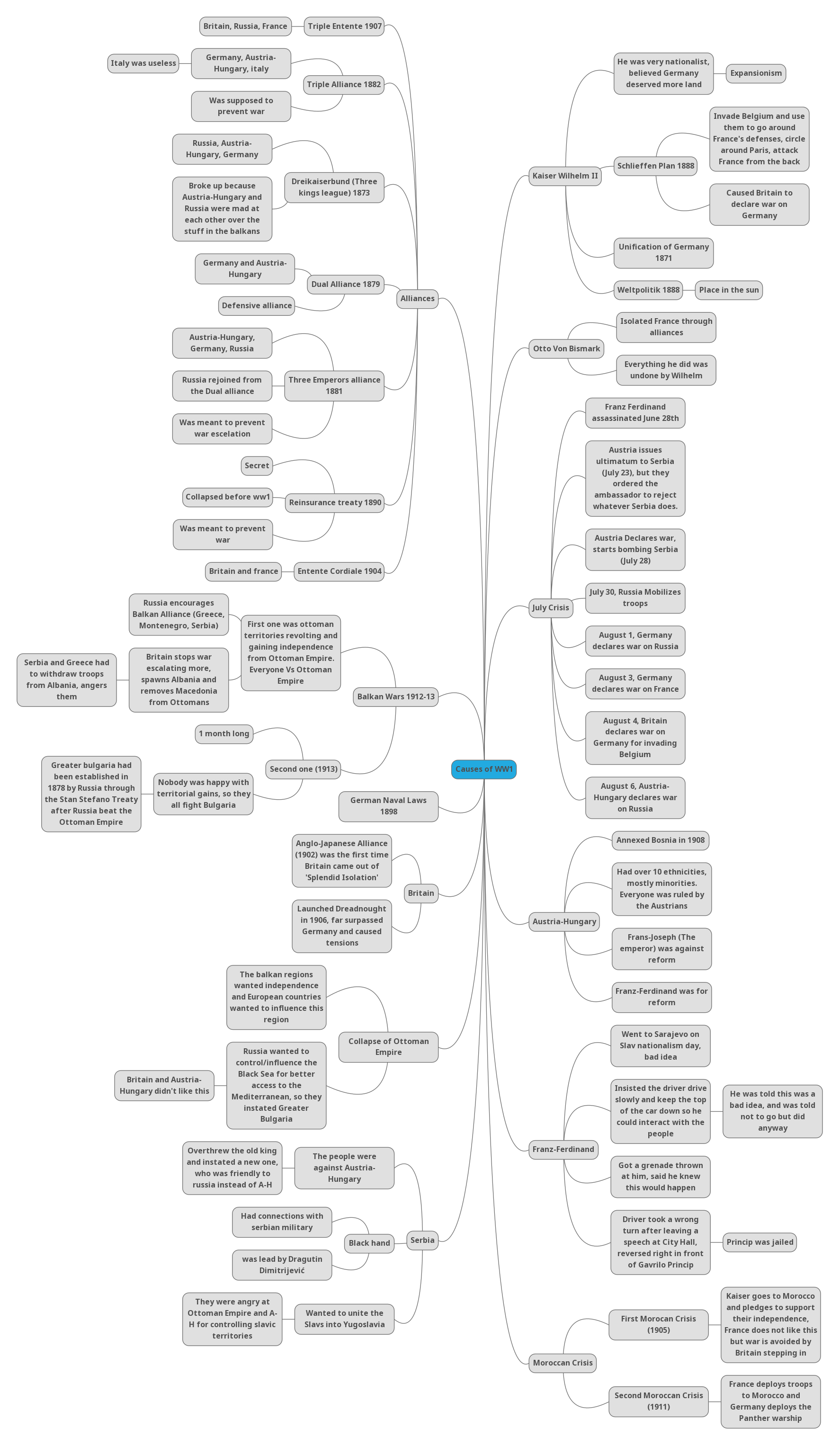
July Crisis Timeline - 1914
28 June
Assassination of Franz Ferdinand and his wife in Sarajevo
Angers Franz Joseph, uncle of Franz Ferdinand, Emperor of Austria, and King of Hungary
5-6 July
Austro-Hungarian envoy Count Hoyos goes to Germany
Makes sure Wilhelm II will support them
Germany issues “Blank Check” - Unconditional support of Austria-Hungary (‘Blank Cheque’ in British English)
7 July
Austria-Hungary creates an intentionally absurd ultimatum for Serbia, expecting they wont meet it so they can declare war
23 July
Austria sends ultimatum to Serbia
They give Serbia 48 hours to meet demands or face war
25 July
Serbia replies, meeting almost all demands, which is surprising
Austria-Hungary still breaks relations with Serbia
26 July
Britain proposes mediation, this is ignored
28 July
Austria-Hungary declares war on Serbia, officially starting the war
Wilhelm II proposes “Halt in Belgrade” as to not decimate Serbia too much
This was an attempt to restrain Austria-Hungary
Austria-Hungary begins bombing Serbia
29-30 July
German Chancellor Theobald von Bethmann Hollweg attempts to restrain Austria-Hungary, despite having encouraged action on July 5th and being part of issuing the “Blank Check”
This attempt is ignored
Willy-Nicky Telegrams begin, Wilhelm and Tsar Nicholas of Russia try to stop all-out war
Russia begs Germany to halt Austria-Hungary to prevent war
Germany refuses
Russia proposes mediation
Germany ignores this
Russia mobilizes and Germany declares war
30 July
Russia begins mobilization
1 August
Germany declares war on Russia to protect Austria-Hungary
France and Germany begin mobilization
2 August
Germany invades Luxembourg as part of the Schlieffen Plan (See plans section)
Germany issues ultimatum to Belgium
British cabinet approves protection of French coast and Belgium’s neutrality
3 August
Germany invades Belgium and declares war on France
Italy announces neutrality
4 August
Britain declares war on Germany for invading Belgium
6 August
Austria-Hungary declares war on Russia
Responsibility for War
Germany
Arguing guilt
Introduced Weltpolitik
Increased defense spending
Much nationalism
Issued “Blank Check” to Austria-Hungary in 1914, pledged unconditional support
Urged Austria-Hungary to attack Serbia
Created and executed Schlieffen Plan to invade France and Belgium, brought Britain into the war
Escalated the disagreement between Austria-Hungary and Serbia by declaring war on Russia, Belgium, and France
Wilhelm II said directly that he did this
War would have united the German people
Chancellor said war is better now than in one or two years
Arguing innocence
Had somewhat improved relations with Britain
Wilhelm changed his mind, sent “Willy-Nicky” telegrams to Tsar Nicholas II of Russia to attempt to stop the war, it was too late
Did not go to war for world power, they believed they were being encircled
Not prepared for war in 1914
Russia
Arguing guilt
Maintained terrible relations with Germany and Austria-Hungary
Imperialist ambitions in Mediterranean and Balkans
Increased ambitions in Balkans
Increased defense spending
Hadn’t tried to contain Serb nationalism, though it was causing Balkan instability
Supported Serbia, which worsened the conflict
Their mobilization caused Germany to declare war
Military had convinced civilian leaders that army was stronger than it was, but realistically it wouldn’t be ready until 1917
Arguing innocence
Not ready for war in 1918
Only wanted to protect Serbia
Reacted to events, didn’t provoke them
Serbia
Arguing guilt
Ambitions to take over Bosnia and create Yugoslavia
Black Hand had some connections to military and government
Arguing innocence
Mostly met Austria-Hungary’s demands in the ultimatum
Austria-Hungary
Arguing guilt
Expansionist policy in the Balkans
Humiliated Russia in 1908 through the Bosnian crisis
Eager to keep Serbia weak, exaggerated their potential threat, and were determined to go to war with Serbia
Delayed response to the assassination, which allowed the July crisis to unfold the way it did
Gave Serbia a harsh and unfair ultimatum, made it purposely absurd so they could declare war
Declared war even though Serbia met most terms of the ultimatum
Literally started the war by invading Serbia
Sought German support to punish Serbia and didn’t consider the potential consequences
Did not attempt to fix relations with Russia
Refused to halt military operation, though there was a mediation scheduled for July 30
Arguing innocence
There was genuine danger to Austro-Hungarian land in the Balkans
Not prepared for war in 1914
Assassination was a good reason to be mad at Serbia
They had hoped Germany would prevent Russia from joining the conflict
France
Arguing guilt
Still angry about losing the Franco-Prussian war and Alcase-Lorraine in 1871
Assertive policy after 1911
Supported Russia through assurances before July Crisis
Increased defense spending
Arguing innocence
Was uninterested in the Balkans
Not ready for war in military and diplomatic relations
Asked Russia to be cautious
Russia mobilized without confronting France
Reluctant to go to war even after Germany declared war on Russia
Much internal opposition to war
Reacted to events instead of provoking them
Tried not to go to war, but was swept into it
Britain
Arguing guilt
Increased military and navy spending
Unclear position during July Crisis
If they had told Germany that they supported France, Germany might not have declared war
Britain changed war from continental to world war by dragging colonies in too
Arguing innocence
Didn’t really do anything wrong, just wanted to protect Belgium
Only joined when their one term (don’t attack Belgium) was broken
Tried to solve things with diplomacy, was ignored
Stopped war multiple times through mediation
Alliances
Triple Alliance / Central Powers
Germany
Austria-Hungary
Italy (Didn’t do anything, left in 1915)
Ottoman Empire
Bulgaria - 1915
Bismarck System of Alliances
Wilhelm II let alliances fall through
Tried to ally with Russia and Austria-Hungary at the same time
Did not work due to ambitions in the Balkans
Aimed to keep France isolated
3 Emperors league
1873-1887
Dreikaiserbund
Germany, Russia, Austria-Hungary
Fell through due to Balkan issues
Isolate France, stabilize Austria-Hungary and the Balkans
Dual Alliance
1878
Germany & Austria-Hungary
Defensive alliance
Replaced by the 3 emperors alliance, but persisted until the collapse of Austria-Hungary
Russia felt threatened
Triple Alliance
Germany, Austria-Hungary, Italy
Defensive treaty, which is why Italy didn’t join the war at first
Aimed to keep power
1882-1914
Reinsurance Treaty
1887-1890
Germany & Russia
Aimed to prevent war on the Germany-Russia front, since Tree Emperor’s League had fallen
Collapsed before World War One, Wilhelm let it die, this was a strategic mistake
Secret treaty
Triple Entente / Allies
France
Britain
And colonies
Russia - Until 1917
Japan
Serbia - 1914
Luxembourg - 1914
Montenegro - 1914
Italy - 1915
Romania - 1916
Portugal - 1916
USA - 1917
Entente Alliances
Franco-Russian Alliance
1894-1917
Defend against Germany
Response to Triple Alliance
Entente Cordiale
Britain & France
Started in 1904, still in effect today
Not defensive or offensive, just to improve relations
Led the way to the Triple Entente
Anglo-Russian Alliance
1907
Settled colonial disputes in Asia
Improved Anglo-Russian relations
Triple Entente
Britain, France, & Russia
Contained Germany
1907-1917
Rebalanced the power
The Entente did not require states to join any potential conflict
Did alliances contribute to the start of World War One?
Yes
The existence of alliances created rivalries between countries
The Triple Entente did foster insecurity within Germany since it added to fears about vulnerability as they were encircled by France and Russia
As Germany was now encircled, they were keen on launching an attack first to prevent their enemy from exploiting this weakness
No
The manner at which each country entered the war did not follow the alliances
France did not declare war on Germany though Germany had declared war on France’s ally Russia
Austria-Hungary did not declare war on Britain or France even though they had declared war on Germany
Italy did not join the war in 1914 though they were allied with Germany and Austria-Hungary
The result of each country being at war despite not following alliances shows they were more focused on their own self-interests rather than the political connections
Actors weren’t exactly pulled into war, as the main alliances did not commit the signatories to military action for any event
Political Actors
Kaiser Wilhelm II
Bad strategic decisions
Comes to throne in 1888, forces Bismarck to resign in 1890
Related to Tsar Nicholas II of Russia and George V of the United Kingdom
Spent a lot of time in the UK
Destroyed the France-Isolating systems Bismarck had created
Starts a colonial rivalry
Helped Germany to industrialize
Tried to start external conflicts to distract German population away from internal conflicts
David Lloyd-George
Prime minister of Britain between 1916 and 1922
Led Britain in the Treaty of Versailles and the Paris Peace Treaties
Woodrow Wilson
President of the USA between 1913 and 1921
Famous 14-point speech
End war, allow self-determination (but only within Central Powers countries)
Suggested and fought for the creation of the League of Nations
Led post-war peace talks
Serbia
Black Hand killed Ferdinand
Mild connections to military and government
Led by Dragutin Dimitrijevic, a Serbian army officer
Gavrilo Princip was the assassin
King Alexander I
Killed in May Coup in June 1903
Was Austria-Hungary friendly
Replaced by King Peter I, a Russian-friendly guy
Wanted to make a unified Balkan Slav State (Yugoslavia)
Generally caused tensions due to hatred of Austria-Hungary
Erich Ludendorff
German military officer
Contributed to Nazi rise to power (Unimportant in this case)
Contributed to victories at Liege and Tannenberg in 1914
Appointed first quartermaster general of army general staff in 1916
Became chief policymaker of the de facto government of Germany between 1916 and Germany’s defeat
Was very mentally unstable, allegedly had a nervous breakdown due to losses in the west at Marne
Afterwards, he finally accepted the war was lost
Chancellor Bethmann Hollweg told the cabinet that Ludendorff is only good when things are going well, he loses his nerves if things go wrong
Was generally a good leader, made significant progress in the east but was outnumbered and outgunned in the west
Tsar Nicholas II
Family man
Didn’t want to rule Russia
Somewhat clumsy policy - Led to his downfall
Lost support during war
Lost the Russo-Japanese war
Herbert Henry Asquith
Prime Minister of Britain between 1908 and 1916
Georges Clemenceau
Prime Minister of France between 1917 and 1920
Led France in the Paris Peace Treaties
Wanted protection against Germany
Wanted Alcase-Lorraine back
Franz Joseph I
Emperor of Austria
King of Hungary
Died in 1916 before the war ended
Very reactionary & conservative
Desperate to keep empire alive
Blamed Serbia for Franz-Ferdinand’s death
Black Hand
Serbian secret military society
Run by Dragutin Dimitrijevic
Formed by Serbian military officers
Responsible for May Coup (The leader was, but the group hadn’t formed yet)
Founded in May 1911
Responsible for assassination of Archduke Franz Ferdinand
Paul von Hindenburg
German military officer
Led the Imperial German Army
President of Germany from 1925-1934
Was retired when war broke out, but was selected to lead the army due to military purges
Worked closely with Ludendorff, contributed to same victories
Successful duo
Assembled almost 700,000 more men and supplied them with light machine guns
Led negotiations in Brest-Litovsk
Blamed the hunger and strikes on poor organization and transportation
Didn’t realize the government could have fed everyone if the people had farmed more efficiently, farmers were following government policy
Aggressive offensive tactics
World War One
Mobilization
Military Manpower
Everyone (Except Britain) had large standing armies
Germany mobilized 1.5 million troops
Very fast and very efficiently
Germany was ready for Schlieffen plan within days of mobilization
Entente had numerical advantage
Everyone needed more troops throughout the war
Russia drew from huge population
British empire provided over 2.6 million troops to British war effort
American troops from 1917, over 4 million total
Germany’s Ludendorff Offensive in 1918 failed due to lack of troops, which meant they were outnumbered
Conscription
“The Draft”
Every country involved did it at some point
Britain tried to avoid it, but had to from January 1916
Flow of volunteers stopped
Economic Mobilization
Most countries faced munitions shortages
British May 1915 “Shell scandal”
Shortages in shells were blamed for failure of breakthrough on Western Front
Shortage of 12% of rifles and 92% of high explosive shells
Production was rapidly increased
France increased shell production
400 a day in October 1914 to 151,000 per day in June 1916
Machine gun production increased
Increased in Britain and Germany, but faster in Britain
Germany was lacking raw materials to make guns rapidly
Resources
USA’s entry provided Allies with more resources such as raw materials and war supplies
Russia was less industrialized
Struggled to produce enough weapons for the large army
70,000 rifles per month in 1915, needed 200,000
By September 1916, 4.5 million shells were produced per month
For comparison, Germany made 7 million per month and Austria-Hungary made 1 million per month
Greater government control over production
Most governments created departments that oversaw production
Gave priority to war industries
Ensured efficient management
Management in Russia was poor
War ministry failed to co-ordinate supply distribution
Serious munitions shortages by 1915
Established the War Industries Committee, which increased munitions production and improved the situation
Rifle production increased by 40,000 per month between 1915 and 1916 (70,000-110,000)
Russia failed to give troops supplies, food, guns, etc. (generally had a shortage of everyone)
The workforce
Most countries increased workforce to increase supply production
Hired women to replace men who went off to war
Britain’s workforce was 23% women in 1914, but rose to 34% by 1918
France’s workforce was 33.8% women in 1911, but rose to 40% by 1918
Austria-Hungary - 17.5% in 1914 to 42.5% in 1916
Germany - 55% of the workforce by 1918
Some constraints for conscripting men in the workforce were implemented
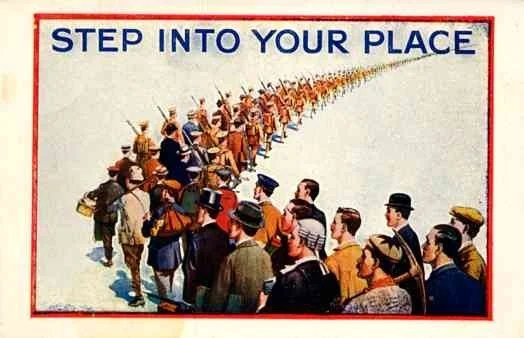
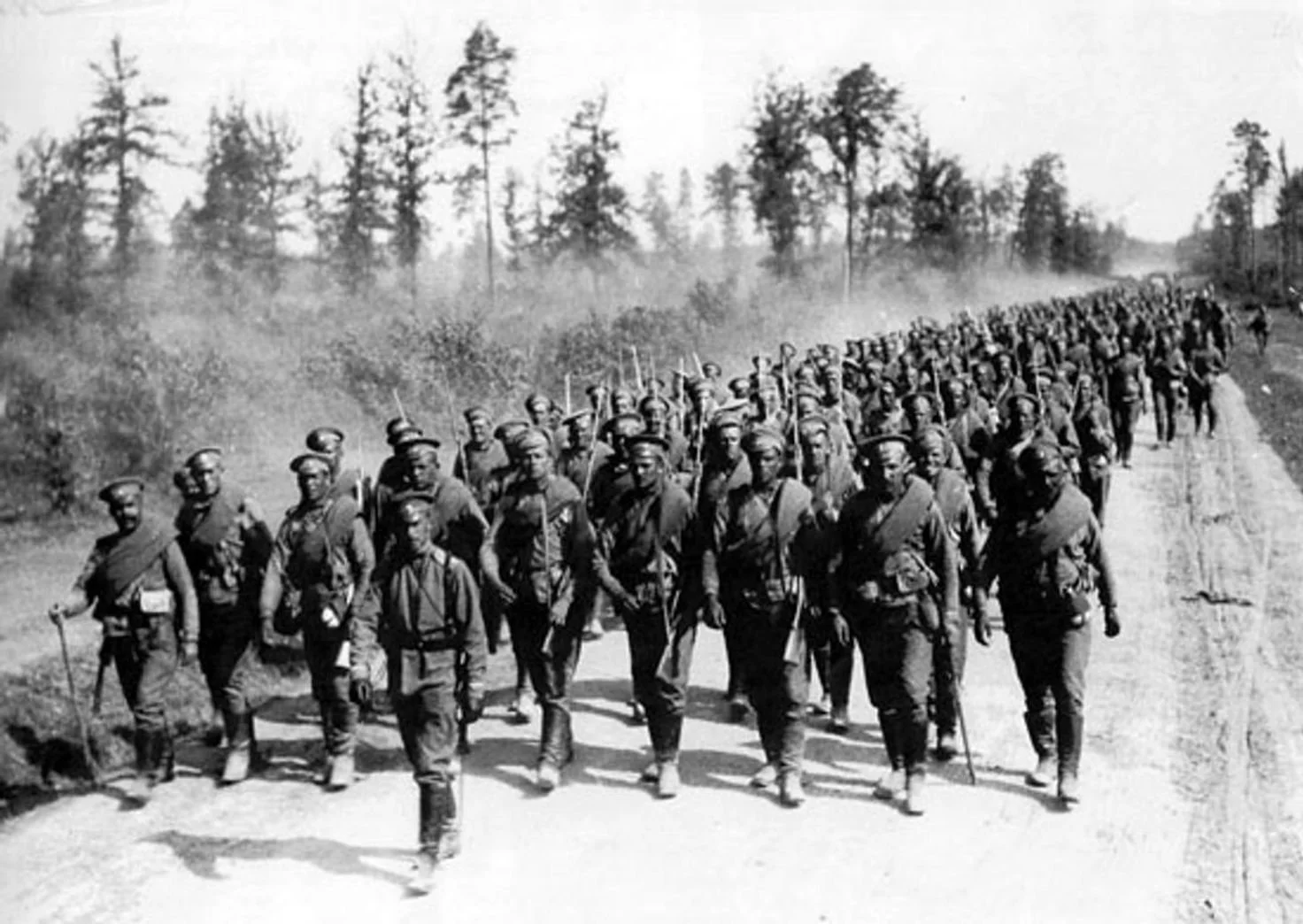
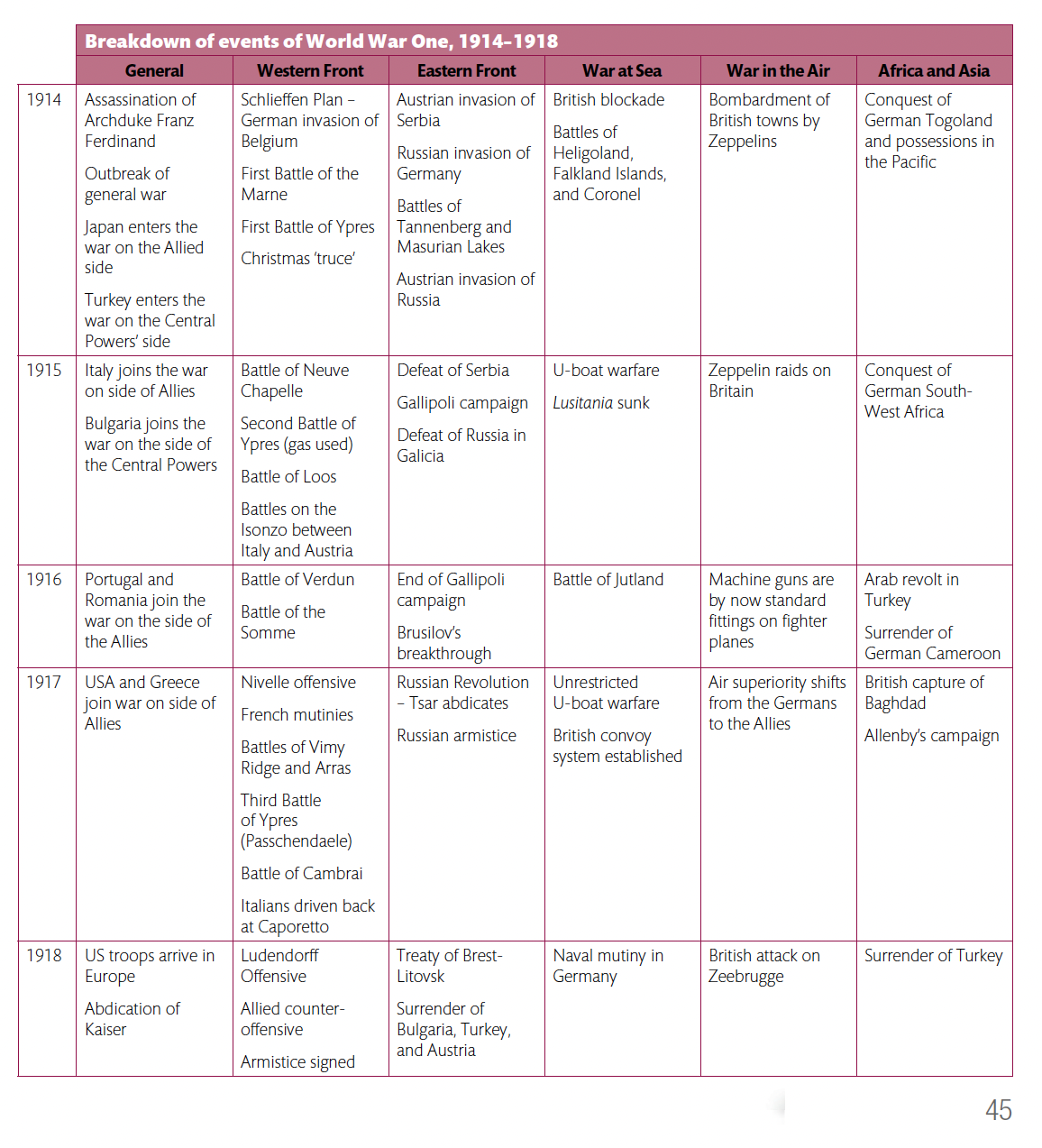
Attack / Defense Plans
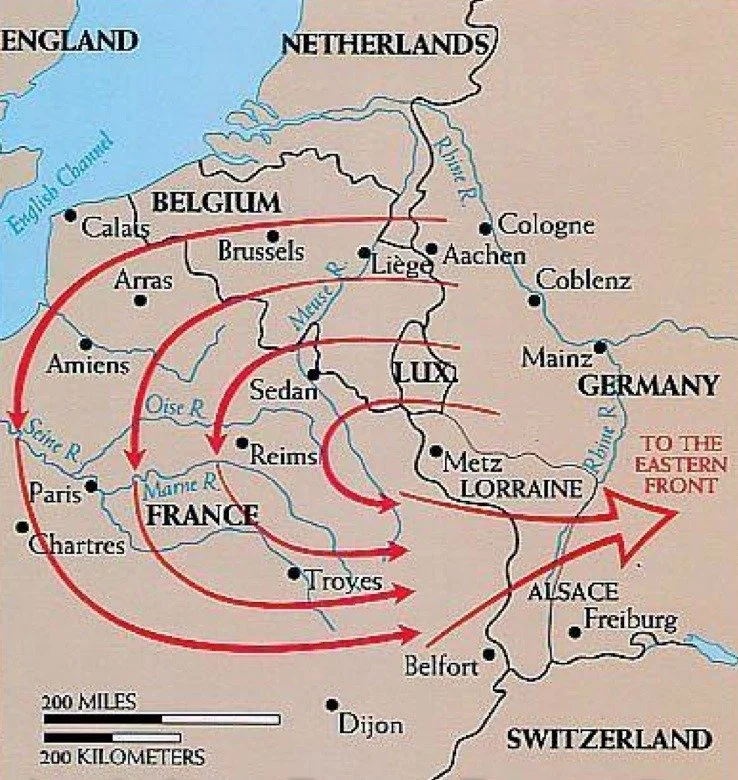
Schlieffen Plan
Created in 1905, executed 1914 (See July Crisis)
Attack France through Belgium & Luxembourg, take Paris quickly, turn around and attack French frontlines along border with Germany from behind
After France, attack Russia
This assumes that France would be quick and easy, this turned out to be the problem
Belgian resistance was unexpectedly strong, took more than 2 weeks to capture Brussels
This gave time for the French to come in and halt the advance
Brought Britain into the war
Delay in Belgium gave Britain time to organize
Troops going to Paris were weakened by some forces being sent east to Russia & lack of supply
Russia had mobilized faster than expected
Failed to execute the plan correctly
Troops went south two quickly, approached Paris from the east instead of the west
France moved troops quickly
Moved reservists from Paris to Marne in taxis - ‘the taxis of the Marne’
German troops were exhausted and halted at Marne, marked failure of the Schlieffen Plan
Land
Trenches
When creating a frontline, each side would dig ditches (trenches) across the frontline to protect soldiers
Mainly made for defense
Created “no-man’s land” in the middle, which was destroyed land due to shelling & barbed wire, this was difficult and dangerous to pass
Neither side would attack, resulting in a stalemate
Fear of artillery & gun fire
Stalemates could last for very long times
Creeping Barrage
Used advanced artillery
Widely used during the war
First used by Bulgaria in 1913
Artillery fires from behind, hitting right in front of the troops and shoots slightly further each time, troops follow behind the screen of explosions
Bypassed trench warfare
Mines
Landmines are explosives that detonate when stepped on
Landmines placed in no-man’s land in front of an enemy advance
Made walking on ground dangerous
Destroyed enemy troops, created breach in frontlines
Sometimes didn’t detonate at all
Places like France, Belgium and Bosnia were heavily mined
These places are still very dangerous today due to the high amount of mines present - Long-term effect of war
Plan 19
Russian war plan
Assumed Germany would start a war by invading France first
Created 1910, revised 1912
Russia would advance into East Prussia and Silesia and move towards central Germany
France insisted Russia make a better plan, Russia refused
German attacks were unexpectedly strong
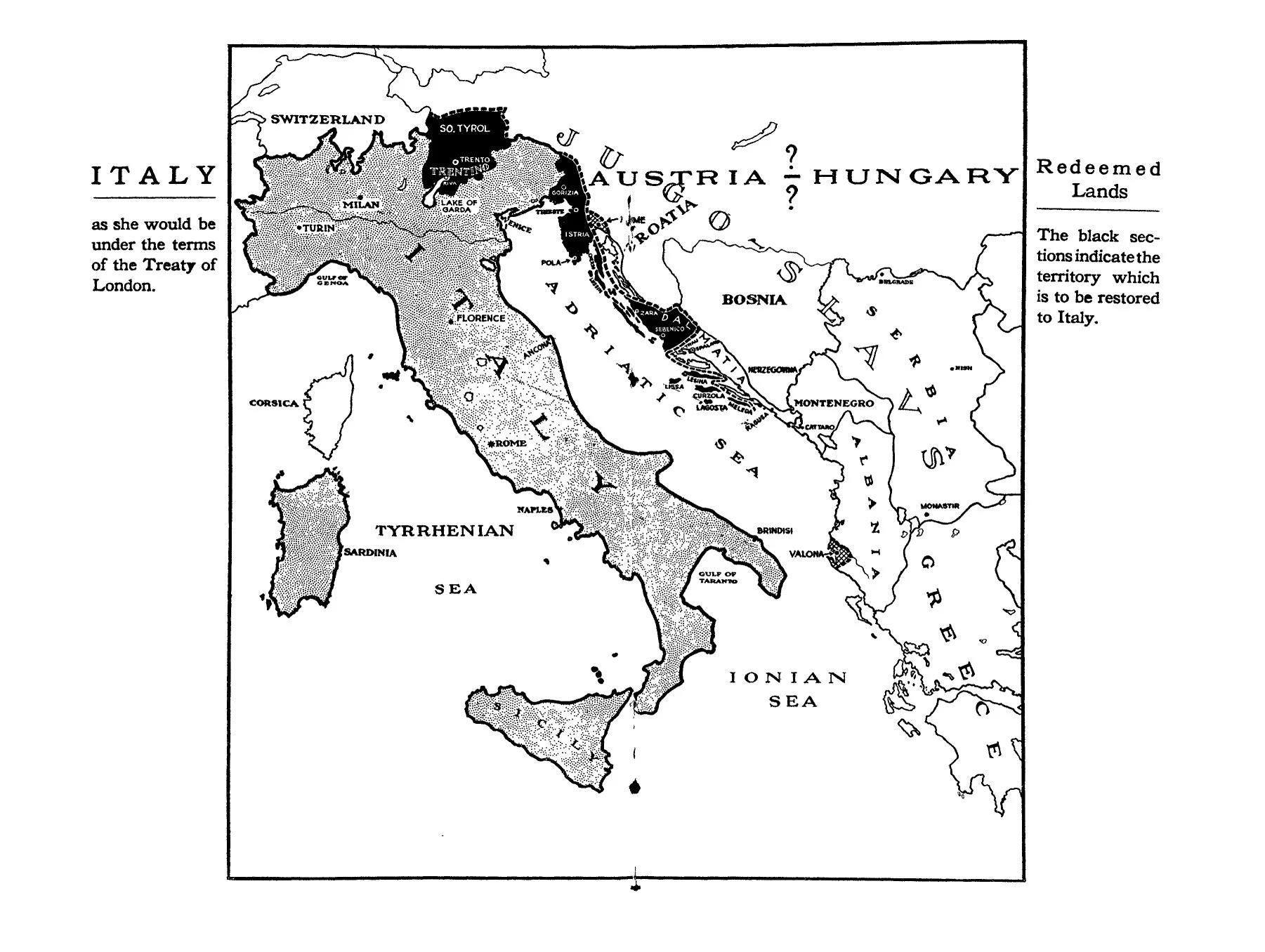
1915 - Treaty of London (Russia, Italy, Britain, & France) brought Italy into the war on the Allies side in return for some land on the Adriatic, which they never got
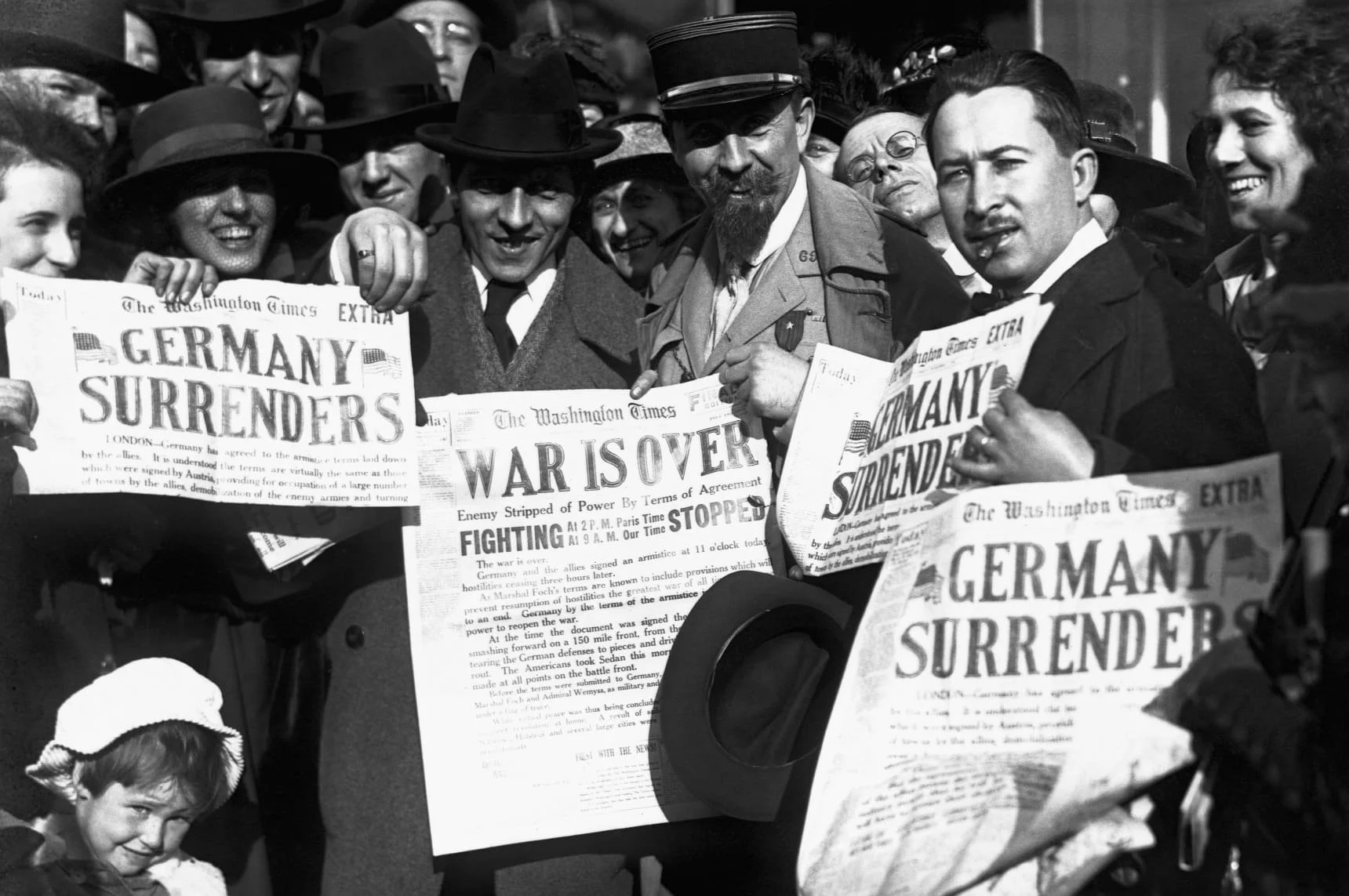
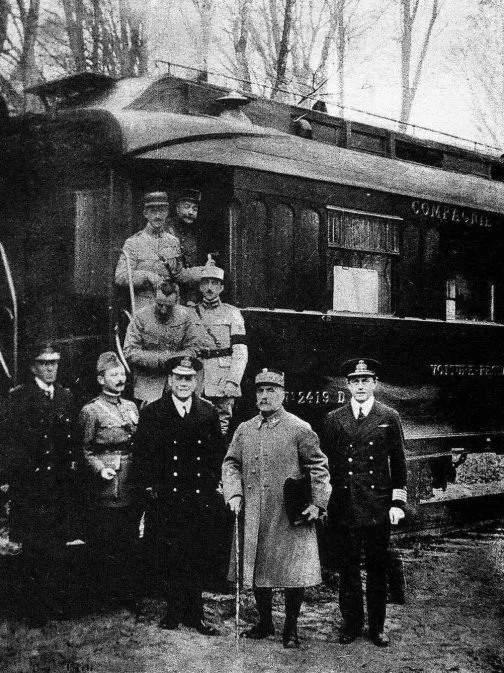
The armistice was signed between the Allies and the last remaining member of the Central Powers; Germany. The armistice took effect and fighting stopped on the 11th hour of the 11th day of the 11th month, or 11:00 on November 11. What followed were the Paris Peace Treaties (See ‘Effects of War’)
The land Italy was promised:
Notable Battles
First Battle of the Marne
5-12 Sep 1914
Invasion of France
Germans made it to the Marne river, 40km from Paris, before being pushed back
A total of over 500,000 casualties
Battle of Loos
25 Sep - 8 Oct, 1915
First British use of gas
Biggest British attack of 1915
British attack failed
~85,000 casualties
Battle of the Somme
15 Sep 1916
First use of tanks
Used by the British
Unreliable
Soon countered by artillery and bombs
Could roll over barbed wire and ignore gunfire in no-mans land
Over 1 million casualties
Nivelle Offensive
16 April - 9 May 1917
Franco-British operation
Plan failed, caused French mutinies
~355,000 Casualties
First Battle of Ypres
Ypres, Belgium
19 Oct - 22 Nov, 1914
>200,000 Casualties
Battles of the Isonzo
12 Battles between Italy and Austria-Hungary
23 June 1915 - 7 November 1917
>1.4 million casualties total
No land gains were made
Battle of Arras
9 April - 16 May 1917
Battle of Vimy Ridge is part of the Battle of Arras
Stalemate with many dead
285,000 Casualties
Ludendorff Offensive
21 Mar - 18 Jul 1917
4 German offensives
Germans made significant territorial gains but lost manpower, supplies, and morale
Largest single gain since 1914
>1.5 million casualties
Second Battle of Ypres
April 22, 1915
First use of gas
Used by German troops
Quickly adapted by the Allies
Gas masks first distributed to Allied troops on December 6, 1916
Chlorine gas
~100,000 Casualties
Battle of Verdun
28 Feb to 18 Dec 1916
Longest single battle in the war
Western front
“Bleed them white” - General Erich von Falkenhayn
>700,000 Casualties
Third battle of Ypres
Also known as the Battle of Passchendaele
31 Jul - 10 Nov 1917
Allied offensive
Allies achieved their goals, but it was difficult and controversial
Many losses, few strategic gains
460,000-850,000 Casualties
Russia
Food shortages in cities caused massive inflation
Average price of food rose by 89% between 1914-16
Price of meat rose by 232%
Salt rose by 483%
Lack of food in urban areas
Result of bad and disorganized transportation
Peasants were producing less food throughout the war
Peasants had little incentive to sell products since the return was increasingly worthless
Paper money’s value went down
Hunger was a major cause of the 1917 revolution
Britain
Imported approx. 40% of its food, plus other materials such as rubber and oil
Vulnerable to Germany’s submarine warfare
Reluctant to do major rationing
Wanted to farm more food
Farmed an additional 2.1 million acres of land by 1918
Increased food import from the USA
Had to establish rationing by 1918
Beef & sugar
Government controlled food prices
Encouraged people to go without certain foods
Ottoman Empire
Refugees crowded Istanbul and other cities, causing food shortages
France
Suffered less due to large food production and US imports
Fronts & Theaters
Western Front
Opened by the Germans through the invasion of Belgium and Luxembourg
Invasion halted by the Battle of the Marne
This is where most of the fighting happened
This is where new technologies were introduced
Mainly Germany vs France, Britain, and the USA
A total of >14 million casualties
Including 1 million civilian casualties
Middle Eastern Theater
Ottomans vs British and their dominions
Many fighting on the side of the Allies were the people oppressed by the Ottoman Empire who desired an independent state
Significant gains against the Ottoman Empire
Total of 7 million dead, most of which were civilians
4.775 million dead civilians
Asia & Pacific Theater
Conquering of German Asian & Pacific holdings (Mainly German New Guinea)
Other German and Austro-Hungarian holdings fell without fighting
Naval warfare was common
Ottoman supported rebellion in British Malaya
Russian Turkestan revolt in 1916
Japan, Britain, Russia, China, USA, and Siam (Thailand) vs Germany, Austria-Hungary, and the Ottoman Empire
Allied victory
Deaths unclear
General Information
Most nations suffered food shortages during the war
Millions of farmers were conscripted
Poor transportation of food
Less fertile soil
Weather
Blockades
Austria-Hungary
Transport system was disorganized & inadequate
Rationing in cities
Riots by 1918
Stole food from ships going down the Danube to Germany, this angered Germany
Germany
Imported about 30% of its food before the war, plus other materials
Britain’s naval blockade meant Germany had to produce more food domestically or face starvation of food and materials
By December 1915, Germany’s imports had halved what they were in 1913
Attempted to make meat substitutions with flour, grain, and mushrooms
Ersatz food was substitutes of common items such as bread, coffee, bread, tea, and butter
Ordered the slaughter of millions of pigs to save on grain
Caused amount of protein available long-term to decrease
Removed manure production, which could have been used as fertilizer
Less food available long-term
Lack of food led to riots and strikes in German cities
Caused revolt in 1918 that established a new government
United States
Was able to feed its civilians and military perfectly fine
Also supplied enormous quantities of food to Britain, France, and Italy
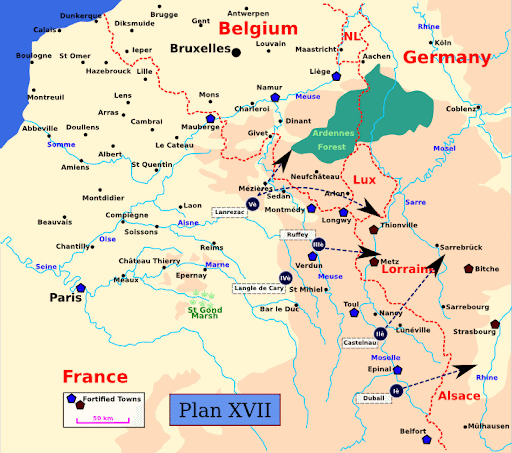
Plan XVII
French mobilization plan
Developed from 1912-1914
To be used in the event of a war between France & Germany
To invade Germany (or Belgium, or both) before Germany could mobilize
Expected Russian offensive against Germany in the east
Implemented plan from 7 august 1914, had disastrous consequences
Defeat in Battle of Frontiers (7 August - 13 September)
329,000 Casualties
Retreated to Marne river, defeated Germans there
Started the ‘Race for the Sea’ which created the long eastern frontline
Circumvent German forts, attack into Alcase-Lorraine
Or attack through Belgium into Germany
Failed with the Battle of Fronteirs
France wasn’t ready for Germany’s declaration of war, couldn’t implement the plan quickly or effectively enough
Plans B and R
Austro-Hungarian war plan
Assumed war would be limited to Serbia only
Plan B (Balkans)
3 divisions would invade Serbia
3 more divisions on the Russian border
Plan R (Russia)
Revised Plan B
More troops to guard against Russia
Deployed 4 armies against Russia and 2 against Serbia
Assumed German defense in the north, this didn’t happen because Germany committed more troops to the Schlieffen Plan in the west
Hungarian Prime Minister Istvan Tisza foresaw war, warned other members of the Crown Council, was ignored
Prepared for war in Early July
Other countries
Britain had no plan
Belgium had no plan
USA planned to not join
Practices of War
Air
Intelligence
Planes flew over enemy positions
Got exact coordinates of enemies
Gave information to the people manning the artillery, who fired on those coordinates
Dogfighting
Airplanes, which were now fitted with machine guns, would fight each other midair
This happened from enemies trying to intercept intelligence missions
Air superiority was finally important
Planes could do ground support, dogfighting was the result of interception
Sea
Naval Blockades
Most used by the British to cut off German supply
Boast patrolled major choke points (Thin stretches of sea between land), and intercepted any ships travelling to Germany with supplies
Major choke points included the North Sea and the English Channel
Submarine warfare
Famously used by Germany
U-Boat warfare
“Unrestricted U-Boat warfare” - Sink any ship that could be going to the Allies
Resulted in the sinking of the RMS Lusitania, this angered the USA
Years of War
Eastern Front
Germany, Austria-Hungary, Bulgaria, & Ottomans vs Russia and Romania
Opened by Russian invasion of Germany
Central Powers won this front
A total of 14.5 - 18.1 million deaths
Including 2 million civilian casualties, mainly in Russia
African Theater
Conquering of German African holdings (Togoland, German Southwest Africa, Cameroon, German East Africa)
Germans vs British, French, Italians, and Portuguese
Allied victory
Unclear number of deaths - millions of civilians dead due to fighting & disease
Food Shortages
Land
Paris gun
Long-range siege artillery gun built by the Germans
Largest gun in the entire war
Maximum range of 130km
Parisians believed they were being bombed by zeppelins because the front was far away, but it was just artillery fire
7 built, all destroyed by allied offensives
Gas
First used in Second Battle of Ypres
Didn’t cause as many deaths as other weapons
Caused excruciating and painful deaths
Choking & organ failure
Very scary to soldiers
Quickly countered by gas masks
Masks only effective if soldiers put them on quick enough
Weakness was a lack of control
If wind changed, the gas could move towards the troops who deployed it
Originally released from canisters, but eventually launched in artillery shells to enemy trenches
Tanks
First used in the Battle of the Somme
Could resist gunfire and roll over barbed wire
Effective in getting through no-man’s land
Typically had cannons that could decimate frontlines
Countered by artillery and other explosives
countered by uneven ground
Pits were common in no-man’s land due to artillery fire
Frequently broke down
Speed: 7-8km/h
Range: 60-90km
Artillery
Artillery technology wasn’t new, but advanced throughout the war
Became more precise and deadly
Made counter attacks & attacks more deadly
Sweeping barrage
Machine guns
Also not new, but became more widely used
Could gun down rows of soldiers easily
Singular soldiers still typically used bolt-action rifles
Anti-Aircraft guns
Used to take down enemy aircraft
Protect friendly aircraft from the ground
Could be used against high-altitude balloons or low-flying planes
Armored Cars
Used for support and transport
Most countries used armored cars
More useful in developed areas, as they weren’t good offroad
Good replacement for cavalry
Some cars, like the Rolls Royce Armored Car, had machine guns installed
Air
Zeppelins
Mainly used by the German air force
High-flying aircraft that could drop bombs on targets such as London, then ascend quickly to avoid enemy aircraft & guns
Effective in air raids
Germans had hydrogen (USA refused to sell them helium), making them highly explosive and prone to explosion
Countered by flaming or explosive bullets
Britain developed plains that could ascend quickly, reach high altitudes, and fire explosive/flaming bullets, this was an effective counter to zeppelins
They were often inaccurate, could not target bomb specific places
Sustained high losses
First use of strategic bombing
Airplanes
Developed quickly throughout the war
First used to gain intelligence on enemy positions
Soon fitted with machine guns
Fighter pilots seen as heroes
First used by Germans in Battle of the Mons, causing British to withdraw
Later used by Allies in Battle of the Marne to find weak points in German positions
Countered by anti-aircraft heavy guns
Speed: 140-220km/h
Britain’s planes went 77km/h
Rate of climb: 2-5m/s
Barrage Balloons
Steel cable nets flown by airships at an altitude of 4500 meters, this was the max altitude for bomber planes
Spanned large distances, hung very low close to the ground
Meant to catch and destroy bombers
Usually had explosives attached to the cable to destroy bombers more effectively
Reduced the number of and destructive power of bomber raids on London
Weak in the amount of resources they used, steel nets were huge
Kite Balloons
Basically small zeppelins filled with hydrogen
Used for reconnaissance
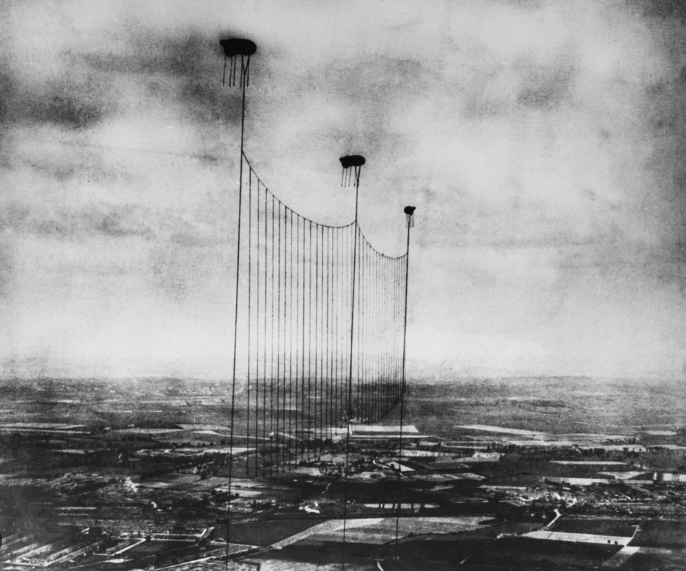
Barrage Balloons protecting London
Sea
U-Boats
German submarines, made larger and more dangerous with torpedoes during the war
Made to sink Allied blockades & transport convoys
“Unrestricted Submarine Warfare” - Sunk any ship suspected to be related to the Allies
Unrestricted Submarine Warfare ended in 1915 after sinking of RMS Lusitania
Threatened bringing the USA into the war
Resumed in 1917 in an attempt to cut Allies off from supplies & break the blockade
Ships built to counter U-Boats
Warships
Ships like destroyers and battleships already existed, but grew rapidly in speed, strength, and size
Allowed raiding missions and blockades to be more effective
Aircraft carrier
Had already existed beforehand, but had only carried reconnaissance balloons
During the war, developed into seaplane carriers
First successful carrier raid was done by Japan in 1914 to bombard German forces
First flat-deck carriers developed by the British in 1914 and 1915
Not widely used as these carriers were slow, inefficient, difficult to build, and too new
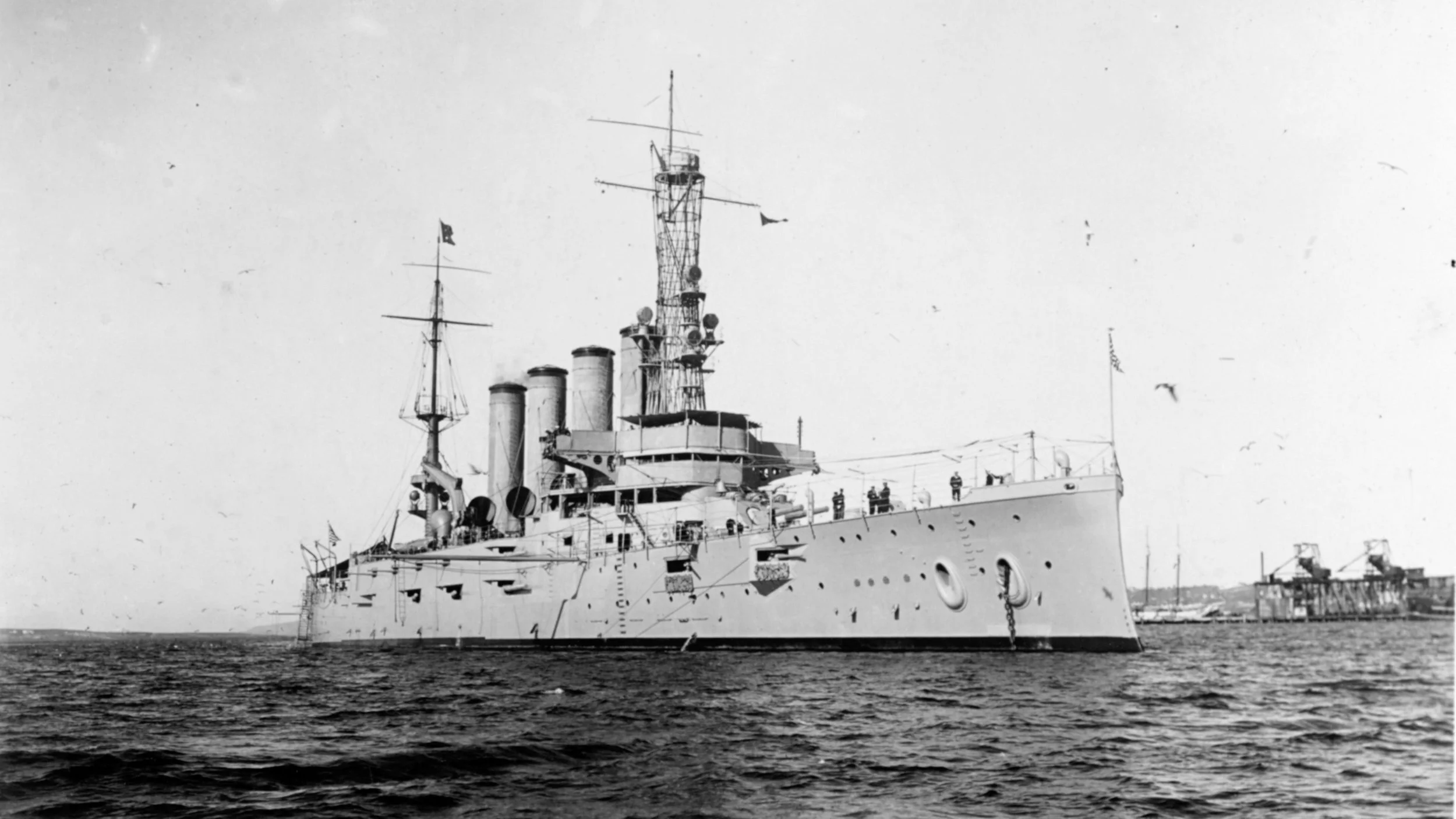
A US Warship used during the war
War Technologies
Entry and Role of the USA
Entry
Sinking of the RMS Lusitania (1915) had already angered USA and the people (It killed 123 Americans)
Events leading up to American joining
USA was angered that their ships were being sunk by Unrestricted Submarine Warfare
Germany had sunk an unarmed French boat in 1916, and then the United States had threatened to cut diplomatic relations with the Germans unless they refrained from attacking all passenger ships and allowed the evacuation of merchant vessels before they were attacked. Germany accepted these terms
Germany had pledged to stop Unrestricted Submarine Warfare
The German Navy then convinced Kaiser Wilhelm that they needed to resume Unrestricted Submarine Warfare in order to win, and that doing so would help defeat the British within 5 months
Chancellor Theobald von Bethmann-Hollweg was against this, as he thought it would bring the Americans into the war on the Allies’ side and that this would cause Germany’s defeat
Germany resumed Unrestricted Submarine Warfare, and Woodrow Wilson severed relations but didn’t ask Congress for a declaration of war
Germany sunk multiple American ships, killing American citizens
As Congress couldn’t agree, Wilson implemented an executive order to arm all merchant ships with US Navy equipment
The British intercepted the Zimmerman Telegram as it was sent to Mexico. Germany had promised Mexico to help them recover territory they had lost following the Mexican-American war in return for Mexican support in the war - January 19 1917
Britain shared the telegram with the Americans in February
Wilson held a Cabinet meeting in March to discuss this
Why the Americans went to war
The exact reasons Woodrow Wilson decided to go to war are debated
The Zimmerman Telegram and threat of attack swayed public opinion in favor of war
Technically under international law, the US placing naval officers on civilian ships was already an act of war against Germany
The threats against the USA and the actions Germany had done against them persuaded Congress to declare war on April 6, 1917
Wilson was reluctant to go to war alongside an absolute monarchy, Russia, but the revolution in 1917 eased his concerns
Woodrow Wilson felt forced to go to war
Troops didn’t arrive until 1918
Role
Washington had not planned any mobilization as they were reluctant to even consider going to war, which meant it took a year to mobilize
Had a home force of 50,000 to 1 million employees in agencies managing the war economy, such as production and food
Food
Herbert Hoover’s United States Food Administration launched a campaign to teach Americans to modify their food budgets and encouraged them to grow food in their backyards, called ‘Victory gardens’
Finances
The United States was not prepared for the economic strains of war
Cost for the USA was $33 billion
Increased income tax to pay for it
Anyone who made more than $2000/year would pay 2% income tax in 1917, then 12% in 1918
Taxed the excess profits of businesses
Taxes on the purchases of cars, jewelry, cameras, and motorboats
War bonds - Propaganda efforts encouraged Americans to buy war bonds, which were essentially just loans, $21 billion in bonds were sold
Made $10 billion in long-term loans to the Allies, every country repaid by the 1950s except Russia
Military
Selective Service Act in 1917 drafted 4 million men into service
2 million soldiers arrived in France by summer 1918, but only half actually saw front-line service
By armistice, about 10,000 American soldiers were arriving in France daily
Sent a battleship group to assist the British and sent marines to France
Impact
USA brought troops who weren’t tired of the war at a time when Germany couldn’t replace their troops
Americans helped defeat Germany’s Spring Offensive (Ludendorff Offensive)
Destroyed German morale
Brought supplies, food, weapons, vehicles, alcohol, & pie
Motivated the Allies as now they knew victory was inevitable
The Americans used four-wheel drive trucks made by the Four Wheel Drive company, which were very important to Allied transports as the Allies used two-wheel drive trucks that got stuck in mud. The Allies couldn’t produce enough four-wheel drive trucks to suit their army, but the Americans could
Commander groups were rearranged to fit the Americans
USA gained significant ground by aggressively attacking the enemy
This worked sometimes, as it would scare away the enemy
Most of the time, it would result in heavy losses as the Germans already knew how to counter this
Treaty of Brest-Litovsk
Ended Russia’s participation in the war
Signed March 3, 1918
Signed between Bolsheviks & Central Powers
Russian civil war was still happening
Soviet Russia withdraws from the war & surrenders
Central powers forced the Bolsheviks to sign the treaty through threats of further war
Brest-Litovsk was effectively terminated by the Treaty of Versailles later in 1918
Terms:
Fighting stopped
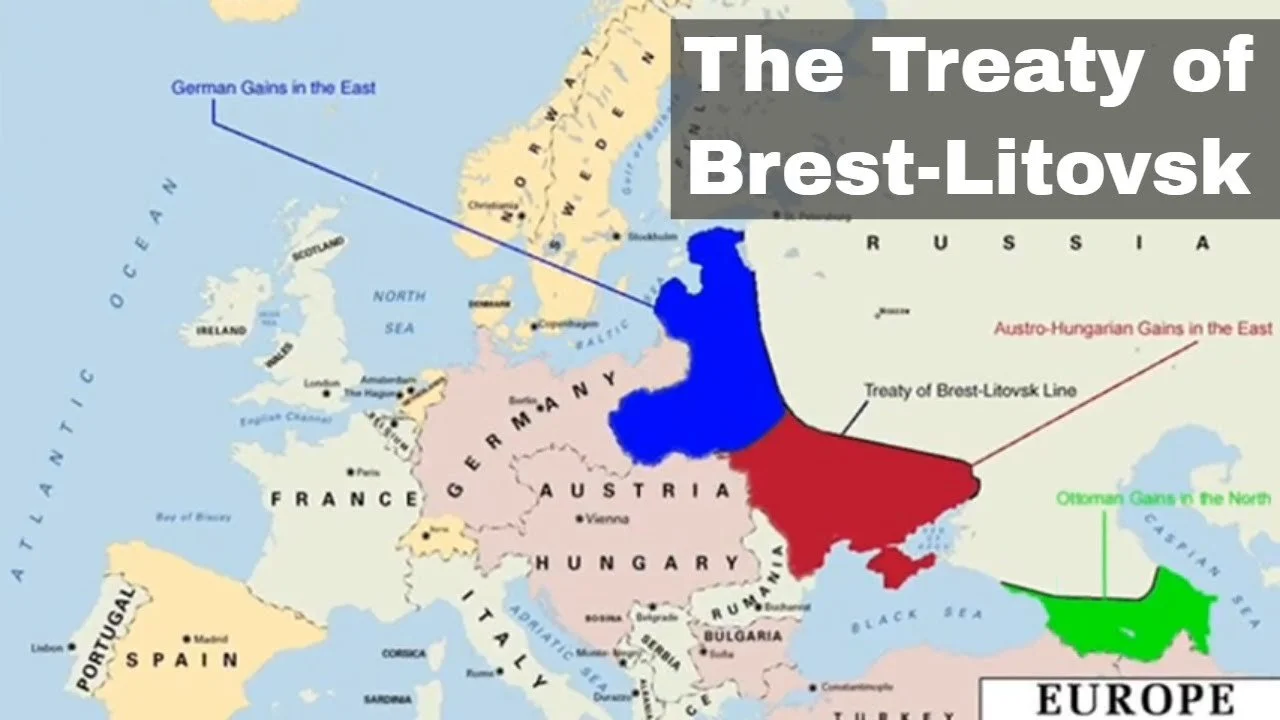
Baltic states ceded to Germany
Cedes caucuses to Ottoman Empire
Gave land in Ukraine to Austria-Hungary
Russia to pay 6 million gold marks in reparations
Germany refused to recognize Poland, which increased Polish nationalism
Treaty lasted 8 months before being negated by Versailles
Russia lost 1/4 of its population, 1/3 of its grain production, and 9/10 of its coal mines
The amount of troops Germany needed to occupy the new land may have contributed to their downfall, as these troops were needed in the west but were being used in the east to suppress nationalists
Riots in the new territories
Tsar’s Abdication
Germans made significant gains in the east
Tsar decided to go to the frontlines as the commander, but was an ineffective commander
Left the capital, Saint Petersburg, undefended
Russian army took the city, renamed it Petrograd
Tsar was captured on the frontline and sent to Petrograd
Army was dissatisfied with the Tsar’s rule
Nicholas II was forced to abdicate at gunpoint
Provisional government taken over by Bolsheviks in October Revolution in 1917
This whole abdication crisis was called the February revolution
Soviet takeover of Russia
This is likely unimportant but is nice to know
October Revolution
Provisional government tried to continue the war, launched an offensive in 1917
Revolution started on October 25 (Julian Calendar) by Vladimir Lenin and the Bolshevik party (Started 7 November Gregorian Calendar)
The provisional government after the February revolution was very unpopular with the people, due to killing protestors and ruling the country with an iron fist
Bolsheviks called for a military uprising - 10 October 1917 (Julian Calendar)
Trotsky and the Petrograd Soviet voted to support the military uprising
Small uprisings at first before full scale uprising, took ports and important parts of Petrograd
Stormed the Winter Palace, which was where the provisional government was operating from
Started Russian Civil War
Lasted until 1923
Created Soviet Union
Soviets murdered the Romanov family (Tsar Nicholas II and his family)
Germany’s risky military policy
Germany gambled on a quick victory with the Schlieffen plan. Once that had failed, Germany faced a war on two fronts and no hope of rapid conclusion of the war
Schlieffen plan was also a gamble in that by going through Belgium, they brought Britain into the war. In 1914, German Chancellor von Bethmann Hollweg had infamously sneered at Britain’s willingness to go to war over a “scrap of paper”
Verdun “bleed them white” (German Commander Erich von Falkenhayn) strategy also failed
Unrestricted U-Boat warfare also failed in limiting supplies reaching Allies
Unrestricted U-Boat warfare was a risky strategy as it contributed to the USA joining the war
Sinking of the RMS Lusitania
By August 1918, 300,000 US troops arriving per month
The dispatch of the so called Zimmerman telegraph was also intercepted. This showed that Germany was aware that the risky U-Boat strategy could bring in the US and encouraged Mexico to join Germany and attack the US. This telegram had strong impact on US public opinion towards joining the war against Germany
German invasion of Belgium (1914), sinking of Lusitania (1915), and zeppelin attacks over UK sacrifices the moral high ground and thus Germany finds it difficult to win the propaganda war
Weak allies
Germany depended on Austria-Hungary to win the war in the Balkans
Political chaos and military weakness in Austria-Hungary contributed to losses
Germany viewed Austria-Hungary as a strategic liability
“Shackled to a corpse” Germany believed they were stuck with useless allies
Especially the Ottoman Empire
Austria-Hungary’s army experienced disunity, soldiers considered themselves separate nationalities rather than Austro-Hungarian
Logistics of a multi-ethnic empire meant orders had to be translated into 15 different languages
Austria-Hungary attempted to attack Italian positions to unify the army, lost 100,000 men instead
Germany’s allies surrendered before they did, leaving Germany all alone
Bulgaria sought armistice on September 25 after defeat at the Battle of Dorian due to being told Germany couldn’t help
Austria-Hungary collapsed
Bulgaria’s surrender cut off Germany’s supply of oil. The same day, Ludendorff told the Kaiser, “The war is lost.”
Ottomans, “the sick man of Europe,” had some success at Gallipoli, but had been in decline for years and was in no position to engage in the war
Ottoman Empire disintegrated
Austria-Hungary and Turkey surrendered in October 1918
Not capitalizing on Russia’s withdrawal
Russia’s withdrawal from the war and the harsh Treaty of Brest-Litovsk terms did not help Germany
Lengthy deliberation over the treaty disrupted organization for Spring Offensive
One million men needed to occupy new territory and Baltics & Ukraine
Chaos in Russia meant Germany couldn’t get badly needed materials from them to combat supply deficits
Economic factors
Supply Issues
Supply wasn’t reaching the German army
German population was ready for revolution
Production fell by 70% in some areas
Germany was the first country to introduce rationing, attempting to save meat, bread, potatoes, and fats
Public funds
Germany had a federal tax system (Decentralized economic system), so they were unable to raise enough money through taxes to fund the war
Germany spend 83% of public expenditure on the military, and just 2% on the public sector
In Britain, it was 62% and 16% respectively
Allies
British Defense of the Realm Act (DORA) gave the government power over production and distribution, made it more efficient
New Prime Minister David Lloyd-George solved the munition crisis
Uses the DORA to encourage women to work in munitions plants
Allies had greater resources so they could sustain the war longer
Central powers ran out of resources while the Allies didn’t
The situation ultimately benefitted the Allies
British control of the seas
Blockade of Germany caused food shortages for the Germans
1916 - Germany created ‘k-bread’
Winter 1917 - “Turnip winter” - most food replaced with turnips
Britain could import supplies from colonies and the USA
John Keegan believes the war at sea in the Atlantic was decisive for the Allied victory
Factors leading to the defeat of the Central Powers
Allied coordinated and modern style of warfare
Russia mobilized quicker than expected, launched an offensive into Germany immediately
French held Germany at the battle of the Marne
British raised a million volunteers by Christmas
Allied counteroffensive had greater coordination of effort and a “modern” style of warfare
French General Foch appointed to coordinate Allied operations in France
These operations took advantage of all new military developments that had occurred over the course of the war
Used tanks, artillery, aircraft, and infantry in close cooperation
Military defeat
When Italy joined the Allies, the Central Powers faced a war on 3 fronts
Stalemate meant war of attrition, exhausted both sides
Exhausted Central Powers more, as they were cut off from supplies
Joining of the USA meant more supply and fresh troops for the Allies
Failure of Ludendorff Offensive (Spring Offensive) was critical to German defeat and lower morale of the German army
Supply lines overstretched
1 million men lost
“The war had been above all a contest of endurance, and during the course of 1918, the accumulated strain and the hopelessness of its situation had broken the army’s will to continue fighting.” (Alexander Watson “Stabbed at the Front” History Today, 2008, p.22)
Germany was unable to sustain losses after the 1918 offensive
Spanish flu led to high casualties and low morale
8th August 1918 - “Black day” for German army, Allied offensive led to huge blow to morale
AJP Taylor says Germans, “No longer wanted to win, they only wanted to end the war.”
Ludendorff asked for an armistice in October 1918, “No reliance can be put on the troops any longer. Since August 8th, it has gone rapidly downhill, continually units have proved themselves so unreliable that they have hurriedly had to be withdrawn from the front… the High Command and the German Army are finished
Germany could have beaten France one-on-one and Russia could have beaten Austria-Hungary one-on-one, but the cooperative nature of the war meant it became a stalemate and a war of attrition
US Entry into the war
US contribution was critical, as troops began to arrive in 1918
Two million soldiers deployed (4 million mobilized), lacked “war weariness”
Gave Allies an advantage
Brought a massive economy and resources
Helped the push
US was already contributing massively to the war, supplying arms, war materials, and resources to the allies
In total, the USA lent ~$60 billion in materials
Very important supplies, made a huge difference to the fight
Value of German trade with the USA fell from 68 billion in late 1914 to 10 billion in early 1915
Declared war on Germany in April 1917, but at the time the army was small and ill-equipped
Chief historian at the US Army Center of Military History: “The war ended before American commanders and staffs could attain proficiency, adjusting their training methods and tactics to meet the demands of the Western Front.”
Arguably, the US entry did not give the Allies quick means of obtaining victory over Germany
Gave huge morale boost to the French and British troops, helped counter the spring offensive
Ludendorff realized American entry was going to cause Germany to lose due to the huge number of American troops arriving in France
“American participation spelled the defeat of German ambitions.” Akira Iriye in The Globalizing of America 1913-1945
Domestic instability of the Central Powers
Bulgaria
Sought armistice after defeat at the Battle of Dorian on September 25 after being told Germany couldn’t help
Turkey
Signed an armistice in late October 1918 due to highly successful British campaigns in the Middle East
Arab uprisings disrupted Turkish war effort
Austria-Hungary
As early as 1916, Emperor Karl (Successor to Franz-Joseph) made peace proposals to the Allies
By 1918, daily flour ration in Vienna had dropped to 165 grams
Stole food from food trains and ships heading to Germany, this angered Germany
Number of deserters in the army rose sharply
Battle of Vittorio Veneto (24th October - November 1918) defeated the Austrians
Empire quietly disintegrated on October 31, 1918
Declarations of independence from the Czechs, Yugoslavs, & Hungarians
3 days later, the remnants of the Habsburg armies requested armistice
Germany
By early October 1918, Ludendorff recognized the need to withdraw from occupied areas and to accept social democrats into the government to pacify the democratic Allies
4th October - New German government led by Prince Max of Baden requested an armistice based on Woodrow Wilson’s ‘14 points’
Threat of domestic revolution added urgency to this request
20th October 1918 - Naval crews in Kiel started a mutiny to protest the orders to continue operations at sea
Over the next few days, more people joined in
Mutiny spread to other towns such as Munich
Kaiser was persuaded that abdicating would save Germany from civil war and Germany would become a republic
This was due to multiple public demonstrations demanding the end of his reign
November 9, 1918 - Social democrats proclaimed the Republic of Germany with Fredrich Ebert as the president
The German delegation agreed to sign the armistice on November 11th, 1918
The delegation was horrified by the terms of the armistice
Treaty of Versailles
Completed in 1919
440 Clauses
Clause 231 - War Guilt Clause: Germany accepted guilt for the war
Central powers had no say in the terms
Germany was to disarm to the minimum amount required for national security
Germany couldn’t have an air force, tanks, armored cars, or submarines
Germany could keep 6 battleships and 100,000 men
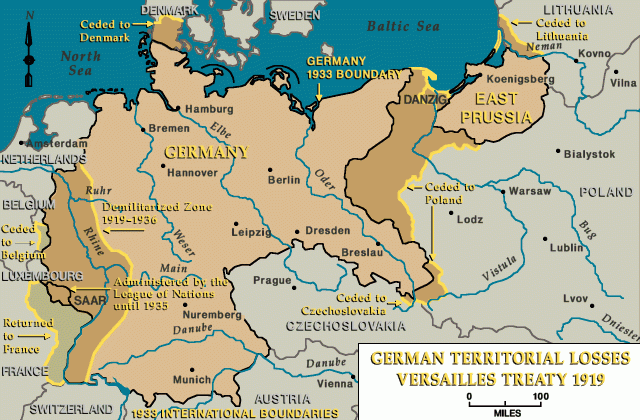
Rhineland was demilitarized
Allies were to occupy it for 15 years
France wanted to annex it, but USA and UK refused
Alcase-Lorraine returned to France
The Saarland, a coal mining region, would be administered by the League of Nations, all extracted coal would go to France
France could occupy it if Germany didn’t pay the reparations
Germany was split, west Prussia and part of their gains from Brest-Litovsk became Poland
East Prussia remained German
Created Estonia, Latvia, and Lithuania from the Baltic region
Nullified Brest-Litovsk
All German overseas colonies were taken and split between Allies
Asian colonies given to Japan
German New Guinea given to Australia
African colonies given to France, UK, Belgium, and South Africa
A union between Austria and Germany was forgiven
Ottoman Empire was split into mandates controlled by the UK and France
A Mandates - Could soon become independent states: Palestine, Iraq, Transjordan, Syria, and Lebanon
B Mandates - Needed some work to develop: Cameroon, Togoland, Tanganyika, Ruanda-Urundi
C Mandates - Needed a lot of work: North pacific islands, New Guinea, Southwest Africa, Samoa
Created an independent Turkey
Officially destroyed Austria-Hungary
Created Czechoslovakia, Hungary, Austria, and Yugoslavia as independent states
Gave land to Romania, Italy, Poland, and the Soviets
In 1921, reparations were set at 6.6 billion pounds
For comparison, 1 British pound was 1,011 German Marks, so Brest-Litovsk wasn’t that harsh in reparations
Wanted to put Kaiser and other commanders on trial
He had fled to the Netherlands, and the Dutch refused to arrest him
They couldn’t find some other important people they wanted to put on trial
Some German commanders went on trial and were jailed or fined
Eupen, Moresnet, and Malmedy would go to Belgium and North Schleswig would go to Denmark
Effects:
Economic downturn in Germany due to reparations - Government announced in 1921 that it could not muster the funds to pay
Political crisis, the government struggled to control protests and the multiple political parties were hostile to each other and unwilling to work together
Led to a social divide as people leaned towards the extreme left or right
See ‘Weimar Germany’ page for more information
Border disputes in the east due to the lands not being officially divided, but were to be given a plebiscite to decide. This issue was resolved by the League of Nations
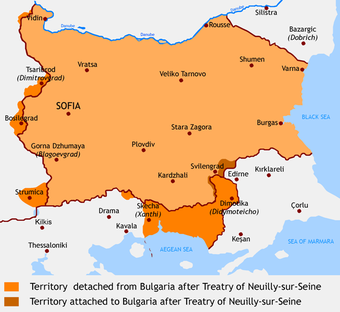
Treaty of Neuilly - Allies & Bulgaria
27 November 1919
Signed in France
Cede western Thrace to Greece, this cut off their access to the Aegean Sea
Population exchange with Greece so Bulgarians can return to Bulgaria
Cede western lands to Yugoslavia
Return property stolen during the war
Army reduced to 20,000
Pay reparations of 100 million pounds
Must recognize Yugoslavia
Effects:
The Bulgarian Communist Party made significant parliamentary gains
The war damaged the agriculture industry, leaving much of the population starving. The Agrarian party attempted to fix this
National public service was made mandatory for one year for all men to aid in the construction of roads, bridges, and other infrastructure. This was to improve the economic situation
The army’s Military League overthrew the Agrarian government in 1923 and killed the prime minister
A communist uprising was crushed
King and other major members of parliament were almost killed in a bombing of the cathedral in Sofia in 1925
Following the attack, the government sponsored political purges that led to the deaths of many Agrarians and many more people being jailed or exiled
A coalition called the Popular Bloc that included the Agrarians gained power in 1931 before being overthrown in another military coup in 1934
Bulgaria experienced economic issues which were helped by loans, but economic gains collapsed in 1929
Bulgarian groups supported the independence of Macedonia by training troops and supplying them with weapons because the region was controlled by Bulgaria’s enemies, Greece and Yugoslavia
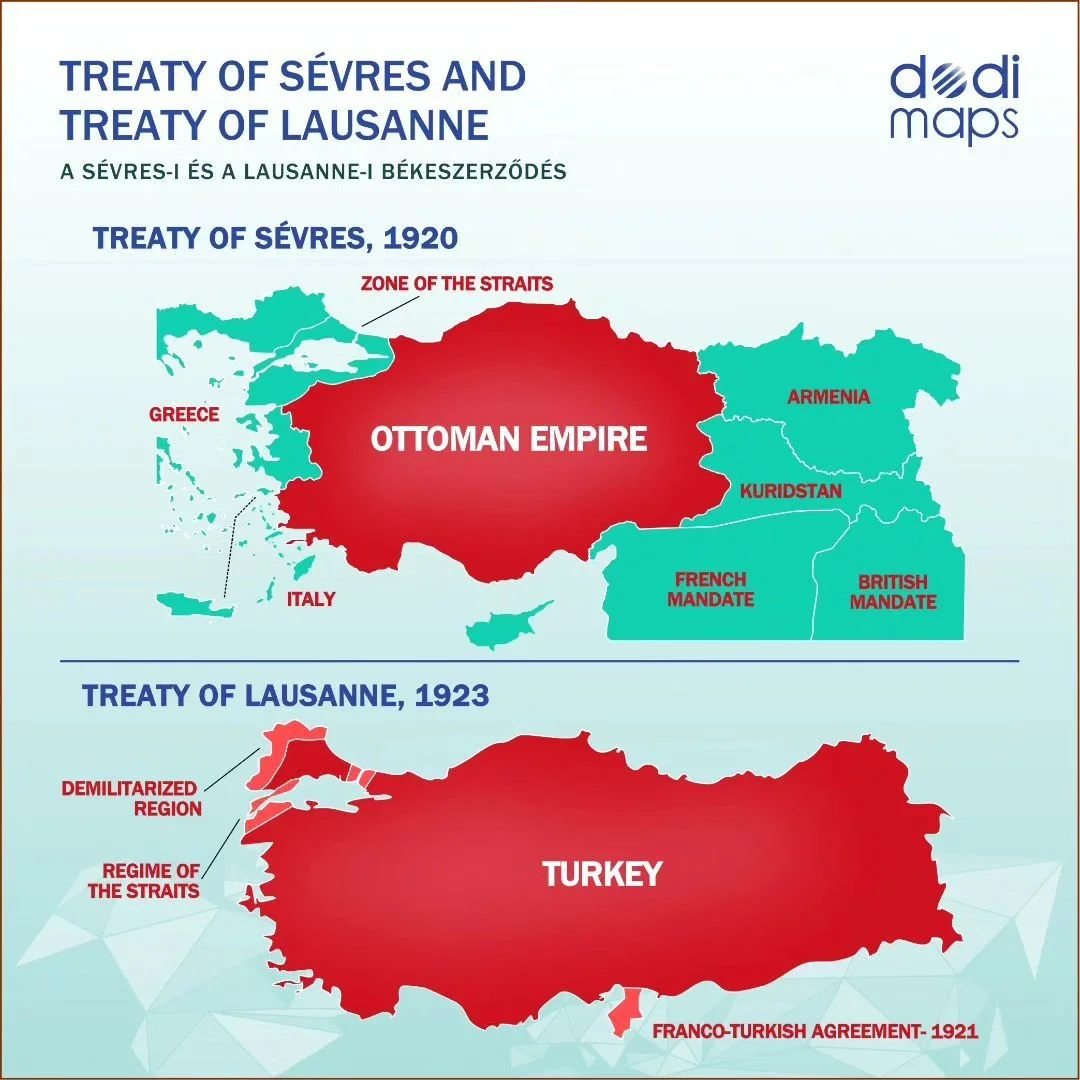
Treaty of Lausanne - Allies & Turkey
Last treaty of World War One
Signed in 1923
Recognized modern borders of Turkey
Had to recognize territorial claims of other nations
Lifted army limit
Foreign troops withdrawn
No need to pay reparations
Demilitarized areas remained demilitarized
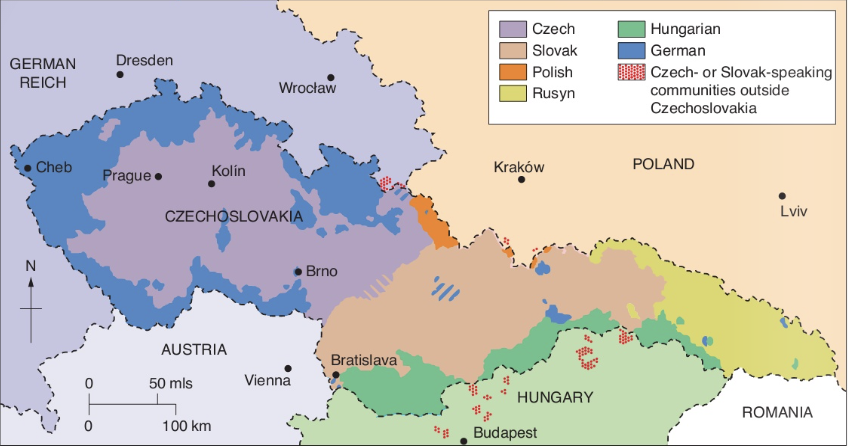
Czechoslovakia
No peace treaty, as they weren’t seen as a belligerent
Created after the collapse of Austria-Hungary
Ethnically diverse, unlike Austria and Hungary that were dominated by Germans and Hungarians respectively
Population of 13.5 million, including:
>3 million Germans
750,000 Hungarians
500,000 Ruthenians (Rusyns)
200,000 Jews
Czechs controlled the government and all civil service jobs including teaching, creating resentment from the other minorities
Czechs did not trust the minorities, as Germans wanted to merge with Austria and the Hungarians and Slovaks wanted to unite with Hungary
Czech political parties dominated the government, resulting in political stability as they tried to fix the social divisions. This was not successful
Czechoslovakia invaded Tesin in Poland, pushing the Polish forces out. Czechoslovakia wanted the coal that this area provided. This conflict was resolved in 1925
Hungarian forces invaded in 1919 in an attempt to restore Hungary’s old borders and created the Slovak Socialist Republic, which was destroyed by the Czechoslovak army
Helped form the Little Entente with Yugoslavia and Romania to protect against Hungarian aggression
Formed relations with France
Little economic stress, as Czechoslovakia was a very industrial part of the Austro-Hungarian empire and they maintained this. Czechoslovakia contained up to 80% of the Austro-Hungarian Empire’s industry
They were in the top 10 most industrialized nations in the 1920s
Despite this, it was an example of the ethnic divide - Most industry was in Bohemia where Czechs lived while the Ruthenian and Slovakian regions were mostly agricultural
The state launched a land distribution plan where every landowner who had more than 5km^2 worth of property would have the excess taken and distributed to peasants
Romania
Mainly agricultural, but included vast natural resources such as petroleum
Industry was underdeveloped, making them reliant on international trade in the 1920s, but they recovered their industry throughout this decade
The number of registered businesses rose from 86,000 in 1918 to 273,000 in 1930
Oil industry rose from <1 million tonnes of extracted oil in 1918 to almost 6 million in 1930
Despite development, Romania remained very agriculture-focused
There was political stability, though the elections were fixed and highly controlled by whatever party the King chose to form the government, inevitably resulting in that party winning
Peasants had the right to vote, but were universally disinterested in politics
By 1930, the monarch almost completely controlled the government
Romania was scared of the Soviet Union and, to a lesser extent, Hungary
Big supporter of the League of Nations and disarmament in the hopes of these ideals would protect Romania’s borders and protect against war
Peacemaking
Treaty of Saint Germain-En-Laye - Allies & Austria
10 September 1919
Austria was to be separated from Hungary
Lost 75% of its pre-war territory and 80% of its population
Now a population of 7 million
Bohemia and Moravia would become Czechoslovakia
Wealthy and industrialized regions
Lost Dalmatia, Bosnia, and Herzegovina to Yugoslavia (Called Kingdom of Serbs, Croats, and Slovenes at the time)
Poland got Galicia
Austria was forbidden from unifying with Germany
Italy took South Tyrol, Trentino, and Istria
They wanted more, but did not get what they were promised
Army was reduced to 30,000 troops
Had to pay reparations, but went bankrupt by 1922. The League of Nations took over their financial affairs
Effects:
As coal came from Czechoslovakia and food from Hungary before the war, Austria had a lack of resources
This deficit was further exemplified as the surrounding nations placed tariffs on Austria and trade borders between them, meaning that the industry essentially shut down due to a lack of resources
Working and lower classes couldn’t afford food or basic supplies
Prices increased by over 14,000%
The League of Nations fixed this by loaning 650 million Krone to Austria, replacing the currency with the more stable Shilling, and enacting a treaty between them and Czechoslovakia where the Czechs would provide Austria with coal (1922)
Politics became dominated by the Christian Social Party and the Social Democrats. The latter provided workers rights, healthcare reforms, and a new tax system in Vienna only, as the national government was dominated by the former. Both formed paramilitary organizations to protect themselves, highlighting the instability
Supporters of these parties clashed amongst each other, including fights between the paramilitary organizations. This resulted in riots and arson and eventually the establishment of a fascist regime under Dolfuss in 1933
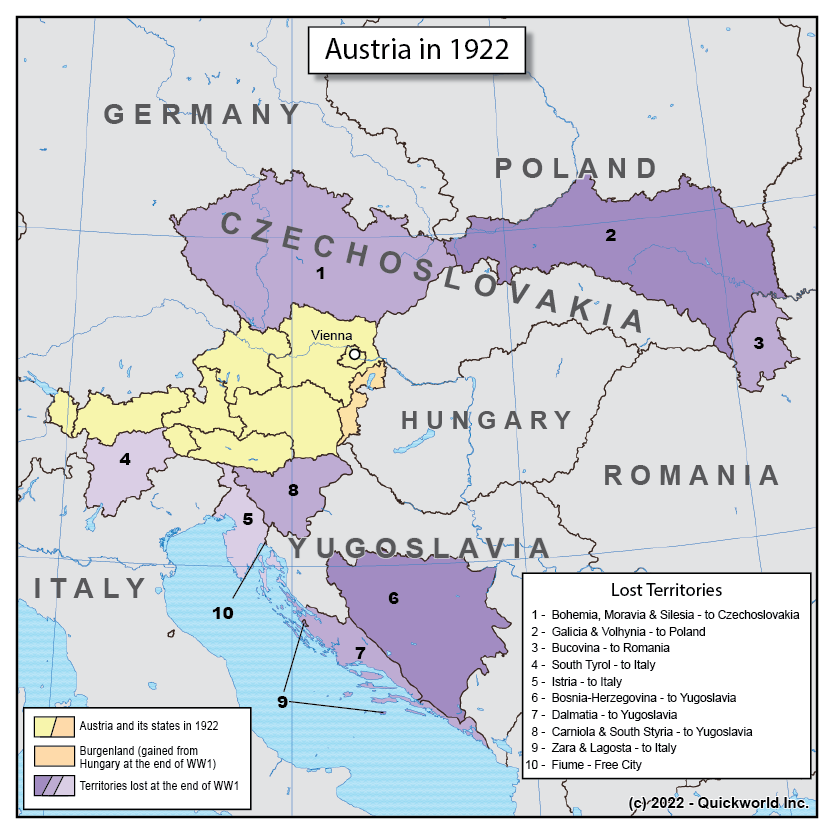
Treaty of Trianon - Allies & Hungary
4 June 1920
Separated from Austria
Hungary had to recognize new states
Lost 75% of its pre-war territory and 66% of its population
Slovakia and Ruthenia given to Czechoslovakia
Transylvania and the Banat of Temesvar given to Romania
Army limited to 35,000 troops
Had to pay reparations
Hungary complained about these terms as they lost regions with ethnic Hungarians
Effects:
Inspired by Russia, Bela Kun led a communist revolt and created the Hungarian Soviet Republic
Fighting broke out between the communists and Miklos Horthy, between the Communists and Czechoslovakia, and between the communists and Romania
Romania invaded and occupied Hungary, forcing Kun to flee
When the Romanians left, they took machinery, 50% of all railroad equipment, 30% of livestock and agricultural equipment, and 35000 wagons worth of livestock food as ‘compensation’ for WW1
Hungary was dependent on the goods and market of the Empire, and so when it collapsed their economy did too
Hungary was the main producer of agriculture, and when the demand suddenly disappeared, unemployment spiked
Grain production declined by 70%
Hungary had a need for raw materials - After the treaty they had been left with only 16% of their iron ore mines and 11% of its timber resources
Hyperinflation until the League of Nations approved a 250 million Krone loan and replaced their currency with the Pengõ
By 1929, the number of factories had risen by 75% and foreign trade by 100%, though they were still partially dependent on agriculture
Admiral Horthy was appointed Regent, where he had the powers of a king. He appointed Prime Ministers and tightly controlled the parliament
Under Horthy, there were no land reforms as the peasants had demanded and minorities such as Jews faced discrimination
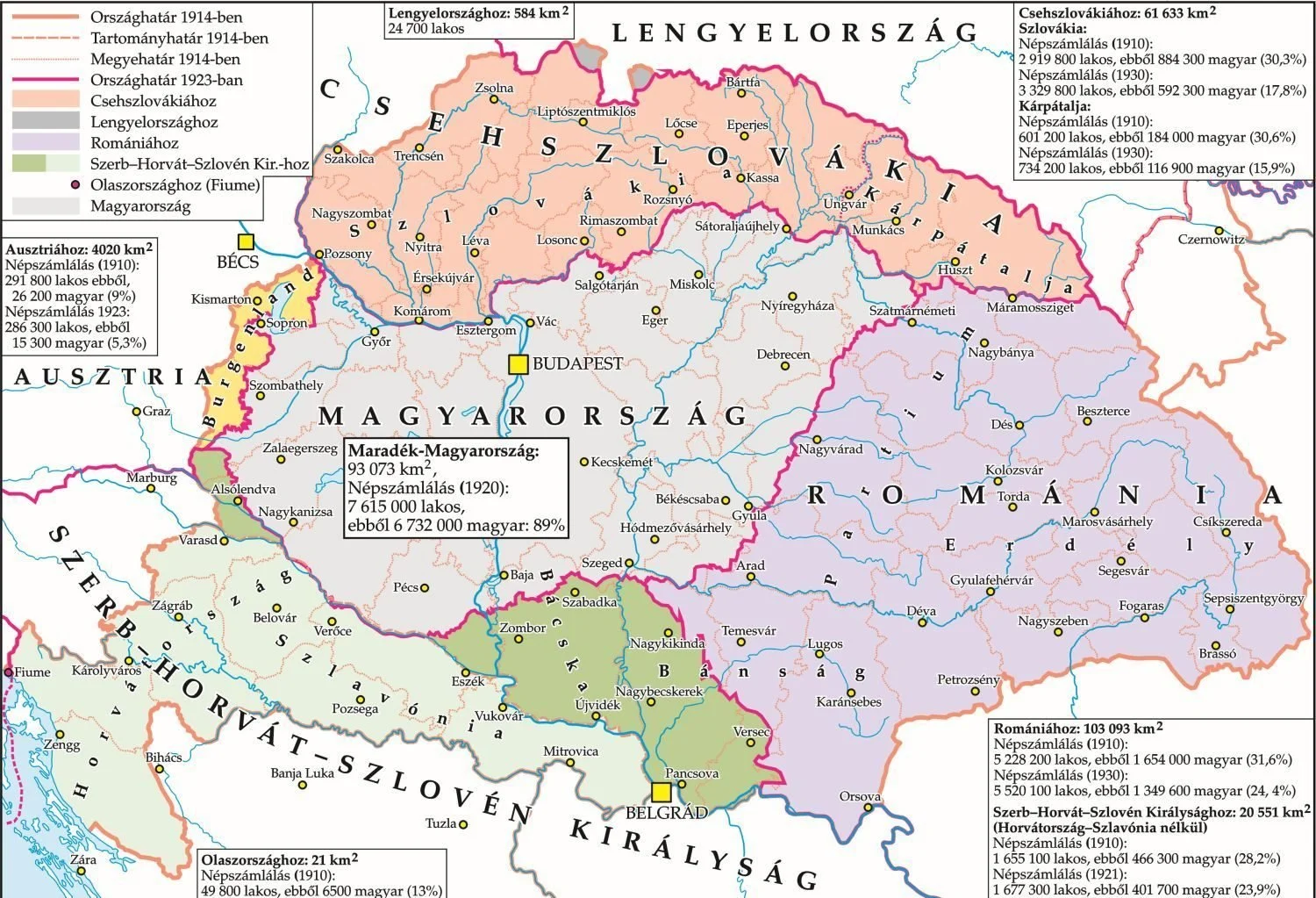
Treaty of Sevres - Allies & Ottoman Empire
10 August 1920
Established Turkey
Disintegrated the Ottoman Empire
Turkey loses all non-Turkish territory
Armenia gains independence
Made Kurdistan an autonomous region
Proposed a referendum be held for Kurdish independence, this did not happen
Army restricted to 50,700 men
No air force
Required free transit of people to native lands
Ceded territory to Greece, France, Britain, and Armenia
Demilitarized the Bosphorus, Dardanelles, and Sea of Marmara
Replaced by the Treaty of Lausanne
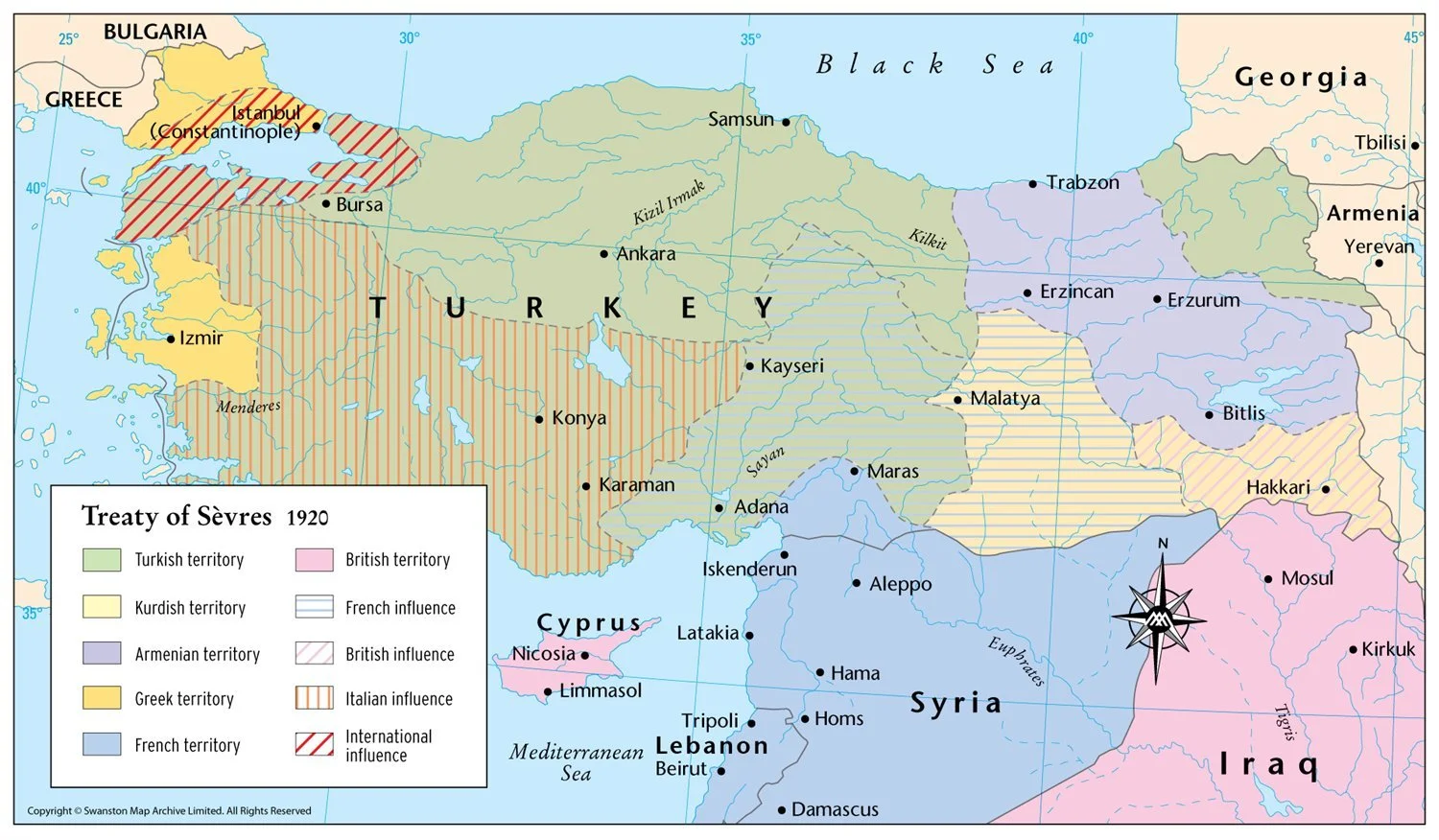
Poland
No peace treaty with the Allies as they weren’t a belligerent
The eastern borders resulted in a war between Poland and the combined forces of Ukraine, Soviet Russia, and Lithuania, with Poland’s enemies also fighting each other
Poland won the war and took more land, giving them more territory than what was decreed in Versailles. This left few satisfied, as there were many Poles living outside of Poland and other ethnicities living inside Poland, including many Germans
Many Germans in the Polish corridor, like in Danzig
The first president was supported by the Socialists but was assassinated in 1922
The government was then overthrown in 1926 by the military led by Jozef Pilsudski
Pilsudski refused to become president and chose to remain head of the military, but he appointed the president, restricted the power of political parties, and controlled the press
He was popular as he worked to reduce the economic issues, and his system continued until he died in 1935
Territorial disputes between Germany and Poland, especially over Upper Silesia
The League of Nations decided to split the region between the two states, giving Poland the more industrial areas, which angered Germany
Poland encouraged minorities in Russia to work for independence and create new states, but they weren’t successful
Poland annexed the region and city of Vilna in 1922 in direct violation of their ceasefire
Poland maintained good relations with Romania, signing the Convention on Defensive Alliance in 1921, which was a mutual defense pledge against the Soviet Union. This was then expanded to be mutual defense against any attack
Signed a nonaggression pact with Soviet Union in 1932 and one with Germany in 1935
As Poland had been the battlefield between Germany and Russia, much of their industry was destroyed including factories, railways, and mines
As Poland had been created from 3 separate countries, the railways that did exist connected to other countries and not with each other
Though industry was only 30% of what it was in 1913, Poland’s acquisition of Danzig (Gdynia) and part of Upper Silesia assisted their economy
Throughout the 1920s, about 65% of the population were peasants
Industrial production was limited as only 16% of Poles were industry workers
Foreign investors didn’t want to invest in Poland
They saw some economic improvement in the late 1920s, but then it went downhill with the Great Depression in 1929
Yugoslavia
Multi-ethnic state dominated by the Serbs and Croats
Many people wanted a strong centralized government that would protect them from threats such as Italy and Hungary, but Croats wanted a federal government to give them a degree of autonomy within Yugoslavia
When Croat politicians were denied this, they withdrew from politics in protest, allowing the Serbs to dominate the political system
King Alexander I took full power in 1929 after a politician was assassinated, dissolving the parliament and constitution
He was desperate to keep power
Controlled press, banned political parties, and destroyed the traditional territorial boundaries and replaced them with 9 administrative districts
This did not achieve unity, but gained enough stability for cohesive foreign policy
Joined the Little Entente in 1921 to protect against Hungary
Clashes with Italy over territories such as Fiume and Dalmatia
King Alexander attempted diplomacy with Mussolini, but this failed
Joined the Balkan Entente in 1934 with Greece, Romania, and Turkey
Majority of the population were peasants without modern machines
Most factories were destroyed by the war, though some remained in Belgrade
Large estates were taken from primarily Hungarian landowners and distributed to peasants, and this did not do much to help the economy
Mining was a major industry, but it was controlled by foreign investors who exported the materials instead of using it to build up the country
The country lacked ports, especially after Fiume was given to Italy in 1924
Trade was limited with Balkan neighbors, especially since they too were experiencing economic hardship
Germany
Short-term Political
Universal male and female suffrage
Parliamentary government
Socialist government
Many soldiers who were demobilized at the end of the war joined the Freikorps
See ‘Weimar Germany’ page for more effects on Germany
Long-term political
National humiliation
Political instability
Rise of a dictatorship
(See Weimar Germany document for more short and long-term political impacts)
Economic
Government tried to use inflation to lessen the burden of internal debt
Reparations of 6.6 billion pounds (80% of GNP)
Economic issues were a disaster for the middle class
Hyperinflation
Prices rose between 1914 and 1923 by a factor of 1.3 trillion
Money became worthless
People walked around with wheelbarrows full of bills just to buy small things
Reliance on American loans
Dawes plan
Collapse of German economy
Greatly affected by the Great Depression
Social Effects
Shortages of food led to starvation
Civilian deaths indirectly caused by the war
Between 250,000-600,000 depending on the estimate
Infant mortality rates rose
Tuberculosis-related diseases spread
Perceptions of starvation sapped civilian morale
Loss of faith in the government
Pre-war social structures weren’t drastically affected
Junkers (elites) maintained land
Institutions remained dominated by Kaiser-appointed men
Civil service, judiciary, military
Teaching became more conservative
International food aid programs quickly solved the malnutrition issue
Demographic
2.04 million soldiers killed - 15% of the army
5.69 million soldiers wounded
1000 civilian deaths directly caused by the war
Mainly because few battles were fought on German soil
France
Short-term Political
Georges Clemenceau replaced due to alleged leniency towards Germany
Increased Socialist party popularity
Political instability
Long-term political
Loss of control of overseas French colonies
Decline in power over European stage
Got the Rhineland demilitarized
Economic
Industrial production fell to 60% of pre-war level
Damage to infrastructure, agriculture, and industrial facilities
Loss of manpower
High costs for mobilization, caring for wounded, and military operations
Inflation
Debt to the United States and Britain
Social
6 million army casualties
1.4 million deaths - 16% of army
4.2 million wounded
72% of soldiers who fought were casualties
Anger at government
Rise of extremism & political instability
Demographic
loss of 1.4 million soldiers
700,000 women widowed
1.4 million children weren’t born
4.4% of French population dead
Territorial
Annexed German overseas territories
Reclaimed Alcase-Lorraine
Created mandates
Russia
Long-term political
Excluded from League of Nations
Bolsheviks eventually consolidated power
Implemented radical political and economic policy changes
Nationalization of industry, redistribution of land, planned economy
One-party system
Lenin’s death in 1924 led to a power struggle within the Communist party
Stalin eventually became leader
More authoritarian government established
Governmental changes
Centralized and repressive regime
Industrialization
Centralization of power
Collectivization of agriculture
Political Purges
Forced labor camps
Demographic
1.8 million soldiers - 15% of the army
4.95 million wounded
500,000 civilian casualties
Immigration into Russia from Germany surged
Much of the population was lost from Brest-Litovsk
They got some of it back, but not Poland, Latvia, Lithuania, and Estonia
Estimates for deaths from the famines vary between 1-10 million
Territorial
Lost Poland, Latvia, Lithuania, and Estonia to Germany in Brest-Litovsk
Gained some land back when Brest-Litovsk was nullified
Lost 34% of the population, 54% of industrial land, 89% of the coalfields, and 26% of the railways
Later lost some land to Poland in the Treaty of Riga
Britain
Political
Decline of the liberal political party
Belief that the state should not intervene in the public’s life
Arguments within the party began with the government’s increased control over civilian life during the war
One reason for declaring war was to stop the Liberal Party from fracturing, the Liberals threatened to resign if the government didn’t support France
Introduction of conscription
Defense of the Realm Act 1914
Gave the government new powers, such as the power to buy buildings or land needed for the war by force
Censored the people
Seen as authoritarian
State increased intervention into public affairs
Ireland demanded full independence in 1916
Political disunity
Destruction of the Liberal Party’s ability to lead Britain
Refused to implement measures that were required for the war
Growing mistrust due to war mismanagement, such as at Somme
David Lloyd-George took control of the government in 1916
Took control of domestic and military policy
Creation of the War Cabinet, which met 200 times in 235 days
Used the Defense of the Realm Act to control the war effort
Economic
War related industries grew rapidly
Production increased
Concessions made to the trade unions
Drew women into mainstream employment for the first time
Insufficient artillery shell production led to the fall of the Liberal government in 1915
Rationing was implemented in 1916, despite efforts to maintain ‘business as usual’
British GDP rose by 14% between 1914 and 1918
War forced the government to use its financial reserves and borrow large sums of money from the United States
Scotland’s shipbuilding industry expanded by 1.3x
Dependent on American raw materials and food
Production fell by 10% throughout the war
By the end of the war, they had sent 187 million shells to France
A year’s worth of pre-production of light munitions could be done in 4 days by 1918
British aircraft firms employed over 340,000 people
Social
Those who could not fight contributed to philanthropic or humanitarian causes
Aerial bombing of cities in Britain was seen for the first time, causing unrest
Propaganda produced by the newspapers was important to maintaining support
Food shortages and the Spanish Flu caused death rates to rise
Russia
Political
Revolution, civil war, famine (1917-1920)
October revolution
February revolution led to destruction of Romanov dynasty (Tsars)
Socialist government established by Bolsheviks
New provisional government faced numerous challenges
Continuation of war, economic problems, radicalism
Weakened by decision to continue fighting in the war, deeply unpopular among civilians
February revolution in Petrograd in 1917, soldiers joined the revolution
Russian Soviet Federative Socialist Republic established, start of the USSR
Russian civil war
‘Reds vs Whites’
Communist victory
Total collapse of the military due to revolution led to many defeats on the Eastern front
Economic
By 1916, Russia matched German shell production
Artillery and rifle production grew by 1000%
Collapse of industry
Train systems, agriculture, prices decreased so incentives were gone, inflation
Government printed money, causing massive inflation (prices quadrupled)
Social
Famine
Peasants and workers faced economic hardship and lack of food
Not enough good being grown and sold
Distribution of the food was the issue, not that there was a lack of food grown
Social groups became more unequal
Strikes
Protesting government policy, like distribution of food and conscription
People were waiting all night outside bakeries for a single loaf of bread
Extreme prices
Military was ordered to break up protests, led to violence
Soldiers joined protests
High casualties, inflation, food shortages
Mobilization of workers left nobody to work
Loss of patriotism, led to discontent with government
Austria-Hungary
Demographic
1.02 million military dead - 13% of the army
1.94 million wounded
120,000 civilian casualties
After the war
Effects of War
During the war
Germany
Political
End of the monarchy
Rise of the socialist government
Strikes
Many people didn’t want to go to war
Unemployment problems
All major political parties initially supported the war, including the Socialists
Economic
Military rose from 2.9 million active duty soldiers to 7 million in 1918
13 million people served in total
More than 13% of the population were in services
Unemployment rose as the factories were trying to quickly convert to producing munitions
Hindenburg Program
Mobilization of all economic resources to produce munitions and arms
Church bells and copper roofs were ripped out and melted to make munitions
Germany had no plan to mobilize their economy and had made no stockpiles of food or supplies
Food price controls
Bread rationing system introduced in 1915
Cost of bread fell
Some states had no sign of starvation
Gross National Product went down by around 25%
Coal output fell 17%
Steel output fell by 14%
Massive growth in the arms industry
Gun production rose from 2,400 to 115,000 per month
Produced thousands of synthetic explosives
From 14,400 tons of explosives per year in 1914 to 144,000 tons in 1917
Workforce shrunk, so they employed 5 million women and some prisoners
Labor force only fell by 7%
Agricultural production fell due to fertilizer importation being blocked by British blockades
And due to farmers being conscripted
Major food supply issues, led to revolts, many Germans starved
Food issues exemplified social divides
The true impact of the food supply issue may have been overstated by the German people and government
Farmers were mobilized, reducing food production
Increase in tobacco production
Increase in wine production by 170%
Grain production fell by 50%
Beer production fell by 33%
Miners were drafted, meaning coal production fell
9 million pigs killed by 1919
Food was made from potatoes, but potato harvest failed in 1916
“Turnip Winter”
Winter of 1916-1917
Turnips, which were usually fed to livestock because it was hard for humans to eat, was suddenly the only thing there was
People used turnips as substitutes for potatoes and meat
Ersatz materials
When one useful material was replaced by other materials, typically lower quality
Cloth and leather were replaced by paper and cardboard
Royal Navy cut Germany off from most trade
By 1915, imports had fallen to 55% of their pre-war level
Half of Germany’s trade had been with their now enemy
Increased trade from Scandinavia
Germany’s merchant fleet lost 639 ships, which was 44% of their total size
Labor conscription in 1916
Used forced labor from Poland, France, Russia, and Belgium
Government control over the economy
KRA: Raw Material Section, central authority which could allocate raw materials, made sure that scarce materials only went to companies involved in the war effort
Caused issues for consumer industries
Focused on raw materials threatened by the Allied blockades
Dealt with supplies from Britain or France
Was inefficient mainly due to the commerce, industry, and government being selfish
Central Purchasing Commission
Handle neutral trade
Nationalized wheat production
Forced farmers to declare their stories and forbid use of wheat and rye for fodder
Imperial Potato Office
Forbade potatoes for fodder
Farmers expected to meet production targets
Attempted to control food supply through rationing systems
Bread rationing by June 1915
Ersatz products - Substitutes for food, 837 different varieties of meatless sausages, coffee from acorns
There is scientific evidence to indicate that German children suffered from severe malnutrition, working class children suffered the most
Ration stamps distributed
War financing
Spent just over 3% of GNP on armed forces just before the war, over 50% during the war
86% of government income went to war
Massive budget deficits, >38% for each year of the war
National debt increased 8 times
War expenditure estimated at about 49 billion dollars
War was paid for using war bonds, Germany was confident they would win and could pay back the bonds
German Mark was worth only a fraction of its pre-war value by 1918
Many women took jobs in industry
The housewives who didn’t were taught to cook without milk, eggs, or fat
Social
Many German people believed the German farmers were causing the food shortages by keeping all the food to themselves, created rivalries
Food shortages lowered morale in both the civilians and soldiers
Migrants flocked to the big cities to find work
Little to no recreation
Many of those who returned from war were traumatized or wounded, and those who recovered were sent back
As the war went on, more people moved towards left-wing socialist movements as they wanted an end to the war
October 1918 revolt in Kiel, sailors mutinied when told to go back to sea to fight the British
Revolt spread across Germany, such as to Munich
Britain
Short-term Political
Rise of the conservative party
Popular among middle & upper class
Threatened by the rise of communism
Least supportive of change
Representation of the Peoples act
Lowered voting age of men to 21
Gave women (who met certain criteria) over the age of 30 the right to vote
Laws previously only let men who owned land vote, which excluded the large lower-class population
Number of voters increased from 8 million to almost 30 million
Growth of radicalism
Industrial workers began to fear for their jobs as returning soldiers would compete for jobs
Strikes and conflict between workers and police
Government worried about a potential revolution
Race riots, primarily directed at sailors from British colonies
Long-term Political
Increase in civil liberties
Health, insurance, and pensions introduced by the liberal government
Widows, Orphans, and Old Age Contributory Pensions Act in 1925
Protected those most vulnerable and likely to be under the poverty line
Increased political engagement
Number of voters and political parties increased
Women given the right to vote
Representation of the Peoples Act gave women’s rights more importance
First female minister Margaret Bondfield in 1928
All women over 21 given the right to vote
Beginning of decolonization
Colonies began seeking autonomy
Independence movements
Some colonies were given compromises as a reward for fighting
Colonies joined the League of Nations as independent states
Colonies like Ireland got home rule
Irish independence war of 1919
Decrease in global power
Decline in the influence and power of the Empire
Britain was no longer the world power, replaced by the United States
Lost influence over some colonies
Economic
Economic decline
Could not maintain the status quo and balance of power in Europe
Loss of GDP due to war
Unemployment
Unemployment rates grew substantially between 1920 and 1930
Seen as the largest unemployment crisis in Britain since industrialization
Loss of international markets
Britain was the largest exporter with 27% of global exports before the war, was replaced by Japan and the USA after
Loss of first-mover deals (They were the primary exporter and thus got better deals)
Loss of world market share
Inflation
Borrowed funds from the USA
National debt grew from 0.62 billion pounds before the war to 7.8 billion in 1920
Loss of human capital
3.6% of human capital was lost due to the war
6% of adult males killed
Social
Great losses
Rise of trade unions
Medical advancements
Decline of aristocracy
Demographic
Participants
5 million British
1.44 million Indians
630,000 Canadians
413,000 Australians
206,000 Irish
190,000 Scottish
136,000 South Africans
128,000 from New Zealand
135,000 from other countries
900,000 soldiers killed - 10% of the army
2.09 million soldiers wounded
Territorial
Creation of mandates
See ‘Treaty of Versailles’
Beginning of decolonization
USA
Short-term Political
Clear ideological divisions
Shifts of political ideologies
Radicalization
Expansion of federal power
Central government gained more power
Backlash against US intervention in Europe
Widespread violence in 1919
Harding elected in 1921, shift back to ‘normalcy’
Long-term political
Rights activism
Civil rights for African Americans
Rights for women
Right to vote
Federal government grew due to the war
Isolationist until the end of WW2
5000 agencies created during the war, these were not ended
Civil unrest
Veterans demanded economic compensation
Labor movements
Red scare (Communism)
Immigrant act passed in 1924
Economic
Government spending increased at rates unheard of
Economic boom due to Allies’ loans
Transformed US into world’s dominant power
Many European countries owed the USA a lot of money due to loans and
Technological advancements
Economic policy
Progressive taxation
High protective tariff
Prohibition
Agricultural crop supports
This all generally angered the people
Social
US was the country least effected by the war
Their homeland wasn’t bombed
Fighting didn’t take place on US soil
Richest country in the world
Invested in other countries, led to economic boom
Demographic
116,000 American deaths in the war
53,000 combat deaths - 1% of army
63,000 non-combat deaths
Population was around 103,000,000 at the time
230,000 wounded
750 civilian casualties - No battles fought on American soil, civilians killed by ships sunk
“Loss of a generation”
Disrupted the labor force
Slight population boom once soldiers returned
Decline in mortality rates after war
Italy
Political
Civil unrest
Strikes
Unstable government
Social
Discontent with the government
See “Mussolini’s Italy’ page
Demographic
460,000 military deaths - 7% of the army
960,000 casualties
4,000 civilian casualties
Austria
Demographic
Lost 20% of its pre-war population
Most Austrians stayed in Austria, but some were spread in Italy, Czechoslovakia, Romania, and Hungary
Territorial
Empire was dissolved
Lost 75% of pre-war territory
Treaty of Saint Germain-En-Laye
Hungary
Demographic
Lost 66% of pre-war population
Hungarians were spread across Romania, Poland, Czechoslovakia, and Austria
Territorial
Empire was dissolved
Lost 75% of its pre-war territory
New Hungary became smaller than Hungary was as part of the empire, this angered Hungarians
Treaty of Trianon
Ottoman Empire
Short-term political
Treaty of Sevres
Lost most of its territory, so the Turkish people fought a war to gain their territory back
Got the borders of modern-day Turkey
Turkish war for independence (1919-1923)
Mustafa Kemal Ataturk
Ottoman Empire officially collapsed
Loss of status
Turkish republic established
Long-term political
Creation of Turkish republic
Turkish war for independence
International isolation
Disintegration of the Ottoman Empire
New borders didn’t follow ethnic borders, led to conflicts across 20th century
Start of Kurdish conflict
Economic
Turkey had to accept the economic restrictions of the Treaty of Lausanne
Quantitative restrictions on foreign trade
Custom duties
Major debt
Loss of Ottoman territories
Loss of agricultural output
Mineral wealth lost
Emigration
Massacres made people leave
Loss of workforce
Social
Invested in education and the advancement of society
Literacy increased from 10% to 50% in 5 years
Employment of women
Mustafa Kemal Ataturk
Radical social reforms
Republicanism, nationalism, secularism, radicalism
Demographic
2.5 million Turks dead
Muslim population declined by 2 million
Deaths and emigration
Armenian Genocide
Reduced Armenian population from 1.5 million to 100,000
600,000-1.5 million deaths
Total population of Turkey itself reduced from 13.5 million in 1914 to 13 million post-war
Due to emigration and deaths
240,000 military dead - 24% of the army
1.27 million wounded
Territorial
Ottoman Empire dissolved
Lost more than 50% of its territory
Turkey fought war to gain some back
Lost all middle eastern territory
Before the war
Economic Aspect
Women did not work much and those who did had less pay
Many weren’t educated
Only good career was marriage
Social Aspect
Lack of education
Women weren’t supposed to be smart
No protection against domestic and sexual abuse
Political Aspect
Women had no political power
Role & Status of Women
How the role and status of women did not change during the war
Economic Aspect
Women never got equal pay
Most changes were reversed after the war
Men were prioritized in jobs
Economic status stayed the same despite job experience
Women remained unable to do many things
In Britain by 1920, 2/3 of women had left the jobs they had taken
In France in 1921, the number of women in employment had returned to 1911 numbers
Social Aspect
Institutionalized patriarchy
Got more stereotyped roles
Women’s football banned in 1921 in the UK
Unbanned in 1969
Things changed back to the way they were
Political Aspect
While they did get voting rights, it didn’t change the system as the suffragettes had hoped
While women could hold political positions, only one woman did and was arrested
Was not in a position of power, as her party had lost the next election
How the role and status of women did change during the war
Economic Aspect
90% of munitions workers were women by late 1918
They demanded the same pay as men, they got some bonuses instead
Replaced the jobs of men who went to war, got better pay than what was normal for women
Almost 100,000 women were employed to transport during the war
900,000 women worked in munitions with relatively high pay
In 1919, women were allowed to enter legal professions and accounting
In France, 47% of women were employed in 1919, an increase of 11.5%
In Britain, female employment raised from 24% to 37%
In Russia, women comprised ~45% of the workforce
In Austria-Hungary, >1 million women joined industry
The view on women’s employment did start moving away from domestic service after the war, leading the way to full equality later on
Social Aspect
Women and men strike together (Coventry 1918)
100,000 women joined the Royal Forces during the war
Sport was encouraged for women
Women’s football clubs opened
Women took better paid but more dangerous jobs
Political Aspect
NUWSS halted political campaigns and offered cooperation with government (Britain)
WSPU became patriotic (Britain)
Suffrage movement became more divided
In Weimar Germany, women had equal voting rights
War in the Atlantic was decisive for the war
John Keegan - Military Historian (1934-2012)
Germany made a calculated risk, which did not go well, and this is not their fault. Germany had hoped the UK and France would do something to resolve tensions, but they did not. Germany wanted better relations with Russia.
Andreas Hillgruber - Conservative Historian (1925-1989)
Britain is to blame. Their policy was anti-German and anti-Austro-Hungarian. 1914 was a war to prevent Austria-Hungary from becoming a power. Britain and France forced treaties and sanctions on Austria-Hungary, which caused tensions
Paul W Schroeder - American Historian (1927-2020)
German and Austro-Hungarian military leadership are to blame. Germany and Austria-Hungary had plans to attack Serbia even before the July Crisis. Germany manipulated Austria-Hungary into starting a war so they could attack Russia
David Fromkin - American Historian (1932-2017)
Peacemaking wasn’t the problem, it was the lack of enforcement
What really marked the decade before 1914 was a failure of statesmanship and hope. By 1912, most European governments had come to believe that the European war was inevitable and the problems which plagued them at home and abroad could no longer be settled by negotiation and diplomacy. In these circumstances war seemed to offer an attractive way out
Ruth Henig - British Historian (1943-2024)
“We will squeeze Germany until the pipes squeak”
“We muddled into war… the nations slithered over the brink”
David Lloyd-George - British PM (1863-1945)
“This is not peace; it is an armistice for 20 years”
Ferdinand Foch - French General (1851-1929)
“It is not surprising that they made a bad peace; what is surprising is that they managed to make peace at all”
Gilbert White - New Zealander Lieutenant (1890-1983)
“The leaders in Berlin… saw war as the only solution. There was no ‘slide’ to war, no war caused by 'inadvertent’; but instead a war caused by a fearful set of elite statesmen and rulers making deliberate choices”
Holger Herwig - German Historian (1941-)
“Haig… failed to comprehend that the policy of ‘attrition’, or in plain English, ‘killing Germans’ until the German army was worn down and exhausted, was not only wasteful and, intellectually, a confession of impotence; it was extremely dangerous. The Germans might counter Haig’s plan by allowing him to wear down his own army in a series of unsuccessful attacks against a skillful defense. Fortunately the enemy generals were much of the same ‘textbook’ type as Haig…”
Llewellyn Woodward - British Historian (1890-1971)
“Ignoring all the warnings, the Kaiser believed Britain would stay neutral, even after he gave Austria a free hand in July 5th”
Barbara Tuchman - American Historian (1912-1989
“If there is ever another war in Europe, it will come out of some damned silly thing in the Balkans”
Otto von Bismarck - German Chancellor (1815-1898)
The Slavs were not born to rule but to serve; this they must be taught” (1913)
“Germany must have her place in the sun” (1908)
Wilhelm II - German Kaiser (1859-1941)
“The sense of domestic catastrophe one gains from most accounts of food rationing in Germany is exaggerated”
Keith Allen - German Historian
Historiography & Quotes
Germany is to blame. German leaders accepted risk of war during the July Crisis. Weltpolitik was done badly. Britain and France were forced into an alliance by Germany.
Fritz Fischer - German Historian (1908-1999)
None of the great powers wanted a war, they all wanted to grow their power relative to others. All powers wanted to develop a deterrent and to mobilize faster than the others. It was just a giant race to the top, which blew up.
“The First World War was imposed on the statesmen of Europe by railway timetables”
“The sole cause of the outbreak of war in 1914 was the Schlieffen Plan”
AJP Taylor - British Historian (1908-1990)
Austro-Hungarian elites are to blame for their role. They influenced Austria-Hungary’s decision-making and caused aggression to keep power.
Samuel R Williamson Jr - American Historian (1935-)
Everyone involved shares responsibility. Austria-Hungary’s aggression and Germany’s support were crucial. Russia disrupted Balkan peace and France supported them, which contributed to the problem. Rapid tension escalation made diplomacy ineffective. The situation was complex leading up to the war, so no country alone is to blame entirely. The leaders took risks that didn’t pay off.
Christopher Clark - Australian Historian (1960-)
Britain is to blame as they made Germany believe they were fully encircled by doing naval talks with Russia in 1914
Robert Pearce - British Historian (1951-)
“[The war guilt clause was] a stigma on an entire nation”
John Terraine - Military Historian (1921-2003)
“We were very stupid men… neither just nor wise”
Claude Nicholson - British Officer (1898-1943)
"A self-reinforcing cycle of heightened military preparedness… was an essential element in the conjecture that led to disaster”
“The armaments race was a necessary precondition for the outbreak of hostilities… The arms race precipitated the First World War”
David Stevenson - British Historian (1942-)
"A state of mind was shared by all countries that saw war as a necessity and improbable in certain circumstances”
James Toll - No information found
“The war had been above all a contest of endurance and, during the course of 1918, the accumulated strain and the hopelessness of its situation had broken the army’s will to continue fighting”
Alexander Watson - British Historian (1979-)
“If the women in the factories stopped for 20 minutes, we should lose the war”
Joseph Joffre - French General (1852-1941)
“They could weld, deliver the post, saw off a leg, drive a tram, entertain troops to the sound of shellfire, read the lesson in the church, and play decent football in front of 20 people - All previously thought utterly, completely, and absurdly beyond a woman.”
Kate Adie - British Journalist (1945-)
“The very presence of these tall, cheerful, well fed [American] boys from the Middle West with their boundless optimism convinced their weary allies that the war could not now be lost”
Michael Howard - British Politician (1941-)
“We will bleed them white” (Verdun)
Erich von Falkenhayn - German General (1861-1922)
“The war [was] imposed… by the aggression of Germany and her allies”
Article 231 - Treaty of Versailles (Signed 1919)
Hundreds of thousands of German civilians died from malnutrition, usually from a disease their weakened bodies could not resist
N P Howard - No information found
Fischer thesis is wrong and aggressive, dishonest, and inaccurate. Germany was acting defensively to keep Austria-Hungary in power. Germany saw Austria-Hungary as a brother empire, as they shared similar views. This is why Germany acted the way they did. Germany was a victim of circumstance, carried into war against their will.
Gerhard Ritter - German Historian (1888-1967)
All powers were trying to prevent a revolution and prevent from falling apart. Everyone aimed to increase internal tensions to maintain domestic power.
Arno J Mayer - American Historian (1926-2023)
Fischer theory is wrong. Britain was clumsy when dealing with foreign policy, therefore it is their fault. Versailles was lenient compared to Brest-Litovsk, as Germany could have paid their reparations
Niall Ferguson - British Historian (1964-)
The German reparations were so high it crippled the German economy. The German people were traumatized by the treaty stipulations.
“The treaty, by overstepping the limits of the possible, has in practice settled nothing”
JM Keynes - British Economist (1883-1946)
“Why does Woodrow Wilson need 14 points when God Almighty only needs 10?”
Georges Clemenceau - French PM (1841-1929)
“May the hand wither that signs this treaty”
Phillipp Schneidemann - German Politician (1865-1939)
“The difficulty was not that the Treaty was severe, but that the Germans thought it was”
Sally Marks - American Historian (1931-2018)
The greatest single underlying cause of the war was the system of secret alliances which developed after the Franco-Prussian war. It gradually divided Europe into two hostile groups of powers who were increasingly suspicious of one another and who gradually built up greater and greater armies and navies.
Sidney Fay - American Historian (1876-1967)
"In 1914, the British soldier went to war dressed like a gamekeeper in a soft cap, armed only with rifle and bayonet. In 1918 he went into battle dressed like an industrial worker with a steel helmet, protected by a respirator against poison gas, armed with automatic weapons and mortars, supported by tanks and ground-attack aircraft, and preceded by a creeping artillery barrage of crushing intensity. Firepower replaced manpower as the instrument of victory. This represented a revolution in the conduct of war.
John Bourne - British Historian (1949-)
The Alliance Systems required the most Olympian efforts of statesmanship
Robert Palmer - American Historian (1909-2002)
“The war of 1914 is the most colossal breakdown in history of an economic system destroyed by its own inherent contradictions”
Leon Trotsky - Russian Revolutionary (1879-1940)
“Germany was shackled to a corpse”
Helmuth von Moltke - German General (1848-1916)
“Over 50 years… imperialism… poisoned the international situation"
Ulrich von Brockdorff - German Diplomat (1869-1928)
“Kaiser Wilhelm II had neither brains nor manners”
RJ Unstead - British Historian (1915-1988)