Mao’s China
-
Conditions in which authoritarian states emerged: economic, political, social, impact of war; methods used, persuasion, coercion, role of leaders, ideology, force, propaganda
Consolidation and maintenance of power: Use of legal methods, force, charismatic leadership, propaganda; extent and treatment of opposition; impact of successes and failures of foreign policy
Aims and results of policies: aims and impacts of domestic social, political, economic, and cultural policies; impact on women and minorities; authoritarian control and the extent to which it was achieved
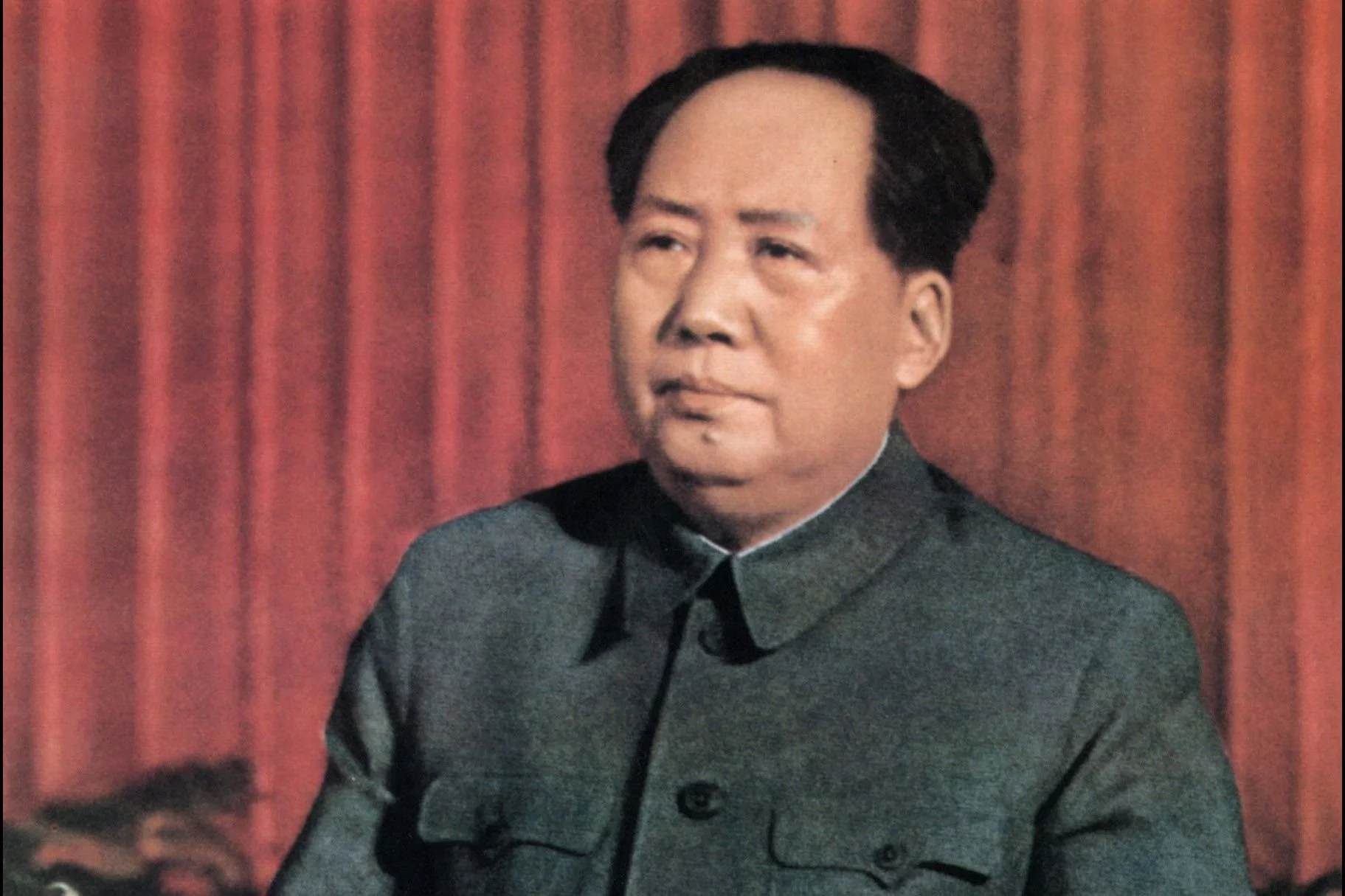
Mao Zedong (1893 - 1976)
Chinese Communist revolutionary and one of the founders of the Chinese Communist Party (CCP). His military strategy, theory, and policies are known as Maoism. He was the son of a wealthy farmer and became a founder of the CCP while studying at Peking University. Mao became the leader of the CCP during the Long March, and led the party to victory against the Guomindang. In 1949, the Guomindang fled to Taiwan and Mao won the war, allowing him to begin implementing his policies across China.
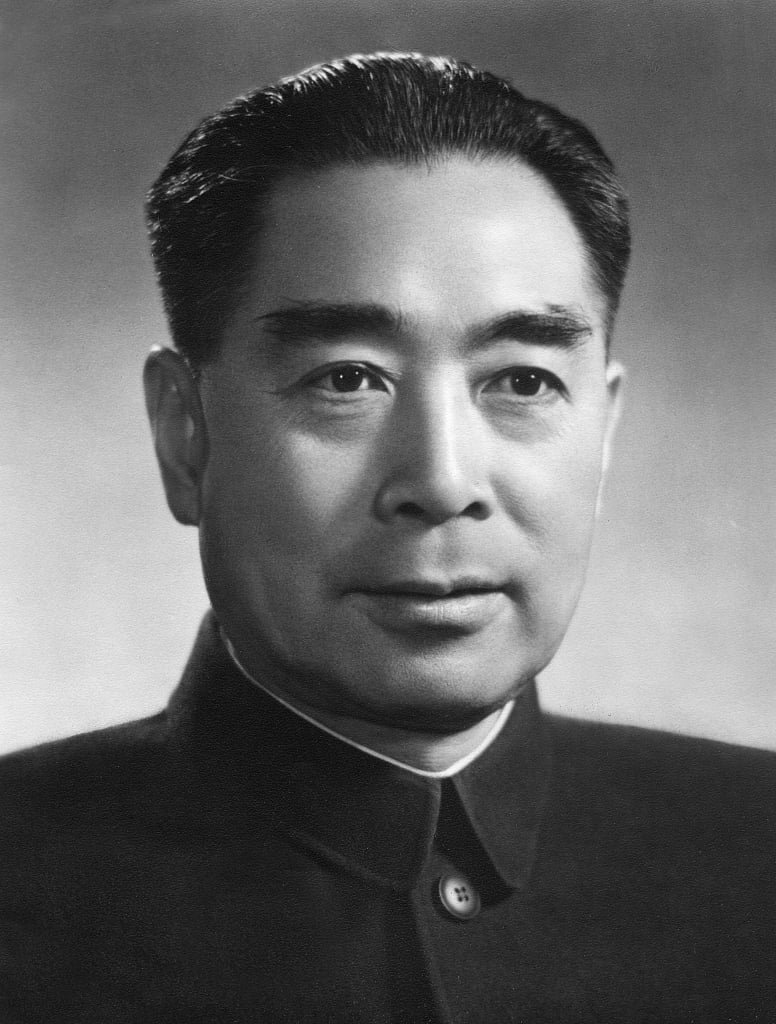
Zhou Enlai (1898 - 1976)
He was the first Premier of the People’s Republic of China, serving from 1954 to his death in 1976. Zhou was good at navigating Mao’s policy and mitigating extremism, and he was the one who called Deng Xiaoping back into the government during the economic downturn in the 70’s. Zhou was loved by the people, and was widely mourned upon his death from cancer
Important people
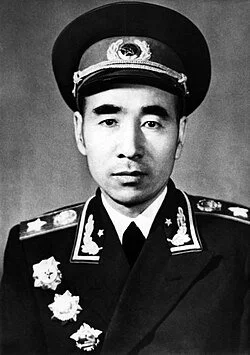
Lin Biao (1907 - 1971)
Mao’s closest ally for many years, he was the chief of the People’s Liberation Army (PLA) and was put in charge of the Campaign Against the Four Olds, a campaign that aimed to modernize and revolutionize China. Lin Biao used the PLA to crush the Red Guards when their activities appeared to get out of control. His growing power made him a threat to Mao, and he was killed in a plane crash in 1971 after being accused of plotting a coup.
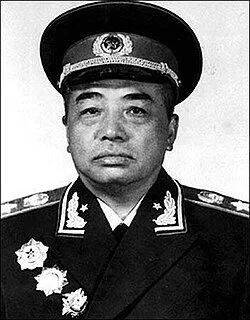
Peng Duhai (1898 - 1974)
He was the Minister of Defense from 1954 until 1959, and was a veteran of the Chinese Civil War. He spoke out against Mao’s policies at the 1959 Lushan Conference, and was subsequently fired and retired. He was arrested in 1970 during the Cultural Revolution and died in prison in 1974.
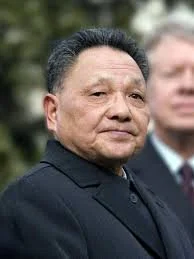
Deng Xiaoping (1904 - 1997)
Deng was an early member of the CCP, and partook in the Long March and became the CCP’s General Secretary. He helped mitigate economic damage after the Great Leap Forward, and made the economic reforms of the 80’s. Deng ordered the suppression of protests in Tiananmen Square in 1989.
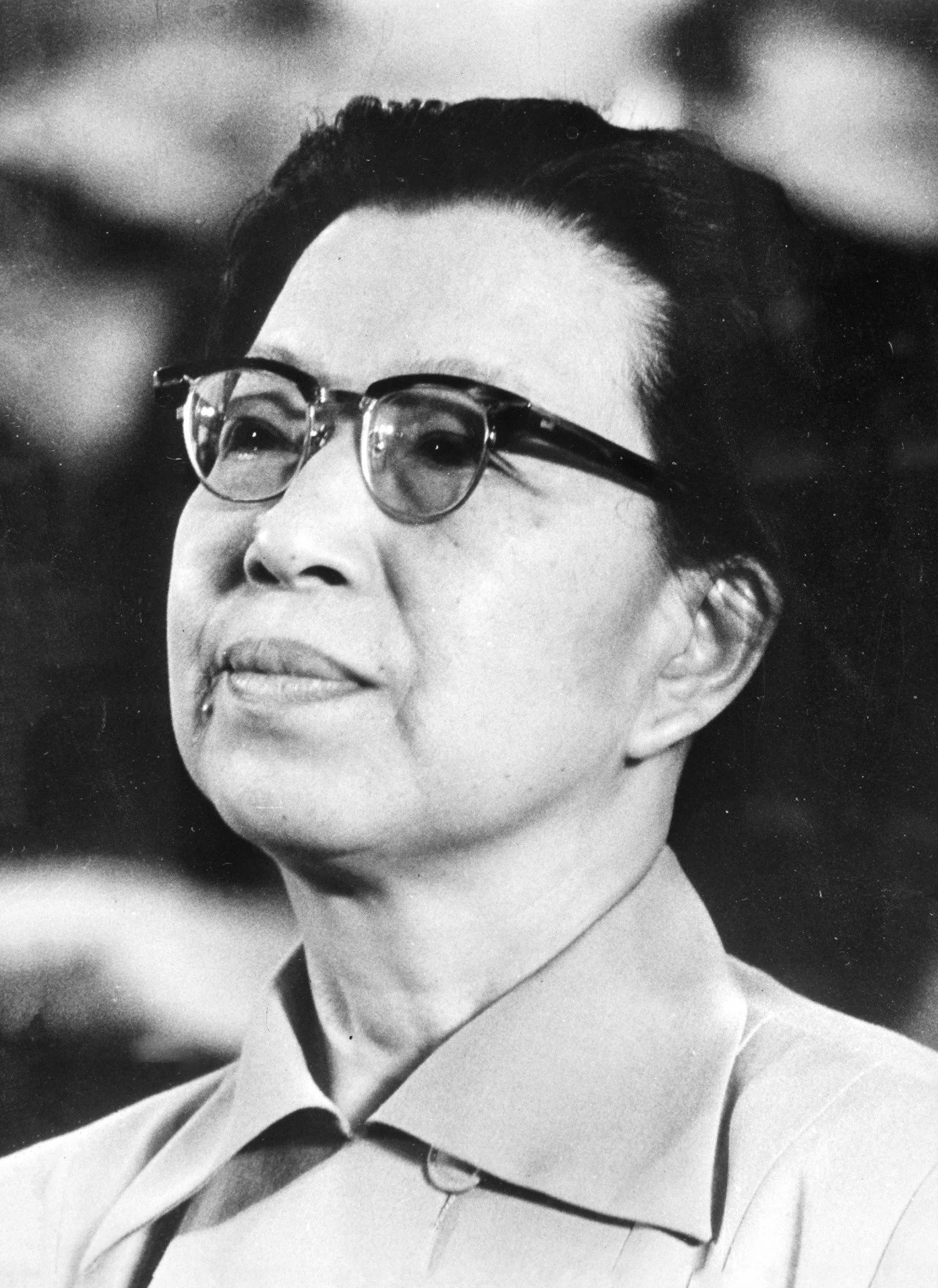
Jiang Qing (1914 - 1991)
She was Mao’s third wife who married him during the Chinese Civil War. She was a close ally of Lin Biao during the Cultural Revolution, and Mao called her the “cultural purifier of the nation”. She rapidly lost influence after Lin Biao’s death, and was imprisoned after Mao’s death. She claimed Mao instructed her, which is why she carried out certain actions.
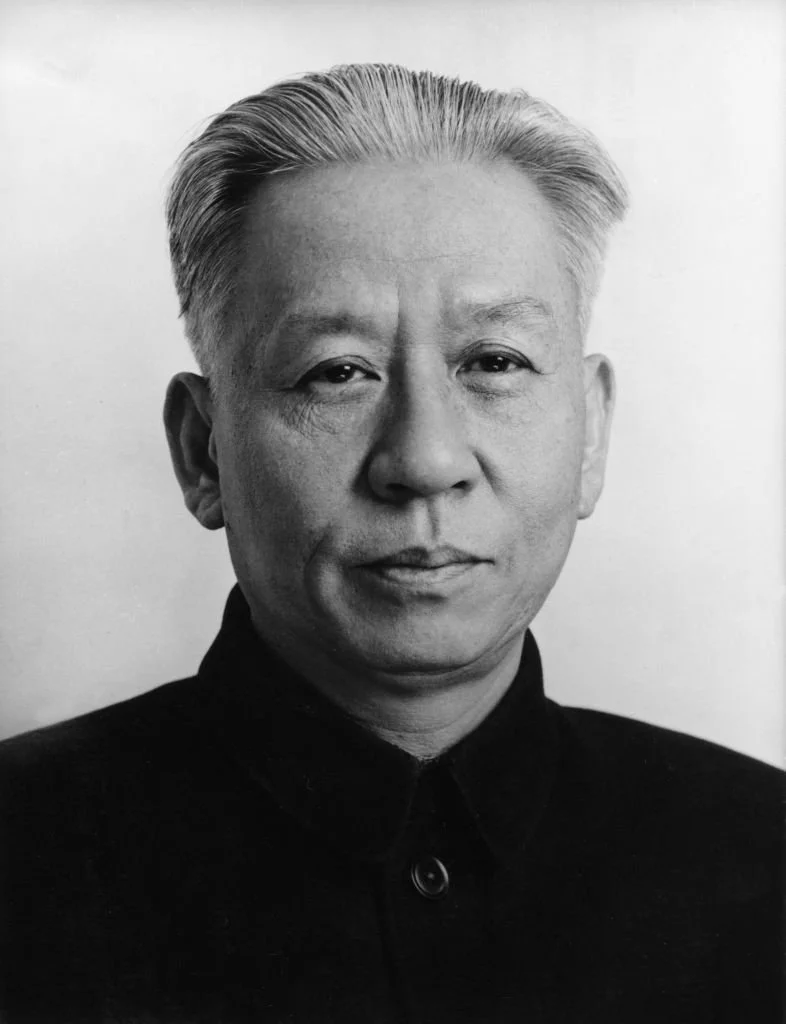
Liu Shoqui (1898 - 1969)
Liu was originally designated to be Mao’s successor, and was given the responsibility of rebuilding the economy after the Great Leap Forward failed. His moderate policies, though successful, got him sent to prison during the Cultural Revolution, and was denounced as being a capitalist and a traitor by Mao. He died in prison after being denied diabetes treatment.
Emergence of authoritarian states
Conditions in which authoritarian states emerged
Economic
China was a feudal country with significant inequality between the ruling class, owners, aristocracy, landlords and working class.
80% of the population were peasants - wealth and power was heavily concentrated in the hands of landlords as China did not have a democratic political system.
In China, only 10% of the land was arable, which meant that natural disasters like flooding could destabilize the food supply of entire regions.
Coupled with the significant rise in population (120 million in 1712 to 440 million in 1900), famines became more frequent due to lack of infrastructure for such a large population and area. Hunger was exacerbated by the custom of land being divided between sons, leading to smaller, less functional estates.
Landlords represented 10% of the rural population, but owned 70% of the land.
This inequality built long lasting resentment of the working class, who were forced into high debts due to having to use 50-80% of their grown crops to pay rent.
During the warlord era (1916-1928), peasant farmland were plundered and land was destroyed.
China had few industrialized areas, and many were under foreign control by Western colonial nations.
Imperialism also built up long lasting resentment, against “foreign devils” yet also against the Qing dynasty and pre-CCP Chinese governments, who submitted to the Western nations.
Resentment and tension boiled over to Taiping and Boxer rebellions. Europeans imposed a $330 million reparations fee on China, further fueling opposition and resentment against these nations.
In conclusion, long term economic struggles such as vast inequality and national economic subjugation of China to other nations fueled resentment of the working class and made fertile grounds for Communist ideology (egalitarian, redistributionist, empowerment of the working class) to take root.
Social
Feudal society with 80% of the population being peasants.
Population grew 8% in the second half of the 19th century, whereas land cultivated only grew by 1%.
Taxes and rents were very high. This worsened the huge wealth inequality, generating social conflict. The KMT did nothing about this disparity, which made the general population feel more attracted to Mao’s Communist policies of land redistribution, social justice, national dignity and the destruction of social classes.
Ancient culture of obedience and hierarchy
Confucianism was deeply engrained in society. Loyalty to hierarchy, respect for authority and putting the group over the individual were firmly respected values.
This social predisposition to central authority made it so that when Mao seized power, it was easy to transition to having a large government which demanded obedience and centralized government. Social expectations made China feel like authoritarianism was natural. Chinese dynasties had ruled through authoritarian government styles for millennia, so many welcomed a strong leader and Party.
Small urban middle class
China had a barely existing urban, educated middle class. This made it so that there were not enough influential and powerful bourgeois liberals to mount opposition to Mao.
Since there was never a solid base for liberal democracy in Chinese society, the transition to power was easy.
National sense of humiliation
For a century, China had been torn apart: Opium Wars, unequal treaties, foreign influence and concessions, Japanese invasions, warlords, famines.
From a social stance, nationalist sentiment was strong: Mao’s pitch for national rejuvenation was met with approval.
People craved strength, sovereignty, prosperity and social justice.
Methods used to establish authoritarian states
Persuasion
Mao persuaded the other CCP leaders to adopt his guerrilla tactics at the Zunyi conference in January 1935, which was ultimately a leading factor in determining the CCP’s victory in the war
His teachings of land redistribution won the support of peasants across China who joined the effort in defeating the KMT
This support was crucial in allowing Mao’s ‘mass-line tactics’ to be successful, which was an important strategy against the KMT
Mao presented himself as a nationalist, fighting for the Chinese people against oppression and Japanese invasion. CCP membership increased between 1937 and 1943 from 40,000 to 1.2 million
The Red Army’s 6 principles (Put all doors back when leaving a house, bundle rice-stalk mattresses neatly and return them, be polite and help out whenever possible, give back everything you borrow, pay for everything broken, and dont take things without permission) convinced the people that the Red Army was actually fighting for them and not exploiting them
Ideology
Mao rallied the general populous with the idea of continuous revolution, which encouraged them to help in the rebuilding of China and helped the CCP survive in its initial years
The ideals of Marxism appealed in China, where 10% of landowners owned 70% of the land, so the peasant majority of the population were happy to accept Mao as he preached the potential power of peasants
Mao adapted it to fit China, which was a largely agricultural society instead of Marx’s vision of a largely industrial society
Mao wrote about his political and philisophical ideologies while in Yanan, which gave his party authority
Ideology included permanent revolution and constant purification, allowing Mao to continue his activities and reduce opposition
The cult of the leader centered around Mao started in 1943, when he took the titles of Chairman of the Communist Central Committee and Chairman of the Politburo
Use of force
Once the Chinese Civil War ended, the CCP launched campaigns to find and destroy any KMT elements that remained in China, using their police force to arrest and often execute previous supporters of Chiang Kai-Shek
Gao Gang and Rao Shushi
Gao Gang was the head of the Northeast China Bureau and chairman of the State Planning Commision. He was accused of wanting to create an “independent kingdom” in Manchuria, after which he committed suicide
Rao Shushi was the head of the Organization Department of the Central Committee, and was accused of “rightist deviation” and lack of enthusiasm when implementing policies. He was arrested and imprisoned, and he died in prison.
The use of guerrilla warfare allowed the CCP to survive 4 extermination campaigns by the KMT, though the 5th forced them to flee onto the Long March
Futian incident was an exceptional use of force
Weakness of political system
Bitterness against foreign interference and weakness of Qing dynasty encouraged revolutionary ideas to spend. The Qing collapsed after being slowly humiliated by foreign powers (Opium Wars, Treaty Ports, etc.).
In 1911 following uprisings, the emperor abdicated and a Republic was set up.
The Republic was very weak. Political institutions were a joke: no rule of law, no national army (just private armies), no centralized control.
Yuan Shikai was president, but when the KMT won the elections, he still wanted to stay in power. He outlawed the democratic process and ruled like an emperor.
He was no better at dealing with foreign intervention and submitted to most of the 21 demands Japan gave China in 1915.
Yuan Shikai died and over a decade of political vacuum, the “warlord” period began. This was political chaos and foreign influence took stronger hold in East China. China splintered into dozens of warlord-run territories.
Peasants, workers, intellectuals: everyone suffered from constant betrayal, shifting borders, no security.
CCP and KMT formed the United Front to create political unity in China but ideological differences soon emerged and Civil War started.
Chiang Kai-shek’s Nationalists technically reunified China in the late 1920s.
But their rule was corrupt, elitist, militarily weak, and heavily reliant on gangster alliances (Shanghai was basically co-run by mobsters and the KMT).
The KMT’s inability to fight the Japanese properly (even with U.S. help) made them look like cowards.
Politically, they were also authoritarian, just bad at it. Between political repression and incompetence, everybody loses faith.
In conclusion, weak and ineffective governments, power vacuum led to Northern Expedition (war to unite country) ineffective action in war against Japan then another war amongst Chinese = deep political turmoil and chaos.
Impact of war
There are three significant wars that impacted the emergence of Mao’s authoritarian state.
WW1:
Increased national Chinese humiliation. China had provided 95,000 laborers - 20,000 of which died on European soil. China expected to be returned Shandong in return, but it was given to Japan.
This prompted national protests by students in Beijing (May 4th 2019) known as the May Fourth Movement, which paved the way for the emergence of the CCP as a political party. Chinese disgust of Japanese expansionism and Western complicity blossomed into the creation of nationalist radical parties.
Second Sino-Japanese War (1937-1945)
The GMD are the official Chinese government at the time, and they struggled to fight Japan effectively.
Meanwhile, the CCP protected rural areas and peasants with guerrilla tactics and unconventional warfare, winning the support of the public and presenting themselves as the real “people’s defenders.”
The CCP built major credibility, legitimacy and popular support during this war, as they were not corrupt and established liberated zones in which they brought communist reforms.
The Chinese Civil War (1945-1949)
KMT was crippled after Japan surrenders: troops exhausted (desertion, famine), and reputation is at an all time low due to corruption and war mismanagement. KMT also lost their American support due to not wanting to collaborate with the CCP.
On the other hand, the CCP had brand new popular support, fresh troops, national support, a disciplined, nationalist image and strong rural backing.
Without the prior wars to weaken the KMT (and strengthen the CCP), it is unlikely that the CCP would have had a chance to emerge as an authoritarian state.
Coercion
Futian Incident in December 1930 - Mao had around 4,000 Red Army members arrested, claiming these regiments were infiltrated by the KMT. This triggered a mutiny in Futian, which Peng Duhai and Lin Biao crushed and had approximately 700 communist soldiers killed. Mao continued this purge in 1931, this coerced other members to accept him and his policy
In 1942, Mao launced ‘rectification campaigns’ where anyone suspected of disloyalty would be forced to confess their “crimes” and they would be stripped of their posessions. He also started struggle meetings, where people would denounce each other; not to speak invited suspicion, but saying too much got you in trouble
Role of leaders
Mao remained the face of the Chinese Communist movement, thus keeping support from people who had seen Mao as their savior during the war
His success in terms of military tactics made him much more popular within the party than other leaders such as Otto Braun, allowing him to rise to control the party entirely
He controlled army behavior strictly, which allowed him to gain support from peasants, but he also provided basic supplies and pay to the soldiers which ensured loyalty
Mao wasn’t part of the elites who were despised by the majority of the Chinese population, meaning he could establish a closer connection to them
Mao had strong beliefs in his own teachings and strategy, making him a confident leader
He was able to establish an alliance with the Nationalists in 1936. While fighting didn’t stop completely, it halted enough for the CCP to regroup and resupply to prepare for fighting to start again
Use of propaganda
During the war, the CCP effectively used propaganda to make their policies look more attractive to the peasant populations
They used simple slogans and posters with only imagery, as much of the rural peasants were illiterate, so the CCP propaganda would be able to reach them. They also had no access to newspaper and radio
Posters and woodcarving were used to explain the Communist ideology to peasants, such as land redistribution and a promise to get rid of exploitation
The Communists offered a better future, which was attractive to peasants who believed they were being exploited by landlords
The CCP set up Propaganda Units, often attached to Red Army units, which were made to spread propaganda to local populations
The CCP also spread stories of a place where Communism prevailed, everyone had food, and the workers were not exploited. This was the Soviet Union
The CCP portrayed the Nationalist GMD as the villains to turn the people against Chiang and his army
They claimed they were going north to fight the Japanese in 1934 when they were forced out of the Jiangxi Soviet, which attracted the nationalist sentiment people had been feeling since the 1900s
They portrayed Chiang as a selfish power-seeker, as he refused to fight the Japanese and let Chinese people be massacred. They also portrayed themselves as patriots while calling the GMD weak and ineffective
Propaganda called Chiang an American puppet, and quickly spread the news when Chinese women were raped by American sailors. CCP propaganda made themselves out to be true patriots who were fighting to rid China of foreign powers
Propaganda played on the failures of Chiang’s government, such as the hyperinflation, corruption, and treatment of locals
The GMD suffered from frequent desertions, so Communist propaganda targeted at their own soldiers aimed to indoctrinate them so they wouldn’t desert. The propaganda told the soldiers they were part of a moral crusade to create a better society without landlord and capitalist injustices.
The propaganda value of the Long March was vital to growing the CCP’s support base
Consolidation and maintenance of power
Use of legal methods
Soon after winning the war, the CCP was made to be the only legal party, making China a one-party state
The CCP divided the country into administrative regions, each governed by a bureau of 4 major officials; the Chairman, the party Secretary, the military commander, and the police commissar. The last two were controlled by the PLA, effectively putting all of China under military control. Central authority was in the Central People’s Government Council, comprised of 56 leading party members, 6 of whom served under the Chairman of the council, Mao, who was the undisputed government leader
On September 20, 1954, the First National People’s Congress enacted a new constitution. This dealt with economic and political structures, land ownerships, women’s rights, and decreed equality for all citizens
Some parts were ignored, such as the right to freedom from oppression and the right to practice religion
Local officials kept logs and information of all people within their region, which allowed them to keep track of people, their movements, their political affliction, their production, and whether or not they were under state suspicion
Danwei was a permit for people to work in specific areas, which controlled who could work and where
Hukuo entitled families to obtain accommodation in certain places
Dangan was a log held by local party officials with records and details of every individual
Announced the first Five Year Plan in 1952, see section on domestic policy
Many of the CCP officials from the war didn’t have the skills to govern, so Mao kept government workers from the previous government in their positions as they were needed to keep the government working
In theory, the government worked through the people deciding the members of the national and local councils, in reality elections were fixed and officials made sure there was no opposition
In theory, the National People’s Council controlled appointment of judges and the people had the right to fair trials, but this was not practiced until after Mao’s death
Propaganda
Launched the Three Antis Campaign in late 1951 to rid China of corruption, waste, and bureaucracy. In reality, this was a propaganda tool to rally the population and push them to support radical government reforms
Launched the Five Antis Campaign in 1952 to target cheating on government contracts, bribery, tax evasion, stealing state information, and theft of state property
Both Anti campaigns were used to consolidate Mao’s power by getting rid of any political opponent and capitalists
Both campaigns combined caused 100,000 deaths, which the CCP says were by suicide. They targeted an estimated total of 10,000 people
The campaigns indoctrinated youth with CCP teachings, training them to be future party officials. These kids were encouraged to report their family or neighbors for “counter-revolutionary behavior”
Hosted struggle meetings in which people would be denounced and attacked for supposed capitalist exploitation
Many managers and business owners survived as their skills were needed
The CCP ensured conformity through multiple methods to ensure that “virtually every student or teacher was a loyal servant to the state”
Rallies, songs, and slogans were advertised and people participated with enthusiasm
People were re-educated to believe party doctrine
People were labeled “good”, “middle”, or “bad” based on party loyalty and lower people were attacked socially and politically
‘Counter-revolutionaries’ were sent to labor camps in the remote parts of the country which were modeled after the Soviet Gulags. Conditions were harsh and torture was common. An estimated 25 million people died here
There was an average of 10 million people in camps at any given time
There was an established ‘killing rate’ that camp officials had to meet, where they had to kill 1.2 people per thousand
In 1956, Mao launched the Hundred Flowers Campaign, with the aim of allowing the people to criticize the government so they could improve
It is debated whether or not this was actually to allow criticism or to find opposition
When people began heavily criticizing Mao and the party, Mao turned this into the Anti-Rightist campaign and accused anyone who criticized Mao of being a rightist and they were subsequently purged in Struggle Meetings
This started as a propaganda campaign to make people feel the government was listening, and ended in a propaganda campaign against supposed right-wing threats
Mao’s swims in the Yangtze River - 1956 & 1966
One of Mao’s favorite activities was swimming, so swimming became one of the symbols of Mao himself, sparking the tradition of swimming across the Yangtze River as a way to honor Mao and his prowess in defeating the KMT. This swim took place on a section of the Yangtze that was about 15 kilometers in width and thousands of people partook in this activity.
In 1956, Mao swam in the Yangtze river, this served to boost his image among civilians as he was seen as human, which created a connection between the people and Chairman Mao. This was used in propaganda as posters showed his interactions with people and asserted his love for the people and his country. This came shortly before the start of the Great Leap Forward in 1958.
In 1966, people were beginning to doubt Mao following the failed Great Leap Forward and were questioning his health, there were rumors that he was dying. Mao addressed this by swimming in the Yangtze River again, despite being 71 years old, to show that he was still healthy and capable of running the country.
The propaganda created around this event intended to prove he was still physically strong by exaggerating his swimming speeds, claiming he swam at 3.8 meters per second, which surpasses the current world record of ~2.1 meters per second. Some sources claim he crossed the river, while others assert that he did not, but the event was still important as it once again created connections between Mao and the people, especially the youth.
Western analysts were concerned about this swim because the 1956 swim came shortly before the Great Leap Forward, so they worried this swim would precede another disaster. They would be partially correct, as 2 months earlier Mao had announced the Cultural Revolution and the campaign against the “4 olds” and suspected bourgeois elements within the government itself
Mao used propaganda to hide the impacts of the Great Leap Forward and the Cultural Revolution to protect his own image
Extent and treatment of opposition
Shortly after the CCP won the Chinese Civil War, the People’s Liberation Army moved to secure the provinces of Tibet, Xinjiang, and Guangzhou
Tibet was not ethnically Chinese, and followed Tibetan Buddhism with their leader as the Dalai Lama. Chinese forces moved into Tibet and successfully crushed resistance in 1959, leading the Dalai Lama to flee to India. The CCP began introducing incentives for Chinese people to move to Tibet to make it harder for them to resist. The Tibetan people were a threat to the CCP as they needed absolute power and under their religion, they answered to a different leader than Mao, and this had to be corrected
Xinjiang were also not ethnically Chinese, and this region had strong separatist sentiments. The PLA moved in and suppressed any opposition. They created re-education camps in both Xinjiang and Tibet to take children and indoctrinate them with CCP ideology
Guangzhou was the final GMD base in mainland China, and the PLA quickly destroyed all GMD elements and opposition in this region
Establishing control over these regions created national unity, though the other ethnic groups were oppressed to achieve this
On 10 January 1954, the CCP passed the “Resolution of the Unity of the Party” which banned factionalism and made opposing Mao very difficult to organized as non-conformity was outlawed
In the 1956 Hundred Flower Campaign, supposed “rightists” were brought to struggle meetings and purged, resulting in 400,000-700,000 intellectuals being purged
1966 Cultural Revolution
In May 1966 Mao announced the Cultural Revolution, this was mainly an effort to purge opposition but also served major propaganda purposes. Mao claimed the bourgeois had infiltrated the government and were trying to restore capitalism and western imperialism.
Mao encouraged the youth to rebel against the government, which Mao was losing control of due to failing economic policies, and announced that rebellion is justified. In August of 1966, many youth formed the Red Guard throughout China and began seizing control from local governments and dismantling public systems.
The Red Guard were symbolized with a red book called Quotations from Chairman Mao Tse-Tung (Mao’s name in Chinese at the time) which contained Mao’s revolutionary teachings and were used to justify dismantling governments. Revolutionaries in the government formed the Gang of Four, four CCP officials who led the Red Guard movement and became influential after Lin Biao died in 1971. These men were arrested and charged with treason in 1976 after Mao’s death.
This served to reduce opposition as people began deposing party officials who may have been able to rival Mao’s power while Mao remained at the top and the face of the revolution. Effected departments within the party included the Organization Department, which handled party personnel and was essentially destroyed and the Propaganda Department, which had many high-ranking officials deposed
This became major propaganda as Mao made efforts to revitalize the ideals of continuous revolution and class struggle and reasserted Mao’s position as the father of communism in China. Mao prevented police from interfereing in Red Guard activities, which further served propaganda as officers who did were accused of being counterrevolutionaries, allowing what would become widespread violence across China
Violence included torture, public humiliation, murder, massacres, rape, and even cannibalism in some instances. Often, those who were labelled as counterrevolutionaries committed suicide before the mob could murder them, as once one was accused they were unlikely to be acquitted. Governments were overthrown and revolutionary committees were established. Over 18 million firearms were seized by civilians to aid in the revolution, and in some places even unconventional and biological weapons were stolen.
In rallies between August and November, Lin Biao called for the destruction of the “Four Olds”; old culture, old customs, old habits, and old ideas. This resulted in historical sites being destroyed as a way to counteract religious and cultural values, such as the Temple of Confucius. Libraries and historical records were destroyed, book burnings were common, religious sites were closed, looted, and/or destroyed. The Red Guard forced Buddhists in Tibet to destroy their monestaries at gunpoint.
There was little order within the revolutionaries, as factions arose and began fighting each other. Many times, revolutionary factions would overthrow each other once the local government was deposed
In 1968, Mao began to fear the power of the Red Guard and revolutionaries and started the ‘Down to the Countryside Movement’, which claimed to send bourgois youth to the rural farms to to ‘experience working life’, which in practice sent Red Guard members to the countryside to prevent them from causing more social disruption.
Estimates for the number of deaths ranges drastically, with some sources claiming only hundreds of thousands while others claiming up to millions. It is difficult to create an accurate estimate due to the scale of widespread violence and the cover-ups that subsequent regimes engaged in.
This disaster had long-term effects due to intellectuals being killed, schools being closed, mass relocations, attempts to retake control of governments, riots, the scale of violence, and lingering revolutionary ideals
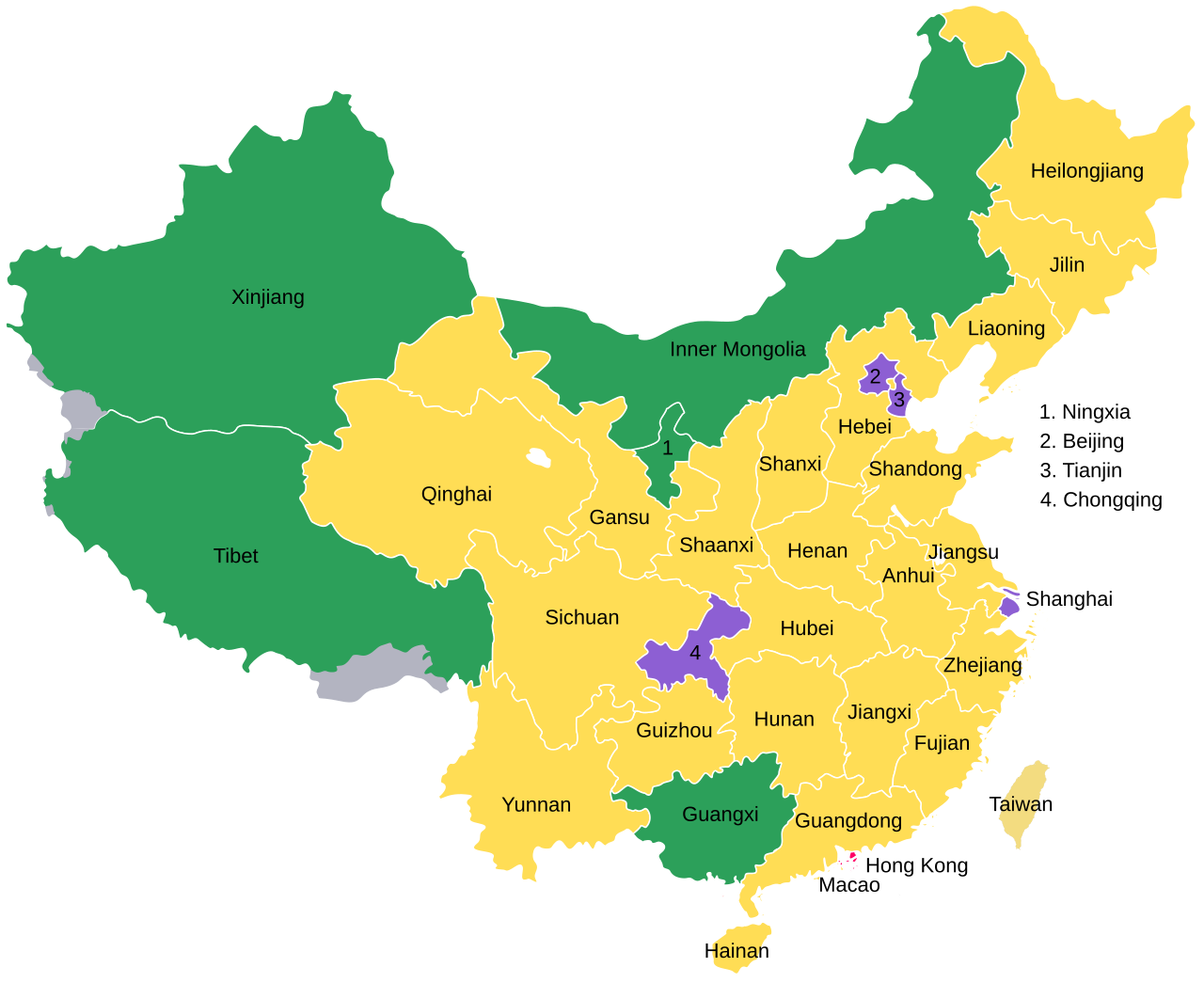
Map of Chinese Provinces - Tibet and Xinjiang are the easternmost provinces
Use of force
Common Program (1949) was to destroy opposition, saying they would “suppress all counter-revolutionary activities, severely punish all Guomindang, counter-revolutionaries, war criminals, and other leading counter-revolutionary elements… Feudal landlords, capitalists, and reactionary elements in general shall be deprived of their political rights”
The entirety of China was ruled by the Chinese Communist Party, who at the time had a membership of only 4.5 million members, less than 1% of the population
At the end of the war, there still existed opposition parties within China and there were frequent separatist movements in remote regions, these were crushed using mainly the army and police force
Between 1950 and 1952, the CCP destroyed the landlord class by encouraging peasant violence, landlords would be lynched (killed by angry mobs) and have their land seized
This fit within the Communist idea of class struggle and the use of violence to destroy the feudal order
The CCP encouraged “Struggle meetings” in which landlords, or normal people, were accused of exploiting people, being counter-revolutionary, or being capitalist. Once someone was accused, they had difficulty defending themselves due to the violent nature of the meetings and the passion other people had. This system allowed the CCP to get rid of opposition with full support from their population
Also known as “Speak bitterness” meetings, as people were encouraged to denounce people and give their account on why the accused is guilty
In October 1950, the PLA invaded Tibet as they followed the authority of the Dalai Lama. 60,000 Tibetans fought against the invasion, but were ultimately unable to overcome the superior weapons of the PLA
The revolts came from oppression and starvation, as Mao’s agricultural reforms reached Tibet and many people starved. Afterwards, many were arrested and the lives of Tibetans were controlled
The mention of the Dalai Lama in China and Tibetan religious practices were banned
The Dalai Lama fled to India and began campaigning for Tibetan independence on the international stage
The Panchen Lama (Second authority to the Dalai Lama) reported in 1962 that 20% of the Tibetan population had been imprisoned and half of them had died there. Mao denied this and had the Panchen Lama imprisoned, but Zhou Enlai later confirmed the figure
The PLA also invaded Xinjiang, which was a majority Muslim province in the west that the CCP feared due to separatism. By 1951, the PLA secured full control of Xinjiang
The CCP established a forceful presence in the southern province of Guangdong, which was the traditional base of the GMD, as a means to eradicate Nationalism
Role of leaders
Mao was idolized by the people, as he was the one who freed them from oppression and stabilized China after decades of conflict
The people expected a lot from Mao and the CCP due to their promises during the Civil War, they expected continuous revolution and the destruction of class divisions
People questioned Mao after the 1956 Hundred Flowers Campaign, but nothing was done about this
In 1966, Mao engaged in the annual Yangtze River Crossing Festival, in which thousands of participants would swim across the Yangtze River. This was after he had stepped back from running the country, and his appearance was a popular event in China
1968 Mango Fever
On August 5, 1968, the foreign minister of Pakistan visited Mao, and brought him a box of mangoes, a fruit which does not grow natively in China
Mao reportedly loved the mangoes, and sent most of them out to various workers in Beijing
The workers, instead of enjoying the treat, saw this as a glorious gift from Chairman Mao, and the mangoes became a symbol of Mao’s love for the people. They were sent around China in massive processions, and people made wax replicas of the mangoes and sold them as they represented Mao himself. People made shrines with a mango and Mao’s face, and worshipped it
This event only lasted around a year before it died down, with people using their wax mangoes as candles. There is no information on whether the original mangoes were actually eaten. Jiang Qing tried to restart the fever in 1974 when the First Lady of the Philippines brought more mangoes, but this attempt was unsuccessful
Successes and failures of foreign policy
Initial problems the CCP faced included an invasion threat from the GMD in Taiwan and the CCP wasn’t accepted as the government of China in the United Nations
Korean War (1950)
When a war broke out in Korea in 1950 between North and South Korea, Mao initially wanted to stay out of it, as his army and economy needed to recover from the Chinese Civil War that recently ended. However, when the Communists broke the ceasefire by advancing south and were subsequently pushed north by American and United Nations troops, Mao became fearful that the Americans wouldn’t stop and would invade China, and thus he quietly mobilized the People’s Liberation Army and sent them into Korea
The US believed Mao had worked with Stalin to orchestrate the North Korean invasion of the South, while in reality Stalin told the North Koreans they could invade if they wanted. Mao did support the invasion though
American General Douglass MacArthur was ordered not to push the North Koreans farther than the 38th Parallel, but he decided to push much further to the Chinese border, which prompted Mao to send his forces in as to prevent a western victory and protect his country
The CCP used the slogan “Resist America, aid Korea, preserve our homes, defend the nation”
Mao’s goal was to protect both North Korea and China from American forces and to preserve Chinese influence in Korea. China’s forces managed to push the United States, the world’s top military power, back to where the current borders are, resulting in a stalemate
This was used as propaganda within China, as China’s success against the United States, which had been vilified for years, reflected well on Mao and his leadership. This solidified Mao as leader of China and showed China’s military power to the world
China lost 1 million soldiers, including Mao’s son, in the Korean War, and as a result the United States gave Taiwan military support, which prevented the CCP from launching an amphibious invasion of the island
The CCP was hailed as the defender of Marxism
Military spending on the Korean War was high and thus the economy suffered
Relations with the Soviets
Mao signed an alliance with the Soviet Union in 1950, from which the Soviets provided loans and experts to aid development within China. This helped early industrialization, which included the completion of dams and infrastructure. This helped Mao as he was at the head of massive development projects in China, which supported his public image
In 1953, Stalin died, and in 1956 Nikita Khrushchev gave a speech denouncing him. Once people heard of this, some people began organizing strikes in China. Mao saw this as an attack on his ‘cult of personality’ due to Khrushchev’s denunciation of Stalinism
In 1956, references to Mao Zedong Thought were removed from the CCP Charter
The Cult of Personality was denounced and collective leadership was encouraged, though this didn’t have much of an effect
Mao tried to divert criticisms away from himself
In 1961, Mao was worried about the Soviet Union’s supposed ‘revisionism’ under Khrushchev, and subsequently ended his alliance with the Soviets, which he used with propaganda to portray himself as a defender of Marxism as he was fighting capitalists
Since 1945, the Republic of China held one of the five seats on the United Nations Permanent Security Council, even after they fled from Mainland China in 1949. In 1971, the Republic of China was expelled from the United Nations and replaced with the People’s Republic of China, giving the CCP a permanent role in international politics
China established trade with the United States following a visit by President Richard Nixon
In both countries, the other was still portrayed as the enemy, but not to the same extent as they had been. This benefitted both nations, as they gained valuable trade partners
China won a border war against India in 1962, again showing their military strength
In 1964, China detonated a successful atomic bomb, making them the fifth country to develop such technology. Though they did not have the missiles to deploy them, this sealed China as one of the top global military powers
Extent and Treatment of Opposition (Continued)
Who were the opponents?
Political opponents
Other political parties, dissidents, intellectuals, divergent members within the CCP who were not loyal enough or tried to stray away or disagree with Mao’s policies
Class enemies
Bourgeoisie, capitalists, landlords, remnants of the GMD
Many of Mao’s political enemies were labelled “class enemies,” so it’s hard to determine who were class enemies and who were political enemies when examining the methods Mao used and the opponents he purged
Criminals
Bandits and warlords
Minorities
Religious Buddhists in Tibet and Muslims in Xinjiang
Minorities across China would have different policies, ideals, and respect of authority, and thus they must be made to conform with the CCP’s grand authority
Other enemies
Christians, intellectuals, disabled people, feminists - All were (according to the state) unproductive or resistant to CCP ideology
Methods to deal with opposition
Propaganda
People’s Liberation Army
Registration systems
“Nation of Informers”
Struggle meetings
Laogai System (Labor camps, akin to the Gulags)
Many people were sent here to prevent opposition, limit their influence, and increase CCP power.
“Reform through labor”
Prisoners had to make full confessions in order to obtain a minimum ration of food, they were sleep deprived, interrogated, put in solitary confinement, beaten, and starved until they broke down and conformed. People were indoctrinated with CCP propaganda
Each year about 10 million people total were in Laogai camps, over 25 million died during this period. By 1976 there were over 10,000 labor camps across China
Torture
Legislation
Treatment of Political Opponents
In 1949 there were 10 political parties within China, by 1952 the CCP was the sole party
Gao Gang and Rao Shushi were both purged in 1954. They were dismissed from their positions and publicly denounced
Hundred Flowers Campaign (See ‘Propaganda’)
Treatment of Class Enemies
The 3 and 5 Anti Campaigns (See ‘Propaganda’)
Nation of Informers: Neighbors would inform local CCP officials about the suspicious behaviors within their communities. Bright red “denunciation boxes” were set up in street corners
Registration: Danwei, Hukup, and Dangan (See ‘Use of Legal Methods’)
June 1950 Agrarian Law: Destroy the landlord class, introduce peasant ownership over rural production. 43% of land was distributed to 60% of the population, and 1-2 million landlords were executed
“Aid Korea, Resist America” Campaign was used during the Korean War to purge enemies under the guise of them being spies or traitors
Guangdong Reunification Campaigns: In 1951, the GMD was rumored to be using Guangdong as a base to retake China, the CCP executed 28,000 people in order to consolidate it
Treatment of Criminals
Bandits and Warlords: There was violent bloodletting in the early 1950s in Shanghai and Guangzhou as part of underworld gangs and organized crime. “Bandits and criminals” were rounded up and over ½ of them were executed in Guangzhou, and 28,000 were killed in Shanghai
Treatment of Minorities
Reunification Campaign 1950-51: Resistance in Tibet was suppressed by the PLA and a puppet government was established. A 17-point agreement was set to merge Tibet with the PRC. Traditional religious practice was prohibited, along with teaching Tibetan language and history. The aim was to suppress any rival ideologies. The Dalai Lama was a rival leader and thus was a threat
Xinjiang had a large Muslim population and bordered the Soviet Union. The CCP was concerned about connections to the USSR, so the PLA imposed control. The Xinjiang leaders were invited to a political conference in 1949, but the plane mysteriously crashed and all on board died, and puppet leaders from Beijing were sent as replacements
Domestic Policy
Economic
Aimed to stabilize the economy immediately after the CCP victory, Mao did this by cutting public spending, increasing taxes in urban areas, and replacing the old unstable Chinese currency with the new Yuan
This reduced inflation rates from 1000% in 1949 to 15% in 1951
The urban population increased from 57 million in 1949 to 100 million in 1957, infrastructure was developed in key areas, such as bridges across the Yangtze River
The expansion of Tianmen Square started in 1957 and only took 2 years
The high-interest loans that the USSR sent to China to support rapid infrastructure development soured relations between Stalin and Mao
1950 Agrarian Reform Law
The land or rural landlords, important families of the KMT, and certain foreign nationals were seized and redistributed to the peasants to provide the base for economic industrialization
This was intended to appease the rural populations, who had supported the CCP on the basis that they’d get land distributed to them
1953 First Five Year Plan
This was intended to industrialize China with support from the Soviet Union and lasted until 1957. The basis for this plan was inspired by the USSR’s 5-Year plans which set targets for industry and prices for industrial goods. The Soviet Union provided advisors, manuals, and blueprints to help China industrialize quicker
The highest focus was on power, steel, and mining production, along with machinery, defense, and chemicals development. They also allocated support to transportation and communications infrastructure
State-owned businesses were expanded and offered welfare benefits to workers, including healthcare and food. This allowed the CCP to better control workers’ lives.
This plan also collectivized agriculture, fishing, and forestry industries
Coal and steel production more than doubled the planned growth models, and the value of industrial products rose by 128.6%. By the end, production of grain reached 195 billion kg. However, government spending on infrastructure loans surpassed what it was supposed to, which strained the national budget.
The plan restricted food imports in an effort to achieve a degree of self-sufficiency in food production at a time when agricultural technology was unfit to support the growing population, straining total agricultural production
This plan was largely successful, despite strains on budget and food production, as it was able to increase industrialization with help from the Soviet Union and increased urban populations by 30%
Collectivization (1953-8)
During the first 5-Year Plan, the CCP encouraged farming families to join small cooperatives to increase crop yields. Agricultural land was combined into larger farms in which the owners of the old small farms would jointly own one large farm and everyone would work it together. The income of each family would be determined by their contributions to the cooperative and how hard they worked
The government held campaigns and public criticism meetings to force people to accept collectivization or face being ostracized. Anyone who did not want to work for the commune was denounced by their community
By 1966, ~60% of farmers were part of cooperative farms. In 1955, the system was changed so that income was determined only by the amount of work contributed, which supported lower-class families who could not contribute as much land as middle-class families
By 1958, all farmland was joint into about 26,000 communes, which were several cooperatives joined together, and the price of crops was set by a central local government
Collectivization converted many small individual families into one large interconnected community, to the point that private cooking was not allowed and people worked for the commune. The intent was to support industrial development by improving agricultural output through encouraging farmers to work together and split work
In practice, this led to a decrease in agricultural production as farmers found difficulty in sharing equipment which led to missed deadlines. Additionally, excess grain was sold to the government at a set price to support the urban regions, but the amount of food that an individual could keep per month was set by the government and was not enough to support a grown adult, leading to starvation.
Many farmers escaped to cities to avoid starvation but in 1955 the CCP created an ‘internal passport’ to prevent mass migration to urban areas
By 1958, the government appointed local officials to control grain production, but these officials were often unfit for this job. The officials would exaggerate the total grain production of their assigned commune, leading to the government expecting more grain from them, so the farmers themselves could keep even less grain. Furthermore, the officials would often keep more grain to themselves to feed their families while the farmers would starve. Ultimately, collectivization resulted in mass famine.
Great Leap Forward (1958)
This was an attempt to overtake western Capitalist nations such as Britain in just 15 years. Mao believed Chinese revolutionary spirit could overcome all obstacles, and that using peasant power and urban plants could quickly turn China into a modern state
Despite his military success, Mao was not knowledgeable in economic affairs. He believed that close planting and deep ploughing, following the model of a Soviet scientist, could lead to a great increase in agricultural output. He ignored the knowledge of the peasant farmers and enforced farming laws that eventually led to crop failures and famine
He recruited enthusiastic, but unskilled, workers to build infrastructure, steel furnaces, industrial plants, power stations, and coal mines. The results were often low quality or ineffective, creating safety hazards and producing low quality goods. For example, the steel furnaces he encouraged peasants to build and throw all their tools into produced bad steel that could not be used for tools, and thus farming equipment was effectively destroyed
Mao followed Lysenkoism, which promoted planting crops close together to maximize the output on a fixed plot of land, but this failed as the soil could not support the amount of plants and thus the crops could not get the nutrients they needed to grow, causing them to die
He launched an extermination campaign against sparrows, as he claimed they were pests who were eating the crops without providing benefits. In reality, the sparrows were eating the insects who were the actual pests eating the crops. People would kill them directly or scare them so they could not land, causing them to die in the air. Sparrow nests were destroyed and eggs were broken. Once the sparrow population was depleted, locust populations flourished and began ravishing the farms
The Great Leap Forward led to a large-scale famine between 1959-1962, resulting in an estimated 38 million deaths
Mao didn’t take responsibility, he blamed the peasants for hoarding food, the local officials for being incompetent, and the weather effecting the harvest
According yo Yang Jisheng, the famine was a government failure on every level; personal, local, and systemic
On the personal level as Mao was not prepared to allow criticism of the Great Leap Forward. At the Lushan Conference, Peng Duhai told Mao about its shortcomings but Mao was furious and publicly humiliated Peng and removed him from his position. Mao refused to change his policy, and his subordinates would only tell him of successes as they were worried of what he would do otherwise
Local leaders were afraid of admitting problems as they may be punished, so they reported false successes to superiors at the provincial level, who then inflated the successes when reporting them to the national officers. Authorities forbade people from leaving areas of famine
Disruptions of rural industrialization, such as deep ploughing, close planting, and leaving too much land empty to recover led to a drop in agricultural production. Between 1958 and 1961, harvests fell from 200 million metric tons to 147.5 million metric tons. This came at a time when many people were still experiencing food insecurity. Local officials still reported successes in fear of retribution, leading the government to collect more grain tax, leaving communes starving with even less food. Local officials took large shares of food for their own families, leaving the weak with next to nothing
The systemic failure came from the party’s monopoly over the truth, meaning no criticism could ever alter the policies of the Great Leap Forward. Even the elites were fearful of punishment if they spoke out. Mao eventually had to admit defeat when he could no longer ignore the famine. 15 million urban residents were forced to leave the cities in the early 60’s as there was no longer enough food to support them.
While a great military strategist, Mao was not skillful in his handling of economic affairs. During the Great Leap Forward, he refused to change his policies which were actively causing famine and death, and recovery only began once he took a step back from economic policy after the end of the Great Leap Forward. There was no careful planning behind his policy and he ignored the reality that deep ploughing and close planting did not lead to a higher crop yield.
Policies on women
Mao condemned arranged marriage as ‘indirect rape’ in 1919, and his policies reflected this in the 1950 Marriage Reform Law
Abolished concubines, arranged marriage was outlawed, women and men who had been forced into marriage were allowed to divorce, and all marriages had to be registered with the state
This law was loved by the masses, as many people sought divorces
Foot binding was banned
Women were given full equality in the 1954 Constitution, with Mao stating “women hold up half the sky”
They were given the right to own land, right to divorce, and right to work
The land that women had been granted was taken away during collectivization
Traditional elements of China such as foot binding and harems were abolished
After this change, many women divorced their husbands and remarried
Children of unmarried parents were given full legal status
The government was still very patriarchal despite these reforms
Women only made up 13% of the total CCP membership
People did not support equal rights in Xinjiang, as they followed traditions
From 1949 to 1976, the percentage of working women rose from 8% to 32%
Despite this, many women were not suited to be in the workforce
Soldiers in the People’s Liberation Army became worried their wives would divorce them while they were serving in the military, so the CCP implemented a policy where women could not divorce their husbands if the husband is an active duty soldier
Despite reforms, female infanticide continued, where baby girls were seen as subserviant and unable to reach the economic value of a man, and thus were murdered
In communes, couples were segregated and many wives’ and mothers’ roles were made redundant
During famines, many women had to choose which child would starve as there was not enough food for everyone
It was often better for a woman to divorce her husband and look for a new husband as to not starve, leaving many children motherless and vulnerable to manipulation
Many woman became prostitutes to afford food
Social
On paper, China was a people’s democracy where “the people shall have freedom of thought, speech, publication, assembly, religious belief, and the freedom of holding processions and demonstrations”
In reality, opposition to the Communist regime was quickly oppressed and punished through public denunciations, humiliation, imprisonment, torture, and death. This was made clear by the Common Program of 1949
Great Leap Forward (1958-1962)
Mao believed that revolution and social transformation would create rapid economic change, which fit with the Maoist ideology as it focused on the role of peasants
The CCP ordered the development of Pinyin, a new version of the Chinese language. It was adopted by the National People’s Congress on February 11, 1958, though it did not become widespread until the 1980s when students were taught Pinyin when they were young. However, it was introduced into primary schools after its official adoption as a means to improve the literacy rate in adults
Created youth brigades to teach Maoist ideals to children and educate them to be workers when they grew up
Started health and literacy campaigns to support rural peasants, this was largely successful as it expanded healthcare services throughout China
Success in creating ‘Patriotic Health Movements’, where the government funded schemes to provide basic hygiene
Peasants made efforts to destroy dangerous insect populations and drain swamps to prevent disease
The government trained doctors quickly and sent them to live with peasants, which did help improve health in peasant areas, but many doctors were targeted during the Cultural Revolution for their supposed ‘bourgeoise lifestyle’
Showing pain was seen as a bourgeoise reaction and doctors stopped using anesthetics, many women were denied painkillers during childbirth
The CCP aimed to reduce religious afflictions and replace them with loyalty to the party
Churches were closed and religious practices were attacked, especially during the cultural revolution
The CCP was effective in suppressing religion, such as in Tibet in Xinjiang. Maoism spread across China as songs and traditional dances were replaced with political slogans and propaganda
To keep up appearances of working in public interest, the CCP allowed some churches to remain open as long as they didn’t threaten the state
This led to a permanent rift between China and the Vatican, as the Pope refused to recognize the CCP-Appointed clergy
Creative arts were made to only serve the state and make propaganda
Only literature, art, and media that promoted Chinese culture was allowed
Any artists that resisted were sent to labour camps
Deng Xiaoping suggested that art should be made to entertain, not control
In 1949, the majority of peasants were illiterate or barely literate, Mao established a national system of primary education in the mid 1950’s
Literacy rates rose from 20% in 1949 to 70% in 1976
During the Cultural Revolution, about 130 million people stopped attending school or university, and 12 million people were sent to the countryside
Creativity and critical thinking were undermined by a priority to make students conform to party ideals
Deng Xiaoping later questioned whether Chinese students could actually read a book
Political
Between 1949 and 1957, the main aim was to consolidate the Communist revolution. This was done effectively by destroying all GMD elements and supporters, landlords, criminal gangs, and other opposition
Millions of students were sent to the countryside to learn from peasants after the Red Guard got out of control
Despite many problems initially, the CCP managed to achieve order and create a strong state. There were no warlords, no foreign oppression, and there was law and order, all of which many Chinese enjoyed
Cultural Revolution (1966)
This aimed to maintain a permanent revolution and prevent China from returning to capitalism. Mao was alarmed by “revisionism” in the USSR after Khrushchev’s secret speech of 1956 that condemned Stalin and his belief in coexistence with the USA. Mao’s intuition was correct, as de-Stalinization and reforms led to the fall of the Soviet Union under Gorbachev
Mao thought China was returning to Capitalism after taking a step away from politics following the failure of the Great Leap Forward, as peasants were allowed to own plots of land and small private markets were allowed
Mao believed that no matter what, China had to remain Communist to be successful, but Deng Xiaoping believed ideology was less important than success
He built up an alliance of enthusiastic youth, army factions, secret police, and revolutionary arts performers to attack Mao’s perceived enemies. This was called the Red Guard, and they launched attacks on the “Four Olds” (Old ideas, old culture, old customs, and old habits)
This did work to destroy his opposition, but Mao was better at destruction than construction. By 1967, party officials of all rank lost prestige and the revolution had spiraled into chaos of competing factions. Mao used the Red Army to restore order, and sent 18 million students to the countryside to learn from the peasants, and this generation lost the opportunity to be properly educated
This resulted in the deaths of Liu Shaoqi and Lin Biao, which showed the faults in Mao’s regime as people were starting to see that he did make mistakes, which broke the facade of infallibility that propaganda had skillfully crafted
Policies on minorities
Minorities in Xinjiang and Tibet were oppressed as the PLA took control in 1950 and enforced Maoist anti-religion and revolutionary ideals
The CCP encouraged people in the east of China to move into western provinces to ‘dilute’ the population of minorities to make it easier for them to control these provinces
These policies were not very successful, as people from the east were not enthusiastic to move to the lesser-developed western regions
A 1959 Tibetan rebellion was suppressed forcefully and the Dalai Lama was forced to flee to India
Extent to which authoritarian control was achieved
Arguing that it was achieved
Mao did establish a one-party state through the destruction of lingering KMT supporters, landlords, criminals, and critics through campaigns such as Hundred Flowers and the Antis
While a secret police was not commonplace in China, unlike other authoritarian states such as Germany and the Soviet Union, the people themselves served to destroy opposition and create terror. Furthermore, Mao used the PLA as a means to coerce politicians into following his will
Mao could dictate domestic and foreign policies for much of his reign, evident during the Great Leap Forward when his policies were followed even when they were causing famine and death.
There has been little evidence of gaps in Mao’s control system until the later years
Despite being restricted by beaurocratic systems, Mao’s authority had the ability to override these systems when he wanted
Despite frequent changes in ideology, Mao was still followed and loved, showing that he was in control rather than his control being based on the effectiveness of his policies
The CCP was able to keep extensive logs on civilians, which helped identify possible opposition and target it
Mao mobilized the largest army in the world, with the PLA having between 2 and 3 million active duty tactical forces, a majority of which entered the Korean War
Arguing that it was not achieved
Mao seemed to lack control over the majority of China’s population, seen especially during the Cultural Revolution as it became unclear if people were causing violence due to Mao’s ideals or because they could gain personally from it
Mao’s original intent to consolidate his personal power in reality showed the power of the masses as they overthrew governments across China, though the PLA was eventually able to become the most powerful force
During the cultural revolution, freedom of press was common as students began independent journalism and published reports of the revolution that the CCP could not monitor, showing that Mao did not have control over the spread of information
His power was occaisonally questioned by top party officials who often got away with it, though many did not. His power was based on loyalty within the party rather than charisma.
Mao was not the only popular figurehead, as other members of the party such as Deng Xiaoping and Zhou Enlai were also beloved by the people, giving them power similar to what Mao had.
When Zhou Enlai died in early 1976 and the police removed wreaths honoring him in Beijing, the people organized a mass demonstration against Mao and the CCP. While this was eventually suppressed by force, it showed that the people were willing and able to start movements against the CCP
By 1957, the CCP had achieved a communist state and a modest degree of prosperity. They repaired or rebuilt infrastructure and doubled heavy industry production in the first Five Year Plan. Following the Soviet model of development made sense, as Stalin had used it to transform the USSR into the world’s second most important economy by his death in 1953.
Fredrick Teiwes - Australian Sinologist
The Hundred Flowers Campaign came from confusion within the CCP
Jonathan Spence - British-American Sinologist
Historiography
The famine that resulted from the Great Leap Forward was a failure for the government on every level; personal, local, and systemic.
Yang Jisheng - Chinese journalist
The Hundred Flowers Campaign was a trick to root out opposition
Jung Chang - Chinese Historian
Please suggest more historiography using the link in the website footer!
The chaos of the Cultural Revolution contributed to the ease of which capitalist economic policies were introduced in the 1980s
Harry Harding - American political scientist
The Hundred Flowers Campaign was a tool by Mao to identify inefficiencies in bureaucracy
Lee Feigon - American Historian