Italian Expansionism
-
Causes of Expansion: Impact of fascism on the foreign policy of Italy; impact of domestic economic issues on the foreign policy of Italy
Events: Italian Expansion in Abyssinia (1935-1936) and Albania, Albanian entry into the war
Response: International response to Italian aggression (1935-1936)
-
Mussolini: Rise of Mussolini; consolidation of power; Mussolini’s pre-war domestic policies, including economic, social, and political policies; nature of the fascist state
Italian Foreign Policy (1919-1941): Aims, issues, and extent of success
Jump to sections
Rise of Fascism
Social / Political Divides
Italy unified in 1861
Despite unification, there was a great division in Italy and a lack of national identity
The laws of the dominant state of Piedmont imposed their laws and political systems on the other states after unification
The north versus south issue exemplified this
The role of the Church was questioned, as in 1870 the Papal States joined Italy, their power and influence was waning and the relations between the Church and the government was breaking down
Led to the Catholic church urging Catholics to not vote
World War One worsened the divisions in Italy
Tremendous losses for Italy, over 1 million dead from war
Many felt that the gains from the Treaty of London were not equal to the costs
Italy wanted lands on the coast of the Adriatic from Austria-Hungary, which they were promised in the Treaty of London that led to them joining the war. They got small pieces of land, far less than what they were promised - ‘Vittoria Mutilata’
Political divisions in Italy grew
The vote was limited to the wealthy elite until 1930
Most politicians at the time responded to the unrest with force
The decision of joining the war was in itself a political division
Italy stayed neutral at first because the politicians were deeply divided over whether or not to join
Eventually, the prime minister Antonio Salandra decided to join the Entente in the hopes of getting Italian-speaking territories that were under Austro-Hungarian control
Victor Emmanuel III, the king of Italy, was persuaded to back the Treaty of London
Nationalists supported intervention into the war
PSI was against intervention, but others on the left supported it because they believed the war would destroy Liberal Italy and they could start a revolution
Mussolini was originally a leading member of the PSI who opposed intervention, but changed his mind. This got him expelled from the PSI and his job as the editor of the PSI newspaper
Relations between the state and the Catholic Church broke down, the Vatican urged Catholics not to vote
Social situation was very bad
Total chaos, anarchy, strikes, near communist revolution, violence
Giovanni Giolitti
Prime Minister of Italy (1904-05, 1906-09, 1911-14)
Wanted to win the support of the masses and wanted to work with the Socialists in the working class and offered welfare reform
Tried to fix relations with the church by allowing religious education in schools
He was initially successful, but was undermined by economic issues and the Turkish-Italian war (1911-12)
He pursued the Turkish-Italian war and was able to seize Libya from the Ottoman Empire, but this was unpopular among Italians
Governments were very unpopular, people wanted change
Biennio Rosso - Two Red Years (1919-1920)
Riots and lootings in the north and center of Italy
Revolution appeared imminent
The Socialist Party met in Milan to decide whether or not to start a revolution, but ultimately decided against it
Workers strikes threatened the harvest in 1920
Mutinies and riots in June 1920 in Ancona
Post-war political issues
The 5 million men that served for Italy were politicized and resented the government for the mismanagement of the war. This led to increased PSI membership
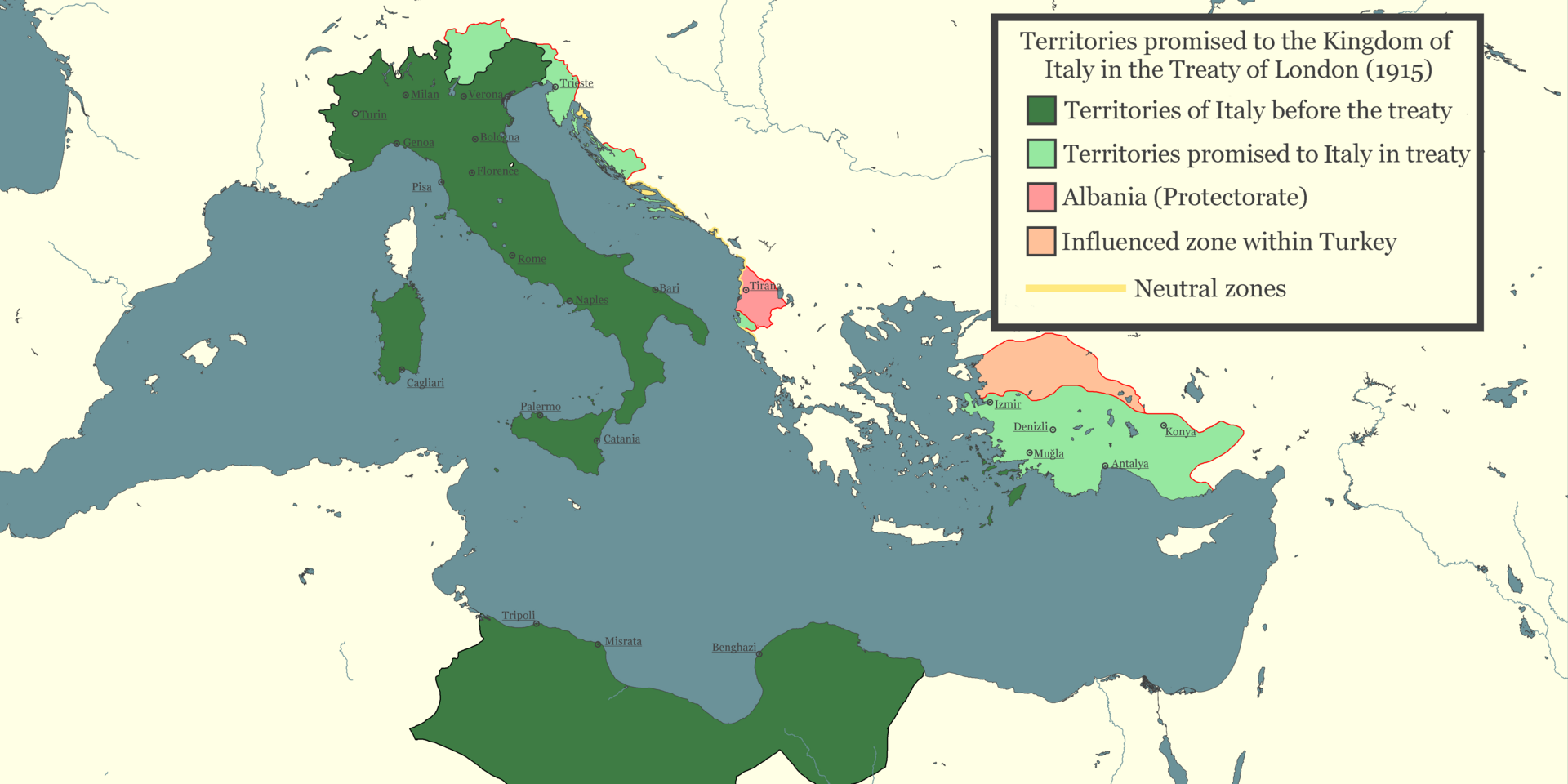
Territories promised to Italy in the Treaty of London (1915)
Economic Issues
Economic divide between north and south, caused disparity in interests and unhappy workers in the south
After unification in 1861, the north was rich and industrialized while the south was poor and agrarian
North against South, wealthy against working class, religious against secular
People experienced extreme poverty, lots of death, and a crippled economy
Unemployment rose to 2 million by the end of 1919
The effect of war was great, as it killed part of the working class, which had political and economic implications
600,000 dead and hundreds of thousands wounded
Working-class protest
Many liberal governments had a reputation for corruption and representing the middle and upper classes only
The vote was limited to wealthy elites until 1930, when all men over 30 were given the right to vote
The middle and upper classes dominated the political system
Establishment of the Italian Socialist Party (PSI) in 1892
Most politicians wanted to respond to protest with force, closing down trade unions, and banning parties such as the PSI
Strikes were especially common within the public service sector
Post-war
Inflation intensified by the government printing more money to pay for arms
By the end of 1920, the Lira was worth only 1/6 of its value in 1913
Savings became worthless
Major arms and shipbuilding companies went bankrupt due to the sudden lack of demand
Peasants siezed land in the south
Farmers went on strike during the harvest
Trade unions pressed for higher wages
Railway activity stopped due to strikes
Growth of Fascism in Italy
Anger over war settlements
Dalmatia was promised to Italy in the Treaty of London, but was given to Yugoslavia instead
Italians called this the ‘Vittoria Mutilata’ or mutilated victory, which meant they thought they were swindled out of their rightful lands
Economic crisis and high unemployment
When people are economically frustrated, they are more likely to move to radical ideals
US restrictions on immigrations leaving the poor unable to emigrate
Many wanted to leave Italy and the social divisions it had and start a new life in the United States
US restrictions in 1920s
Bolshevik Revolution leading to fears of communist expansion
Fears of expansion into Italy
Socialists attempted to catalyze a Russian-style revolution in 1920 during a strike
Support from the Catholic Church
Fascist government might be more supportive towards Catholic beliefs
Mussolini was charismatic and a good speaker
Offered to solve economic and social problems like the social divisions, economic inequality, and communist threat
Fascism
As frustrations with the outcome of WW1 grew, Benito Mussolini organized the National Fascist Party in Italy
Mussolini was a journalist for the Socialist party before he was kicked out for supporting Italy joining World War One
Party created in 1919
Ideology:
Promotion of nationalism
Promoting nationalism when the rest of the world is moving towards internationalism
Desire to remove foreign influences
Nation state’s culture and history is a unifying force
Own nation is seen as superior to others
A dictatorship in a one-party state
Feeling that multiple political parties divides a nation
Totalitarian control - The state has influence or control over all aspects of society
People are subservient to the state
Militarism and expansionism
War is a national good, these ideals were seen before WW1 but the Italians expanded on this
Criticized the liberal governments for being unable to become a ‘Great Power’
Political violence was seen as a method of revitalizing society and necessary in order to progress
Development of paramilitary organizations
Anti-Communist
Anti-internationalist
Social darwinism
“Survival of the fittest”
The belief that races have evolved as superior to other races - Italians are superior
Social unity
Opposition to class-based divisions, promotes a collective national society
Mussolini’s Rise to Power
Rise to Power
Liberal governments began losing control between 1918-22
Liberals did badly in the 1919 elections, gained fewer than half of seats in parliament
None of the political parties were able to form a functioning coalition
Many short-term government which undermined the credibility and trust in the democratic parliament
Exploitation of the results of the war
Italy hadn’t obtained the lands they expected from the Treaty of London - Fiume and Dalmatia
They had received Tyrol, Istria, Trieste, and the Dodecanese Islands
The issue arose when the prime minister Vittorio Emmanuelle Orlando was willing to renounce claims to Dalmatia in return for Fiume but the foreign minister Sydney Sonnino disagreed, so the other powers at Versailles exploited this and didn’t give them either
Orlando was forced to resign
39.1% of Italy’s forces were casualties
Since Fascism was vague and not based on clear theories, it appealed to a wide range of Italians across the social classes
Italians embraced the demands for strict law to stop the street violence that came from the war
September 1919 - Gabriele D’Annunzio led 2,000 ex-soldiers into Fiume without government sanction in protest against the Italian government’s agreement to cede the port to Yugoslavia
The government was too weak to do anything about it until Giolitti returned as prime minister
Undermined the government’s credibility, thus giving the Fascists more support
Polarization of politics
1921 parliamentary elections - 35 seats for the Fascists (PNF), 108 for the Catholic Party, and 138 to the Socialists and Communists (New party founded in 1921)
Socialist coalition government collapsed in February 1922, it was replaced by a weak conservative government that was unable to control the increasing violence
Mussolini declared in a speech in September 1922 that he backed the monarchy, making him favorable in the King’s eyes
October 1922 - Talks regarding creating a new government with Fascist representation were continued with some willingness to offer cabinet posts to the Fascists, but Mussolini wouldn’t accept anything less than a major role
Consolidation of Power
At first, the government was still comprised of multiple political parties
Mussolini was the prime minister of a cabinet where only 4 of 12 ministers were Fascists
The Fascist government receives a vote of confidence in late 1922, which granted them emergency powers to make reforms
The Nationalists merged with the Fascists in February 1923, reducing the amount of opposition to the Fascists
The Acerbo Law was passed in July 1923, which gave a 2/3 majority to any party that receives the most votes in any election, this made Mussolini’s consolidation methods viable
Murdered Giacomo Matteotti in May 1924, who gave a speech condemning the Fascist violence just 11 days earlier
This resulted in a wave of revolts, forcing Mussolini to take responsibility for the Fascist violence
Most members of the parliament withdrew in opposition, but Mussolini was already too powerful
Political Parties and trade unions were banned with the Law on Powers of Head of Government
Fascists claimed they promoted disunity
Also banned trade unions
Press was strictly controlled, no critiques of the government
Elected local officials were replaced by appointed officials, the Fascists could control who was in power, effectively making their power absolute
Secret Police was organized (OVRA)
Look for and silence critiques of the government
The powers of arrest were increased, meaning the OVRA was able to arrest anyone for basic crimes or ‘treason’
Jury trials ended
Only politically appointed judges could make decisions in these trials
In combination with the arrest and death penalty laws, this meant the Fascists could effectively kill anyone they deemed a threat or opposition
Death penalty expanded
Now included crimes against the government and actions against authorities
Young men and boys organized into a fascist youth movement
To get this power, the Fascists had to compromise with non-Fascists such as the King and the Vatican
Mussolini could still be dismissed by the King
The Church remained very influential
Fascism never gained total control over the south because the Church and the landowning elites maintained power
Anti-Semitic racial laws were implemented in 1938 to prosecute Jews
March on Rome - October 1922
16 October 1922 - Mussolini met with other major Fascist leaders in Milan where they agreed the time was right to seize power
Weak post-war coalition governments couldn’t suppress street violence led by Fascist party members
Coalition made of many different political parties
Socialist and Communists calls for a general strike led more to the Fascist party’s support of ‘law and order’ from the middle classes
Protest economic conditions
Fascists called for law and order, this gained middle class support
Mussolini gains order by taking away freedoms
24 October 1922, the march on Rome began
Fascist congress held in Naples with 40,000 Black Shirts chanting “To Rome”, declaring their intention to march on Rome
10,000 of the planned 50,000 Fascists began to assemble at 3 outside Rome
27th October - Fascists attempted to take control of government buildings in northern and central Italy, which terrified locals who then sent reports to Rome
The government resigned, but Prime Minister Facta was asked to stay, he had taken no firm action against the Fascists before 1922
Facta asked the King to declare martial law so the army could crush the Fascists
Mussolini wasn’t there, he was in the north preparing to flee if something went wrong, but eventually took a train to Rome when the king gave in
29 October, the King sent a telegram to Mussolini stating, “Very urgent. Top priority, Mussolini, Milan. H.M. the King asks you to proceed immediately to Rome s he wishes to confer with you”
The King sided with Mussolini to avoid greater violence (and his own ousting) and named Mussolini Prime Minister despite the relatively small numbers of elected Fascists
Mussolini was offered prime minister even though his party only had 35 members of parliament
Consolidation of Power - Timeline
November 1922; Mussolini’s government receives a ‘vote of confidence’ and gains emergency powers to reform administration and taxation
Parliament put confidence in Mussolini to fix things
February 1923; Nationalist Party joins the Fascists
July 1923; Acerbo Law: The party with the most votes (plurality) receives 2/3 parliamentary seats
Law that allows the most votes will gain 2/3 of parliamentary seats - This is because there were too many parties for any single one to gain a majority of seats
April 1924; Elections marred by political violence, Fascists grow from 7% to 67% of Parliament
Because of the Acerbo law, they became the majority party and could pass anything they wanted
The Fascists engaged in intimidation campaigns
June 1924; Liberal political leader Giacomo Matteotti who spoke against Fascism in Parliament was murdered
Mussolini and the Fascists were blamed
January 1925; Mussolini proclaims himself ‘il Duce’ Head of government, the Duke of Fascism
December 1925; Law on Powers of Head of Government passed giving Mussolini supreme executive powers, only could be removed by the king
Once again passed due to the Fascists having 2/3 of the parliament because of the Acerbo law
November 1926 - January 1927; Founded the OVRA and increased repression
Foreign Policy
Mussolini’s Goals
Aims and Goals
Increase Italy’s national pride and unity
Harmed by the war losses and treaty settlements
Get rid of the divisions
Consolidate domestic support for Mussollini
Revise war settlements
Get the land Italy was promised from the Treaty of London
Dominate the Balkans and Mediterranean
Aimed to rebuild the Roman Empire
Build an empire
Spazio Vitale (Living Space)
Desire to have plenty of land that could be used for production and the people
Expansion in Africa
Italy already has a colonial presence in Africa, but Mussolini wanted more - France and Britain had a lot, why not Italy?
Improvement of Italian economic condition through the development of a ‘corporate state’ and a drive towards autarky
All workers and employers work towards the good of the state
Elimination of class divisions
Corporations regulated by the government
Autarky - Self-sufficient nation, no reliance on other states for trade goods or economic assistance
Land and economic reforms fail to make Italy an economic power
Especially because of the Great Depression
Build the strongest military
Large standing army
Large air force
“Blot out the sun”
Large navy
Mussolini implemented policies to increase production to meet goals
Improve economy
Achieve Autarky, self-sufficiency
This means gaining control over more sources of resources
‘Productivism’ - Vague term that described the intent to increase productivity
Heavy industry favored over consumer goods
High taxation to fund development, placed a burden on the working class
Corporatism - Alternative to socialism or capitalism - All people work together for the benefit of the nation
Fascists believe no one would lose
Belief that it had all the advantages of capitalism and socialism but without the disadvantages
Economy would be regulated
Corporatism had begun to fail by the early 1930s
Factors influencing foreign policy
Disappointment over the Versailles settlement
Many Italians were still angry over the ‘Mutilated Victory’
Increasing national pride would consolidate his power and make him a more significant figure in international politics
Ideology
Mussolini believed he would turn Fascist Italy into the second Roman Empire, and he needed control over the Mediterranean
Expansionist
Control over resources would improve economic situation
Economic issues
Italy had limited resources and relied on other countries’ imports
The south was far less industrialized than the north
Low literacy rates among Italians compared to other European countries
Foreign Policy
1920s
1923 Corfu Affair
Italy invaded the Greek island of Corfu after an Italian official was killed there
Italy demands 50 million Lira from Greece as compensation
The League of Nations ordered a withdrawal
1924 Seizure of Fiume
Disputed town in Yugoslavia on the Adriatic coast that had a majority Italian citizens
1924 Treaty of friendship with Albania creating a protectorate status
Led the way for Italian annexation of Albania
Annoyed France because Italy was encroaching on territories that France was trying to protect
1925 Locarno Treaty
Spirit of Locarno
Confirmation of Western European borders
The European world is being put back together
1928 Kellogg Briand Pact
Agreement to not use war as a means to solve disputes
He’s playing into internationalism
Support of right-wing movements in Germany and agreement to train German pilots in Italy
Violation of the Treaty of Versailles
Supported independence movements in French Morocco
Brutally crushed revots in Libya
1922-28
1928 “Pacification” campaign turned into full scale war, only ended through violent force and mass executions
Signed a treaty of friendship with Abyssinia
1928
He already had ambitions to conquer it
Military and Empire building
Supported independence movements in French Morocco
Much like Germany before WW1
Mussolini doesn’t care about Moroccan independence, he just wants the French out so he can expand his African holdings
Violent suppression of revolts in Italian Libya
Despite disarmament agreements, promise of building an air force that would ‘blot out the sun’
Build many planes
Economic depression of the 1930s would result in more aggression
Greater push to Autarky
Extent of success
Successes
Foreign policy helped consolidate Mussolini’s power, as foreign victories led to more support from the people
The Corfu Affair was seen as a success domestically
Mussolini sent a military commander to take control of Fiume - 1924
Gained complete control, and in the Pact of Rome the Yugoslavs ceded it to the Italians
He then believed he could intimidate Yugoslavia further and undermine French influence in the Balkans
Mussolini tried to destabilize Yugoslavia by funding independence movements such as the Croats
King Ahmed Zog gained control in Albania in 1924
Italian-backed leader
Mussolini invested into Zog’s regime
Italy helped train the Albanian army
Led the way to the treaty of friendship in 1926 and Albania became an Italian protectorate
Maintained good relations with Western European powers at first
Despite Mussolini supporting independence movements in French North Africa, having claims on the French territories of Corsica, Nice, and Sardinia, and aiming to replace French influence in the Balkans and Adriatic, Mussolini wanted to present himself as a force for moderation
Signed the Locarno Treaties in 1925
Signed the Kellogg-Briand Pact in 1928
Remained diplomatically stable throughout the 1920s and 30s
Recognized the Soviet Union in 1924
Italy had withdrawn relations after the Bolshevik revolution in 1917
Negotiated trade deals with them in 1921, unofficially recognizing them
Mussolini saw the Soviets as a useful tool in gaining diplomatic leverage in the European stage
Failures
Corfu Affair 1923 - Italy was forced to withdraw from Corfu because Britain threatened to use its navy to force them to. The League of Nations had condemned them but Italy refused
Mussolini learned that he could only intimidate smaller states and couldn’t intimidate states such as Britain
Mussolini had to support the League of Nations disarmament because Italy’s armed forces were too weak
Mussolini’s Foreign Policy 1933-39
Four Power Pact - July 1933
Smaller nations should have less of a say in Great Powers relations
Signed in Rome, Italy was a signatory
Allowed further Great Power cooperation
Mussolini was heralded and it was considered a success
France’s parliament didn’t ratify it, pact was dismissed by the other nations
Stresa Front - 1935
Italy, Britain, and France met in Stresa to discuss Germany’s rearmament
Conference signed on 14 April, 1935, reaffirmed Locarno and guaranteed Austria’s independence
Brought Italy slightly closer to Britain and France
None of the signatories would actually invade Germany
Spanish Civil War - 1936
Militant groups asked Italy for help
Italy sent the most aid to Franco of any nation, over 70 thousand troops
Mussolini had no clear goals or nationalist intent other than gaining influence
Italy lost half of its money reserves and 1/3 of its arms
Increased tensions with Britain and France
Italy grew closer to germany
Anschluss - 1938
Hitler invaded and annexed Austria with no resistance
Mussolini didn’t object, which gave Hitler more confidence
Mussolini’s lack of objection was a popular move domestically
Another turning point in Italian foreign policy
Some international condemnation, Mexico was the only country that didn’t accept it and submitted a protest to the League of Nations, which was ultimately futile
Invasion of Albania - 1939
Italy invaded Albania, it was easy for them
Italy wanted to be involved in Germany’s expansionist ambitions
Mussolini wanted to recreate the Roman Empire
Condemned by Britain
Outbreak of World War Two - 1939
Germany invades Poland on September 1, 1939
Italy declared itself non-belligerent
Italy wasn’t ready due to lack of supplies and being told only a week before, thus had no time to prepare
Mussolini wanted to resolve it through a conference
Ultimatum from Britain to call off the attack, Germany didn’t respond
Italy tried to bargain with the Allies at first, showing Mussolini was still mistrustful of Germany
Failed Anschluss - 1934
Nazis in Austria attempted a coup that failed
Mussolini denounced it and said the murder of Dollfuss was bad
Troops were mobilized on the Austrian border
Mussolini flaunted his power to deter Germany
Germany was deterred and there was international outrage
Abyssinia - 1935
Italy invaded Abyssinia to gain a larger colonial empire
Mussolini gained a lot of political influence in Italy
League resolved that neither side was responsible for the event that started the war, and condemned Italy and imposed sanctions
Anti-Comintern pact - 1937
Was against the international threat of communism
Mutual defense with Germany and Japan
Italy joined what would become the Axis powers and left the League of Nations
Grew closer to Germany
Turning point for Italians
Italy eventually allowed the Anschluss in 1938
Rome-Berlin Axis - 1936
Created by Italian foreign minister Galeazzo Ciano
Italy was officially aligned with Germany
Expansionist ideology
Sudetenland Crisis - 1938
Germany demanded the Sudetenland from Czechoslovakia, this weakened the Czechoslovaks
Soviets weren’t invited to Munich, where the diplomacy was happening, this angered Stalin
Italy supported Germany
Some international condemnation, Britain pursued appeasement and allowed Hitler to take Sudetenland
Pact of Steel - 1939
Military alliance between Germany and Italy
Italian civilian population weren’t supportive
Concern from Britain and France
Italy enters WW2 - 1940
Joined because they wanted a place at the peace conference table, as they thought Germany would win and they wanted some land gains
Italy does good at first but then loses horribly, Italians turn against Mussolini, eventually leads to Mussolini’s downfall and he is killed in 1945
Mussolini’s Foreign Policy
Four power pact
Italy, Britain, France, Germany
Reaffirms Great Power influence in Europe
Italy’s attempt to be seen as a great power in Europe
Signed July 15, 1933
Support of Austria
Failed Anschluss of 1934
Germany tried to invade and annex Austria, but Italy’s support scared them off
Mussolini supported an independent Austria
Affirming the Treaty of Versailles
Protect against possible German threat
Following the murder of Engelbert Dollfuss in 1934, Italy moved troops to its northern border
Response to German rearmament
Mussolini is very concerned about the possible threat Germany poses to Italy, by this point they were not allies
Stresa Conference in April 1935 established the Stresa Front between Italy, France, and Britain
This agreement fell apart after the invasion of Abyssinia and when Britain made the Anglo-German naval treaty with Germany without consulting the other front members in 1935, Stresa Front officially dissolved in 1936
Called for a maintenance of the status quo in Europe preventing Germany from further violations of Versailles
Italian aggression in the 1930s
Factors leading to expansion
Fascism
Glorification of war
Call for imperial expansion
Economic crisis
Loss of outside investors
Crashing grain prices hurt farmers
Unemployment is on the rise
Drive towards Autarky - Economic self-sufficiency
Invasion of Abyssinia - 1935-36
Rationale
Expansion of Italian Empire in Africa
Abyssinia is now Ethiopia
Abyssinia was one of the last independent territories in Africa that hadn’t been colonized
Italy owns Eritrea and Italian Somaliland to the north and south of Abyssinia
Gain support for his government with successful conquests
Avenge the 1890s defeat of Italy
Italy tried to take Abyssinia but had been defeated
Gain colonial troops for future military action
British and French had been using troops from their colonies during World War One
Export markets for Italian goods
Stresa Front offered protection from Germany
Italy doesn’t have to worry about a threat from Germany so they can focus troops elsewhere
Demonstrate Italian strength
Bring European civilization to Abyssinia
Italy had asked permission from Britain and France, France agreed
December 1934, Italian forces clashed with Abyssinians in the disputed Wal Wal oasis
Mussolini demanded an apology and compensation
Haile Selassie (Emperor of Ethiopia) requested a League of Nations investigation
Mussolini refused, called for conquest
500,000 Italian soldiers invaded in October 1935
Used brutal methods such as poison gas and bombing civilian targets
The League condemned the invasion and placed economic sanctions on Italy
Italy formally annexed Abyssinia in May 1936
Invasion results
Very few Italian losses, hundreds of thousands of Ethiopian losses
Increased tensions with Britain, effectively destroyed the Stresa Front
Italy moved closer to Germany
Costly war exacerbated economic problems
The hope was that it would solve economic problems. It did not.
Guerrilla war would continue for years
Abyssinian fighters would continue to fight against Italians
League of Nations was shown as weak
They could not stop this aggression
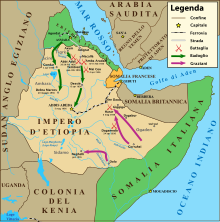
Italian invasion of Abyssinia
March to War
Support of German Anschluss in 1938
Support of German occupation of Sudetenland
Invasion of Albania; union of nations
Pact of Steel with Germany in May 1939
Not ready for war in September 1939
Mussolini had sent Hitler a message saying they weren’t ready with a list of supplies they needed to become ready, this was ignored
WW2
Joins the war in June 1940
Germany had already made tremendous gains
Desired to be seen as a great power
Avoid Europe dominated by Germany
Hopes for territorial gains
Invasions of Egypt from Libya
Invasion of Greece from Albania
Invasion of France through the Alps
Spanish Civil War
Italian involvement
Mussolini saw the war as an opportunity to expand Italian influence
Support Fascists in Spain against socialists and communists
Gain naval bases in the western Mediterranean
70,000 Italian troops joined the war, more than any other nation
Italy trained troops and pilots in this war
Results
High economic costs
Depletion of arms leaving Italy weaker moving forward
Back-to-back wars that Italian production couldn’t keep up with, meaning they didn’t have a sufficient amount of supplies
Increased tensions with Britain and France
They were not sympathetic to the Fascists
New Alliances
October 1936: Rome-Berlin Axis
First alliance with Germany
This is why the alliance in WW2 was called the Axis
November 1937: Anti-Comintern Pact with Germany and Japan
Protect against communism
December 1937: Leaving the League of Nations
International response in the 1930s
Public Sentiment
Anti-war Sentiments grew in Britain with news of the bombing of cities during the Spanish Civil War
Weakness of the League of Nations
Lacked the economic resources and credibility of the USA
Many in the League thought the Treaty of Versailles should be revised
Weakness in the faces of prior aggressive acts
Could not stop Italian aggression
Countries driven by their own self-interest rather than lofty League principles
Abyssinian Crisis
Public outrage and condemnation from the League
Attempts to negotiate a solution failed
Economic sanctions placed against Italy
Not all members followed through
Suez Canal not closed
USA increased exports to Italy
Hitler’s remilitarization of the Rhineland diverted attention back to Europe
Invasion of Albania
Condemnation and further proof to Chamberlain that agreements with dictators could not be trusted
Greek borders guaranteed by Britain
Spanish Civil War
Britain and France committed to non-intervention, not wanting to see a wider war
USSR, Italy, and Germany also signed a non-intervention pledge that they ultimately violated
Britain favored the nationalists over the communist-supported republicans
Pre-War Domestic Policies
Foreign Policy Aim
Increase National Pride
—————————————————————————————
Consolidate domestic support for Mussolini’s regime
—————————————————————————————
Revise the Peace settlements of 1919-1920
—————————————————————————————
Dominate the Balkans
—————————————————————————————
Dominate the Mediterranean
—————————————————————————————
Build an Empire, gain spazio vitale (living space), and expand territories in Africa
—————————————————————————————
Foster the spread of Fascism
—————————————————————————————
Battle for Grain
Propaganda campaign aimed at increasing wheat production to gain self-sufficiency
Battle for the Lira
Aimed to reduce inflation and fix the Lira exchange rate
Battle for Births
Increase the population by 20 million to 60 million by 1950
Multiple policies aimed at fixing domestic crises, increasing production, and increasing the military strength
Possible examples of success
Took Fiume
Subdued Libya
Increased role in Locarno / Stresa
——————————————————————————————————
Brings Albania under Italian control
Mussolini gains Prime Minister role
——————————————————————————————————
Stresa Conference
Locarno Treaties
——————————————————————————————————
Invasion of Albania
Corfu Affair
Took some Yugoslavian land after the invasion of Yugoslavia in 1941
Italian invasion of Greece (1940)
——————————————————————————————————
Mussolini supported Franco in the Spanish civil war in hopes of gaining ports to dominate the Western Mediterranean
Italy took Tunisia and some of Egypt in north Africa
——————————————————————————————————
Took Albania and Abyssinia
——————————————————————————————————
Inspired Adolf Hitler
Assisted Francisco Franco in winning the Spanish Civil War
—————————————————————————————————
Battle for Grain
Did increase production and decreased the trade deficit
Imports fell by 75%
Battle for the Lira
Did fix the exchange rate and benefitted the industry
Battle for Births
Offered monetary compensation for women who stayed home and had children and for couples to get married
Degree of Success
Successful, Italian Citizens were proud to be Italian
Increased domestic Support
—————————————————————————————
Success meant more fascist party support and war support
—————————————————————————————
Success, as the peace settlements were revised and improved while aligning with the status quo
—————————————————————————————
Success, as Italy took lands in the Balkans from 3 countries
Failure, as they did not keep this land for very long and Greece was seen as a weak region from Hitler, leading to the Axis diverting supplies there and leaving Sicily weak
—————————————————————————————
Failure, there is no record of Spain ever letting Italy use ports during the war
Failure, Italy ultimately lost the naval war in the Mediterranean and lost the entirety of north Africa
—————————————————————————————
Success, by definition, Italy had an empire
Failure, the empire was nowhere near the size or strength that Mussolini had hoped and were not comparable to France or Britain
—————————————————————————————
Success, inspired the most infamous Fascist in history and helped fascism spread in Spain
—————————————————————————————
Battle for Grain
Failure, while it did increase wheat production, it made farmers stop growing other crops which led to a food deficit in those areas and decreased exports
Caused negative impacts in the south, where the soil couldn’t grow wheat
The state failed to challenge big landowners to improve the poverty in the south
Battle for the Lira
Failure, ultimately was unable to fix inflation
When Mussolini fixed the price, exports fell with no benefit and consumers had to pay more for tariffs
The government cut wages by 10%
Battle for Births
Failure, Mussolini didn’t expect war and being deposed and killed by 1950, so the births meant very little as they were not old enough to participate in the war
Historiography
Not needed for Paper 1
Mussolini Quotes
“All within the state, nothing outside the state, nothing against the state”
“Often I would like to be wrong, but so far it has never happened”
“Strike the imagination of the public: that is the real secret of how to govern.”
“The inert masses must be led… the public are stupid, dirty, content with their little cinema shows”
“[Catholic Priests are] black germs”
“Fortunately the Italian people are not accustomed to eat much and therefore feel privation less than others”
“We are probably moving towards a lower standard of living”
“The fate of nations is intimately bound up with their powers of reproduction”
“All nations and all empires first felt decadence gnawing at them when their birth rate fell off”
“Democracy is beautiful in theory; in practice it is a fallacy”
“Every anarchist is a baffled dictator”
“The twentieth century will be known in history as the century of Fascism”
“Fascism is a religious concept”
“Fascism is not an article for export”
“Fascism should rightly be called Corporatism, as it is the merger of corporate and government power”
“Fascism, the more it considers and observes the future and the development of humanity, quite apart from political considerations of the moment, believes neither in the possibility nor the utility of perpetual peace”
“Inactivity is death”
“It is humiliating to remain with our hands folded while others write history. It matters little who wins. To make a people great it is necessary to send them to battle even if you have to kick them in the pants. That is what I shall do”
“What is the first duty of a child? Obedience! The second? Obedience! The third? Obedience!”
“It is the State which educates its citizens in civic virtue, gives them a consciousness of their mission, and welds them into unity”
“Let us have a dagger between our teeth, a bomb in our hands, and an infinite scorn in our hearts”
“Socialism is a fraud, a comedy, a phantom, a blackmail”
“The best blood will at some time get into a fool or a mosquito”
“The League is very well when sparrows shout, but no good at all when eagles fall out”
“The Liberal State is a mask between which there is no face; it is a scaffolding behind which there is no building”
“The mass, whether it be a crowd or an army, is vile”
“The truth is that men are tired of liberty”
“War alone brings up to their highest tension all human energies and imposes the stamp of nobility upon the peoples who have the courage to make it”
“War is to man what maternity is to woman. From a philosophical and doctrinal viewpoint, I do not believe in perpetual peace”
“We become strong, I feel, when we have no friends upon whom to learn, or to look to for moral guidance”
“The function of a citizen and a soldier are inseparable”
“The history of saints is mainly the history of insane people”
“The keystone of the Fascist doctrine is its conception of the State, of its essence, its functions, and its aims. For Fascism the State is absolute, individuals and groups relative”
“A woman’s place is at home and preferably pregnant”
“The eyes of the Duce are on every one of you”
“Diplomacy is simply the art of deceiving one’s enemies”
“It is blood that turns the clanging wheels of history”
“[My foreign policy is] to bleat with the sheep and howl with the wolves”
“[With regards to World War Two:] If Britain wins, we lose; if Germany wins, we are lost”
“No one could imagine that we could stay completely out of [the war]. We cannot become a second division team”
The creation of the Press Office allowed Mussolini to transform his power and allow for the ultimate control of the media and representation of him in newspaper articles and other texts
Guido Bonsaver
“Mussolini’s personal responsibility from the start can now be fully documented. The trial documents reveal that the murder was also closely linked to the system of bribes that served to finance Mussolini’s propaganda machine and the sections of the press that formed part of it”
Mauro Canali
“[The ministry of popular culture] never succeeded in creating a new fascist culture and was only partially successful in forcing artists and others to conform”
Stansislao Pugliese
“The Italians were divided before, but by November 1919, they were more divided than ever. No conceivable form of government could suit them all”
Christopher Clark
“Power was gained not through revolution but… compromise with conservatives”
Martin Blinkhorn
“[Mussolini was] a vain blundering boaster without either ideas or aims”
AJP Taylor
“[Mussolini was] a good man to do business with”
Austen Chamberlain
“Mussolini took part voluntarily and knowingly in the Shoah.”
Michelle Sarfati
Communist threat to Italy in the early 1920s was a complete illusion; Mussolini exploited it to gain power
Alan Cassels - Communist Threat
Mussolini’s coalition with the Catholic Church was vital to his success
Finbar Madden - Mussolini and the Church
“Fascism obtained power not through revolution, but as the result of Mussolini’s compromise with conservative and liberal interests”
Martin Blinkhorn
The decade of 1915-1925 was riddled with problems and controversies, simplifying Mussolini’s rise to power in this time period. The underlying weaknesses in society present in Italy at the time, primarily the political and economic instability, shortened Mussolini’s path to power
Denis Mack Smith
The Italian government was riddled with corruption, easing the rise of a fascist such as Mussolini
Rupert Colley
Militarist violence was instrumental to Mussolini’s unified Italy, such as the use of poison gas in Abyssinia and repressive confinement of opposition. This implementation of fascist ideology went on to directly inspire other European fascists such as Adolf Hitler just a few years later
Dr. Christian Goeschel
The March on Rome was the first real big movement of fascism in Europe, supporting the argument that force and violence was a more effective tactic than just popular support. Mussolini’s “ragtag” army of 40,000 fascist supporters was sloppy in nature, not yielding the popular support it wanted, yet put the Italian fascists in a position to cause fear and violence to gain that support
Charles Keserich
Mussolini knew how crucial the pope’s support was if he wanted to survive. Mussolini shortly after started becoming a religious man and had his children participate in the church. After multiple failed assassinations towards Mussolini, the church exclaimed that Mussolini lived by the grace of God, this was when Mussolini knew he had the support of the church
David Ketzer
Despite Mussolini’s described plan in maintaining power under constitutional ideals, he instead widely strayed from that which was mandated by constitution. In doing so, Mussolini was able to increase his governmental power while utilizing this increased power to systematically and legally oppress opposition within the government and throughout Italy
Egidio Reale
Mussolini had not been involved in the Matteotti crisis. Since Mussolini was not involved, he was not entirely successful in elimination opposition to his rule, and instead the crisis only became a concern when it threatened his own popularity, therefore implying that he was unlikely to intervene with future mass opposition unless inclined to in the atmosphere of a political scandal
De Felice and Emilio Gentile
Mussolini played a role in organizing his opposition in political scandals, like the Matteotti crisis. This supports the argument that Mussolini was successful in effectively dealing with opposition
Denis Mack
Mussolini was unable top put a complete end to his opposition. This was because of the weakness of Mussolini’s rule and he was largely opposed by the Italian population
Giulia Albanese
Subtle violence allowed Mussolini to consolidate and extend his power throughout his writing. The central ideals of fascism stem from unprecedented violence and pressure that terrorized the Italian citizens
Michael Ebner
The middle class was the core essence of the Fascist regime and allowed Mussolini to maintain support for the newly-developed fascist government
H. Turner
“Fascism never did penetrate to the roots of Italian society”
Leeds
Fascism gathered support because of the weakness of liberalism, the bankruptcy of orthodox conservatism, and the dangers apparent to the middle and upper class from socialism
High levels of disruption made it unexpectedly easy for Mussolini to bind together different classes
Mussolini added to his status by appearing to be unable to control the violence of the squad, while at the same time he escaped contamination by being too closely associated with them
Gordon
“[Italy must] take shelter on rainy days under the ample and capacious cloak of England”
Guariglia
“British foreign policy threw Mussolini into Hitler’s arms”
Richard Lamb
“[After the Pact of Steel] Mussolini oscillated between greed and fear".”
Richard Lamb
“Mussolini saved thousands of Jewish lives - Far more than Oskar Schindler”
Nicholas Farell